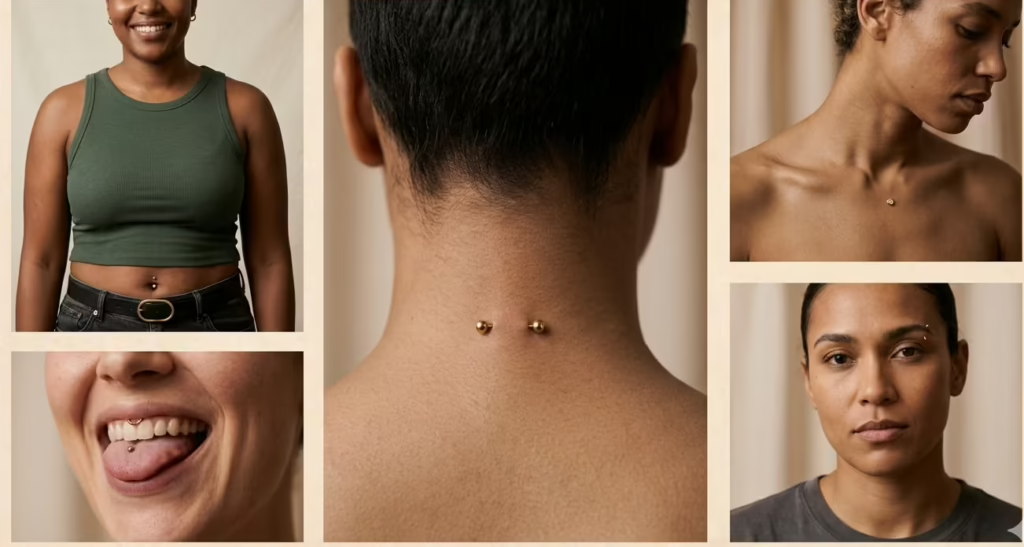
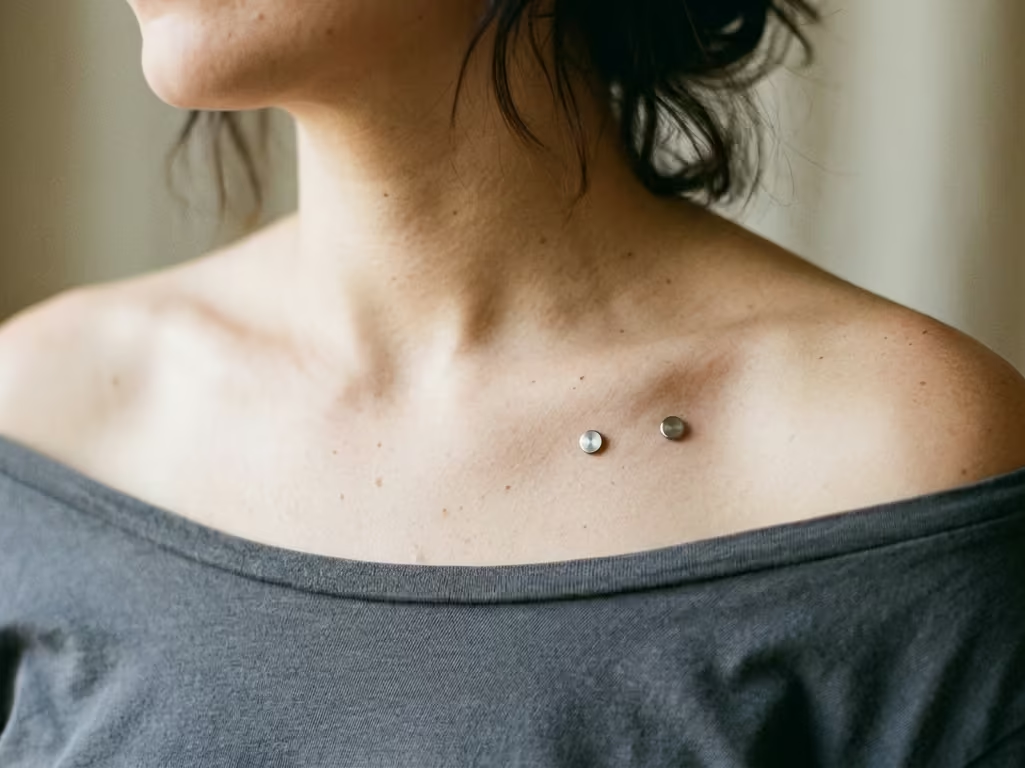
The clavicle piercing sits in a category of its own. It is not a standard ear piercing or a simple nostril stud. It is a surface piercing — one that rests just beneath the skin near the collarbone — and it demands a very different kind of commitment than most piercings do.
Done well, it is genuinely breathtaking. Two small, polished ends sit symmetrically above or below the collarbone, drawing the eye exactly where the neckline meets the chest. It is the kind of piercing that makes people ask “what is that?” in the best possible way.
Done poorly, or without a full understanding of what it involves, it is a piercing that rejects, scars, and leaves you wishing you had done more research first. The clavicle piercing rewards preparation. This guide gives you everything you need to make a genuinely informed decision — from what it actually is and how it is done, to the real risks involved, the right jewelry choices, and the daily commitment of aftercare.
❝ The clavicle piercing is one of the most visually stunning surface piercings available — and one of the most demanding in terms of aftercare and patience. Understanding both sides of that equation is essential before you book your appointment.
What Is a Clavicle Piercing?
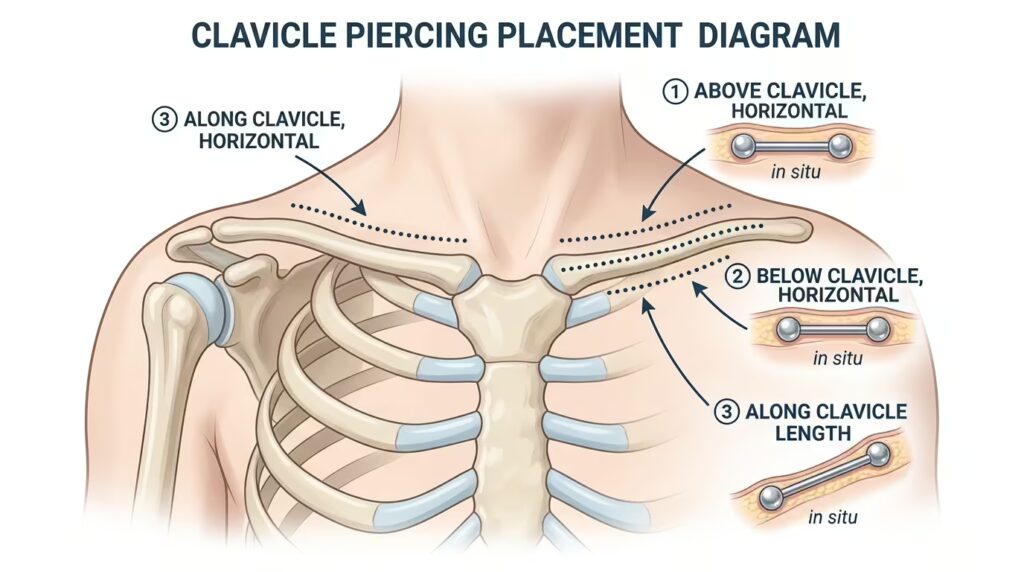
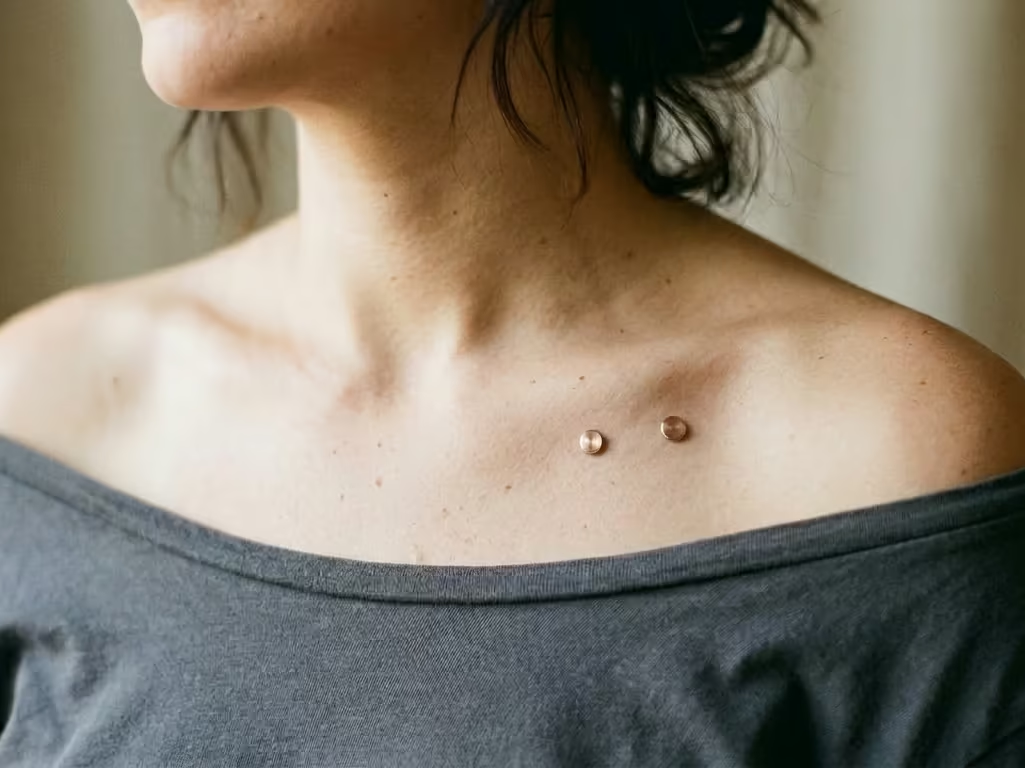
A clavicle piercing is a surface piercing placed in the skin near the collarbone — either directly above it, below it, or along its length. Unlike a standard piercing, which passes completely through a defined piece of tissue (like an earlobe or nostril), a surface piercing enters and exits through the same layer of skin, with the jewelry bar running horizontally beneath the surface.
This is what makes it technically different from most piercings. There is no separate entry and exit point through a fold of flesh. Instead, the needle creates two closely spaced holes on a flat surface, and the jewelry — typically a surface bar — sits under the skin between them, with only the two decorative ends visible above the surface.
The placement can vary. Some people pierce directly above the clavicle bone. Others prefer just below it, which tends to experience slightly less movement and friction. Some go for a horizontal placement along the clavicle, while others prefer a vertical orientation. Your piercer will assess your specific anatomy and recommend the placement that gives the best chance of long-term success.
It is worth being clear about one important thing: the clavicle piercing is considered a surface piercing, and surface piercings are fundamentally impermanent in a way that most piercings are not.
Even with perfect aftercare and ideal jewelry, many surface piercings eventually reject. This is not a failure on anyone’s part — it is simply how the body responds to foreign objects near the surface of flat skin. The typical lifespan of a clavicle piercing, even a well-maintained one, is anywhere from one to five years. Some last longer. Some last less.
This does not mean you should not get one. It means you should get one knowing what you are committing to, rather than being surprised by it later.
How Is a Clavicle Piercing Done?
Understanding the procedure itself helps you know what to expect on the day and why certain things matter for the outcome.
A reputable piercer will begin by cleaning the area thoroughly with an antiseptic solution. They will then mark the two exit points with a skin-safe marker and show you the placement in a mirror before doing anything else. This is your moment to ask questions, adjust the placement, or decide you want to think about it more. A good piercer will never rush you past this step.
The actual piercing is typically done with a hollow, single-use needle. The piercer pinches and carefully lifts the skin, creating a small pocket of tissue, then passes the needle through to form the two channels the surface bar will sit in. The surface bar is then threaded through, and the decorative flat discs are screwed onto the ends.
The whole procedure takes only a few minutes, though the preparation and aftercare discussion will take longer. The sensation is a sharp pinch — more intense than a lobe piercing but generally manageable. The collarbone area is more sensitive to nerve stimulation than some other body areas, so expect some sharpness, but most people are surprised by how quickly it passes.
❝ The quality of the needle technique and the precision of the placement are the two most important factors in how well a clavicle piercing heals. This is not the piercing to get at a walk-in kiosk.
Pain Level: What to Realistically Expect
Pain tolerance varies enormously from person to person, so any pain rating is approximate. That said, most people who have had clavicle piercings describe the procedure itself as a 4 to 6 out of 10 — sharper than a lobe piercing, less intense than cartilage piercings that go through thick tissue.
The area near the collarbone has relatively thin skin over a hard bony surface, which contributes to a more noticeable sensation. The pinch-and-lift technique used for surface piercings can feel more substantial than a straight-through-and-through needle pass. Some people also experience a brief wave of adrenaline immediately after, which can feel like lightheadedness or nausea — completely normal and usually passes within a minute or two.
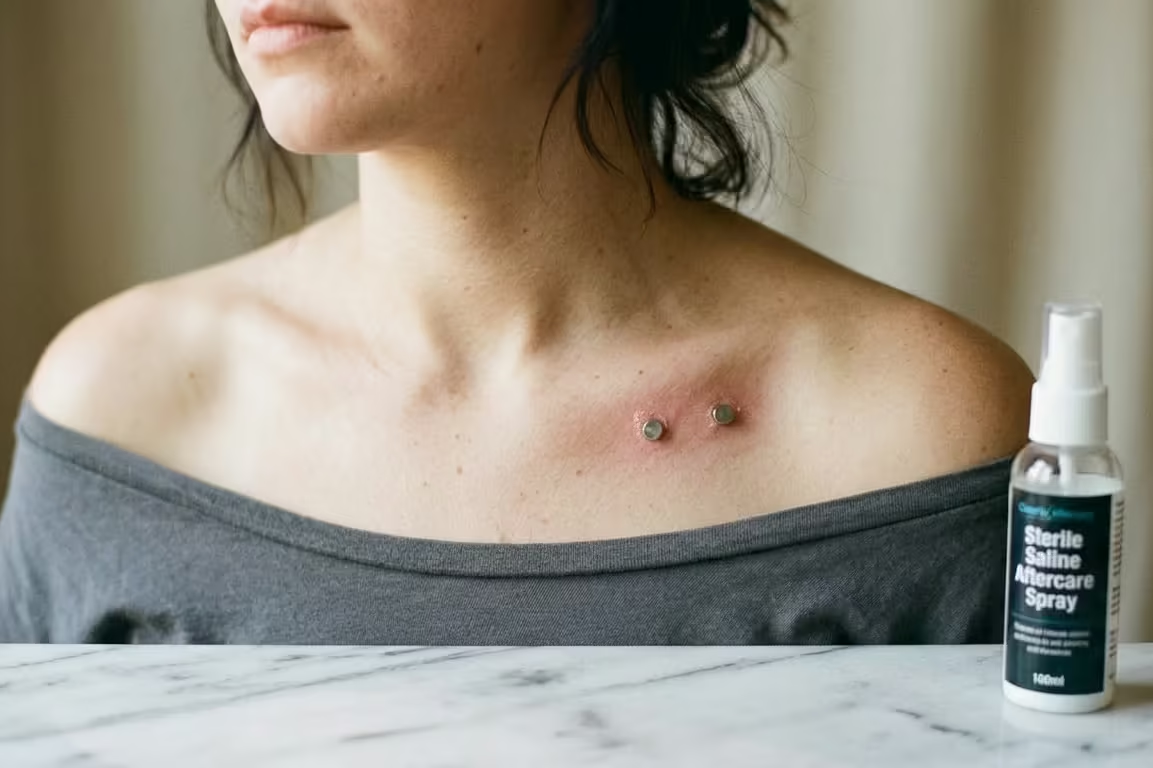
Post-procedure soreness is worth planning for. The collarbone is an area that moves a lot — shoulder movements, reaching, carrying bags, even breathing deeply — and all that movement can keep it tender for the first several weeks. Wearing soft, loose clothing around the neckline during the early healing period makes a real difference to your daily comfort.
Healing Time: What You Are Actually Signing Up For
The original healing estimates you will find on many piercing websites — “three to six months” — significantly understate the reality for most people. The honest timeline for a clavicle surface piercing is six to twelve months for initial healing, with full tissue maturation taking up to eighteen months or longer.
Surface piercings heal from the outside in, which means the skin at the surface can look healed long before the tissue underneath actually is. A clavicle piercing that looks fine after three months may still be fragile and reactive to disturbance. Treating a surface piercing as healed before it truly is — changing the jewelry too soon, stopping aftercare, or putting it through significant physical stress — is one of the most common causes of rejection.
Month by month: what to expect
In the first two to four weeks, some redness, tenderness, and clear or whitish lymph fluid discharge around the ends of the bar is completely normal. This is your body’s healing response, not infection. The area will feel sensitive, and you’ll be very aware of it throughout the day.
From weeks four to twelve, the initial tenderness should gradually reduce, though the piercing will still be reactive to pressure, friction, and catching. Irritation bumps — small raised areas around the piercing ends — are common during this phase and usually settle with good aftercare and careful management of clothing friction.
After three months, a well-placed, well-cared-for clavicle piercing should start to feel more settled. Discharge reduces to minimal, tenderness becomes infrequent, and the skin around the ends of the bar starts to look more normal. This is a good sign, but it does not mean you are done. Continue your aftercare routine and keep avoiding pressure and friction.
A healed clavicle piercing — one that is genuinely mature and stable — typically looks clear, sits flat, and is completely comfortable unless physically disturbed. Getting there takes patience. Most people who rush the process end up extending it.
Aftercare: The Daily Practice That Makes or Breaks This Piercing
Surface piercings require more consistent, ongoing attention than standard piercings. The clavicle is a particularly demanding location because it is in near-constant motion and frequently in contact with clothing. Your aftercare practice is not an optional extra effort — it is the primary determinant of whether this piercing survives.
Cleaning
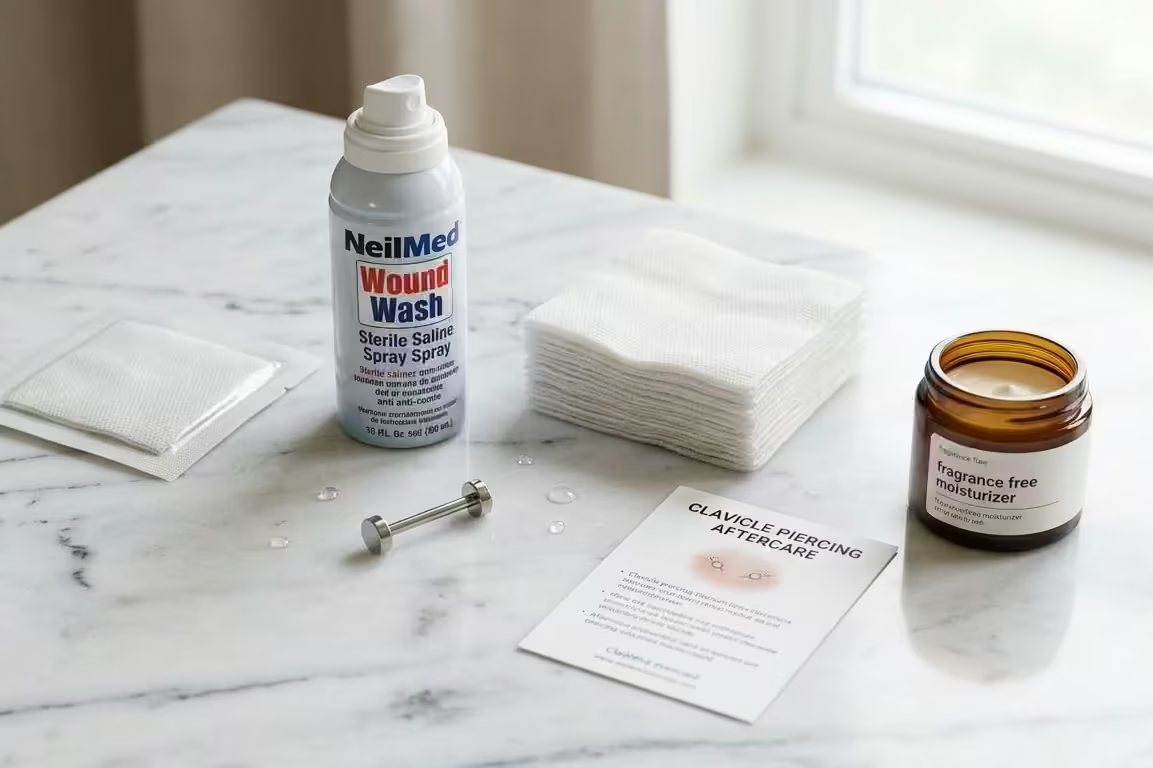
Twice-daily cleaning with sterile saline wound wash is the professional standard. NeilMed Wound Wash and similar sterile isotonic saline sprays are ideal — they are pre-mixed to the right concentration and delivered in a sterile single-use spray that does not introduce bacteria the way a cotton ball can. Spray directly onto the piercing, let it soak for thirty seconds, then gently rinse. Do not scrub, rotate the jewelry, or use soap, alcohol, or hydrogen peroxide near a healing surface piercing.
Clothing management
This is where most people underestimate the challenge. Necklines, seat belts, bag straps, towels, bedding, scarves, and anything else that passes over the collarbone can become a source of irritation. During the healing period, loose V-neck or wide-scoop necklines work best. Cross-body bags should be switched to hand-held or backpack styles to avoid the strap sitting directly on the piercing. Seatbelts may need a small padded cover to reduce friction on long drives.
Sleeping position
If you are a side sleeper who rolls toward the pierced side, expect to have some interrupted nights in the early healing period. Pressure on the piercing during sleep is a significant source of irritation. Some people find sleeping with a travel pillow — wearing it around the neck to keep their head from rolling to the pierced side — helpful during the early weeks.
What to avoid
Swimming in pools, hot tubs, rivers, or the ocean should be avoided during the healing period. Chlorinated and natural water both carry bacteria that can compromise a healing surface piercing. If you must swim, a waterproof dressing over the piercing offers some protection, but it is not foolproof. Sun exposure directly on the piercing can also cause irritation — sunscreen should not be applied directly to a healing piercing, so cover it with a light dressing if you will be in strong sun.
Jewelry for Clavicle Piercings: What Works and What Does Not
Jewelry choice is critical for surface piercings. The wrong jewelry is one of the fastest routes to rejection, irritation, and scarring. Here is what you need to know.
The surface bar
A surface bar — also called a staple bar — is the standard choice for clavicle piercings. It is shaped specifically for surface piercings: a 90-degree bend at each end brings the decorative ends flat against the skin, while the bar beneath the surface follows the natural contour of the body. This design minimises the leverage the jewelry exerts on the tissue, which is the primary cause of rejection in surface piercings.
Surface bars should be internally threaded or threadless — meaning the thread is on the inside of the barbell post, not the outside. External threads are rougher and can damage the healing tissue each time the jewelry is inserted or removed. Any reputable studio working with surface piercings should be using internally threaded or threadless jewelry as standard.
The dermal anchor
Some piercers offer a dermal anchor as an alternative for the collarbone area. A dermal is a single-point piercing — one hole instead of two — with a flat foot anchored under the skin and a single decorative top visible above it. Dermals give a different aesthetic: a single point rather than two connected ends, like a gemstone embedded in the skin.
Dermals in the clavicle area have advantages and disadvantages compared to surface bars. They create less tissue leverage, which can reduce the risk of migration. But they are also more difficult to remove once established, and if they do reject, they can leave a more pronounced scar than a surface bar. They are also more vulnerable to being knocked, as there is nothing stabilising them against lateral pressure.
| Jewelry Type | Advantages | Disadvantages |
| Surface Bar | Designed for surface piercings, distributes pressure well, and is stable | Two visible ends, can catch on clothing at both points |
| Dermal Anchor | Single point, lower profile, less leverage on tissue | Harder to remove, vulnerable to lateral knocks, and can scar more if rejected |
Material matters
For a healing clavicle piercing, implant-grade titanium is the material most professional piercers recommend. It is lightweight — important for a surface piercing where the weight of the jewelry influences migration risk — and completely hypoallergenic.
Implant-grade steel is acceptable for most people but contains trace nickel, which can cause sensitivity in some individuals. Solid 14k or 18k gold is an excellent long-term choice for a healed piercing. Acrylic, mystery metal, and fashion jewelry brands have no place near a healing surface piercing.
Rejection, Migration, and Scarring: The Honest Conversation
This is the section most piercing articles gloss over, and it is the most important one for anyone seriously considering a clavicle piercing.
Surface piercings reject at a significantly higher rate than standard piercings. The body does not naturally accommodate foreign objects lying beneath a flat, frequently moving skin surface. Its instinct is to push them out — gradually, over weeks or months, moving the jewelry closer and closer to the surface until the skin thins out and the jewelry eventually breaks through. This process is called rejection, and the movement of the jewelry toward the surface during the process is called migration.
Signs that your clavicle piercing may be rejecting
The jewelry appears to be sitting higher or closer to the surface than it did when it was fresh. The skin between the two ends of the bar is becoming thinner and more translucent. You can see the outline of the bar beneath the skin that you could not before. The area is persistently red, sore, or flaky despite good aftercare. Any of these signs warrants a visit to your piercer for assessment.
Catching a rejection early and removing the jewelry yourself — or having your piercer remove it — results in a smaller, neater scar than leaving it until the body fully heals. Once a surface piercing is rejected completely, the resulting scar is typically more noticeable than one removed proactively at the first signs of migration.
❝ Removal at the first sign of rejection is not giving up. It is making a smart decision that protects your skin from more significant scarring. You can always be re-pierced in the same area once the skin has fully healed.
Minimising rejection risk
While rejection cannot be entirely prevented, several factors significantly influence its likelihood and speed. Quality jewelry — specifically implant-grade titanium surface bars from reputable suppliers — reduces the body’s inflammatory response to the foreign object.
Correct placement by an experienced piercer reduces the mechanical stress on the tissue. Consistent, thorough aftercare reduces the number of additional irritations the piercing experiences during healing. A lifestyle with minimal physical contact or friction at the piercing site gives it the best possible chance.
About scarring
All surface piercings leave some mark when removed. The size and visibility of that scar depend on how the piercing was done, how long it was in, whether it was removed proactively or left to reject fully, and individual skin characteristics.
People with a tendency toward keloid scarring should discuss this specifically with their piercer before getting a clavicle piercing, as the collarbone area can be prone to raised scarring in susceptible individuals.
Is a Clavicle Piercing Right for You? An Honest Self-Assessment
This is the question that deserves the most honest answer. Clavicle piercings are not right for everyone, and that has nothing to do with how much you want one. It has to do with lifestyle, skin type, occupation, and realistic commitment to aftercare.
You are a good candidate if…
You have a relatively sedentary lifestyle, or you can easily control your clothing choices. You work in an environment where professional dress does not require tight collars, lanyards, or anything that regularly crosses the collarbone.
You are committed to twice-daily aftercare for at least six months without exception. You can adjust your sleep position if needed. You have no personal or family history of keloid scarring. You understand and genuinely accept that this piercing may eventually reject, and that outcome will not devastate you.
You should reconsider if…
Your job or lifestyle involves frequent physical contact at the collarbone — sports, manual labour, regular uniform wearing with tight collars or lanyards, or frequent swimming. You have skin that tends toward keloid or hypertrophic scarring. You are prone to forgetting or deprioritising aftercare routines.
You are expecting a piercing that will last indefinitely with minimal commitment. None of these factors makes the piercing impossible, but they do meaningfully reduce the chances of a good long-term outcome.
It is also worth considering timing. Getting a clavicle piercing before a summer of beach holidays, a physically demanding work period, or a season where you will be wearing formal clothing with constrictive necklines is not ideal timing. The best time to get a clavicle piercing is when you have a predictable, relatively low-friction few months ahead of you.
Cost: What to Budget for a Clavicle Piercing
Clavicle piercings cost more than standard piercings, and that premium is justified. The skill, time, and precision required from your piercer is significantly greater than for a simple lobe or nostril piercing.
| Cost Component | Typical Range (USD) |
| Piercing service fee | $60–$100 |
| Implant-grade titanium surface bar | $30–$70 |
| Sterile saline aftercare | $8–$15 |
| Piercer tip (recommended) | $15–$25 |
| Realistic total | $113–$210 |
This is not the piercing to save money on by going to the cheapest studio available. The difference between a well-placed clavicle piercing and a poorly placed one is not just aesthetic — it is the difference between a piercing that has a chance of longevity and one that rejects within months. For more on the cost considerations that apply to surface and body piercings generally, our article on types of body piercings with pictures is a useful companion read.
Frequently Asked Questions
Can I get a clavicle piercing if I have a lot of muscle or fat in the area?
Body composition affects surface piercing placement. Very thin skin over a prominent collarbone can actually make the piercing more difficult to place because there is less tissue to work with. More subcutaneous tissue in the area can be easier to pierce but also creates more movement, which can affect healing. Your piercer will assess your specific anatomy and advise on the best placement and whether a surface bar or dermal makes more sense for your body.
How do I know if my clavicle piercing is infected vs. just irritated?
This is one of the most common questions new surface piercing owners have, and the distinction matters because the solutions are different. Irritation presents as redness and tenderness at the piercing site, possibly with small bumps, and generally improves with better aftercare and reduced friction.
Infection presents as spreading redness, significant swelling, warmth, throbbing pain, and yellow or green discharge. If you are seeing signs of infection rather than irritation, see a doctor rather than trying to treat it yourself — and do not remove the jewelry unless advised to, as removing it can trap the infection inside the tissue.
Can I get both collarbones pierced at the same time?
Technically, yes, but most experienced piercers recommend against it. Two simultaneous surface piercings in a high-movement area double the aftercare demands and the potential for irritation from clothing and daily activity.
It also means that if one develops problems, you will be managing complications on both sides at once. Getting them done separately — with the first fully healed before attempting the second — gives each piercing the best individual chance of success.
Will a clavicle piercing affect how I can dress?
During healing, yes, meaningfully. Certain necklines, high-necked tops, scarves, jewellery that sits at the collarbone, cross-body bag straps, and seat belts all become things you need to navigate carefully. Once fully healed, the impact on your wardrobe is much less, though you will always want to be aware of anything that puts sustained pressure or friction directly on the piercing site.
Clavicle Piercing: Beautiful, Demanding, and Completely Worth It — If You Are Ready
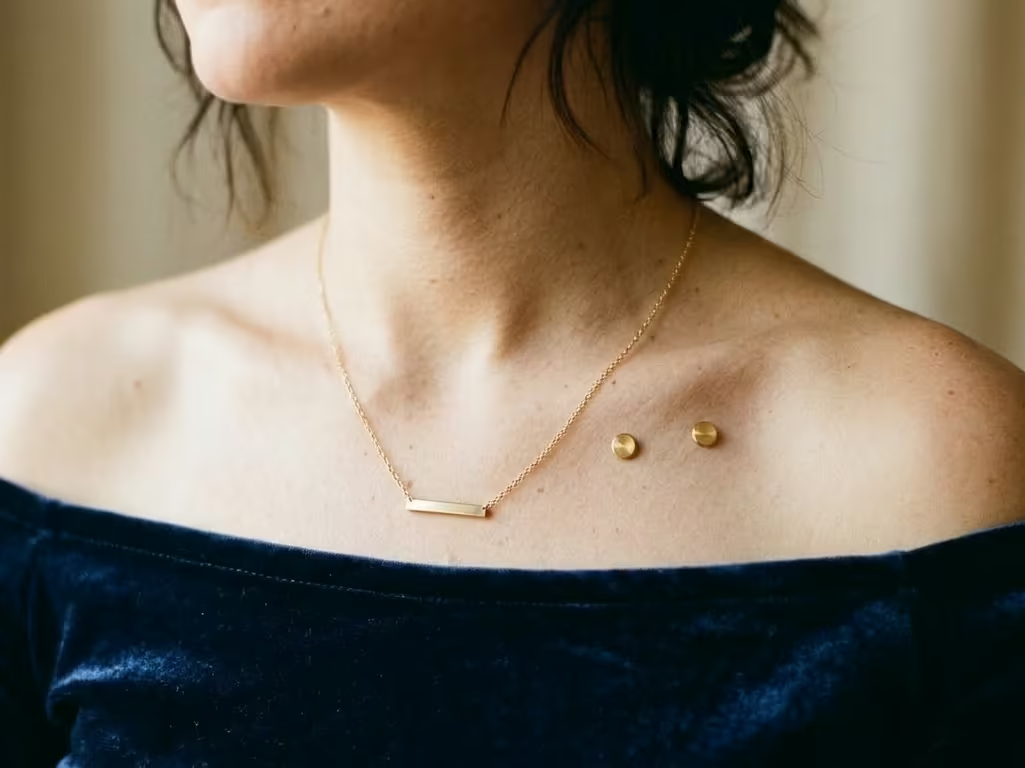
The clavicle piercing is one of the most visually striking body piercings you can get. When it heals well and sits beautifully, it is the kind of jewelry that genuinely transforms the way a neckline looks. It is elegant, unusual, and deeply personal.
But it asks a lot in return. It asks for consistent daily care over many months. It asks you to rethink your wardrobe during healing. It asks for patience when the healing is slow, and for honesty when the signs suggest it might be migrating. It asks you to find a piercer who genuinely knows surface work — not just someone who has a needle and a low price.
Go into it with all of that understood, and a clavicle piercing can be one of the most rewarding pieces of body jewelry you’ve ever committed to. Go into it underprepared, and it is one of the more frustrating piercing experiences available. The choice is yours — and now you have everything you need to make it well.
If you are exploring other body piercing options at the same time, our guide to types of body piercings with pictures covers the full landscape of what is available. And if you are building a curated ear look alongside your body-piercing journey, our deep dive into the evolution of ear piercings from ancient Egypt to modern trends is a fascinating read on how we got to where piercing culture is today.