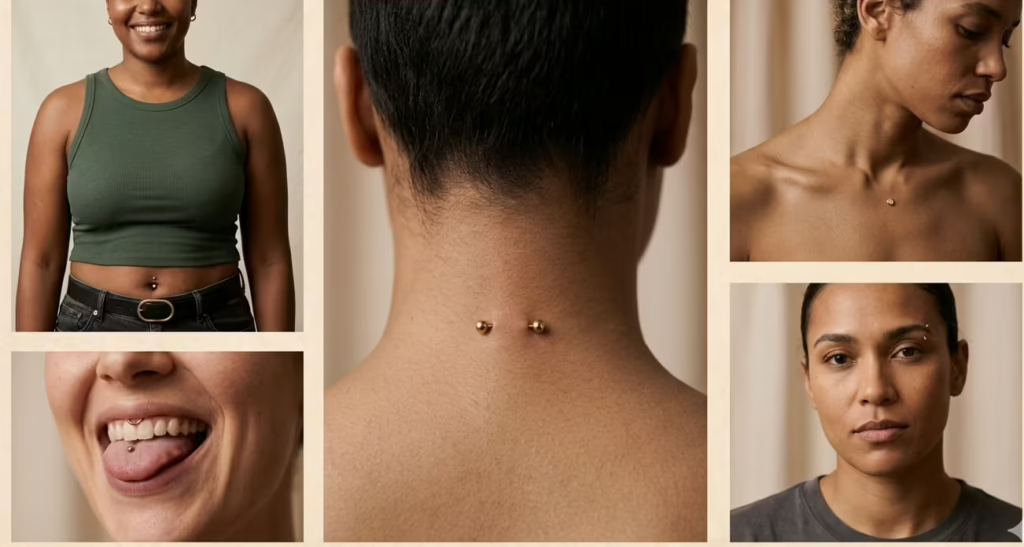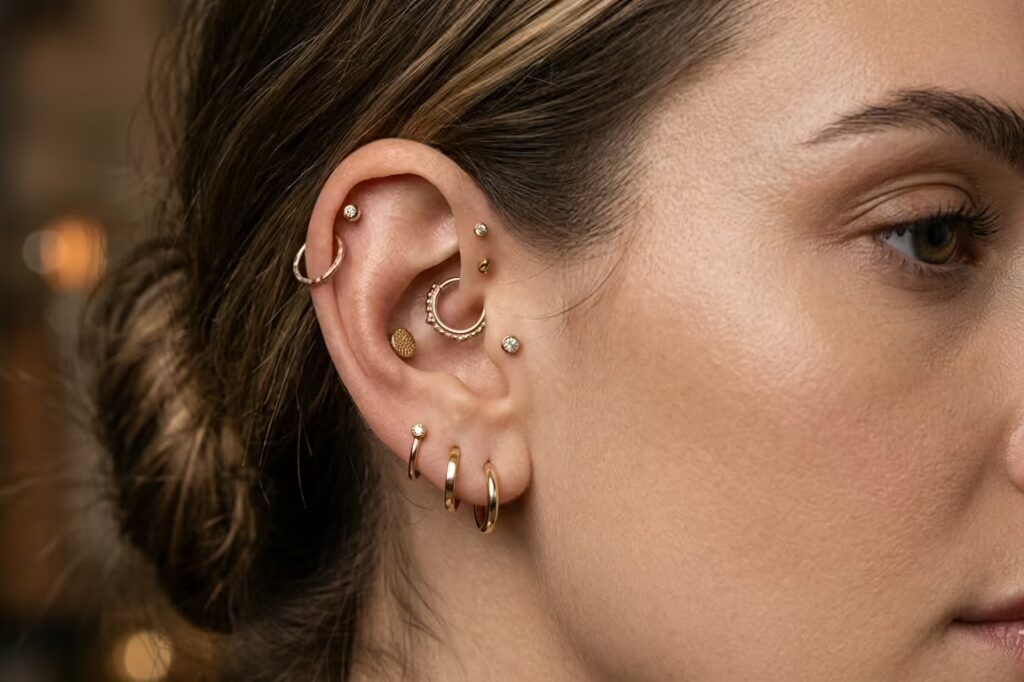
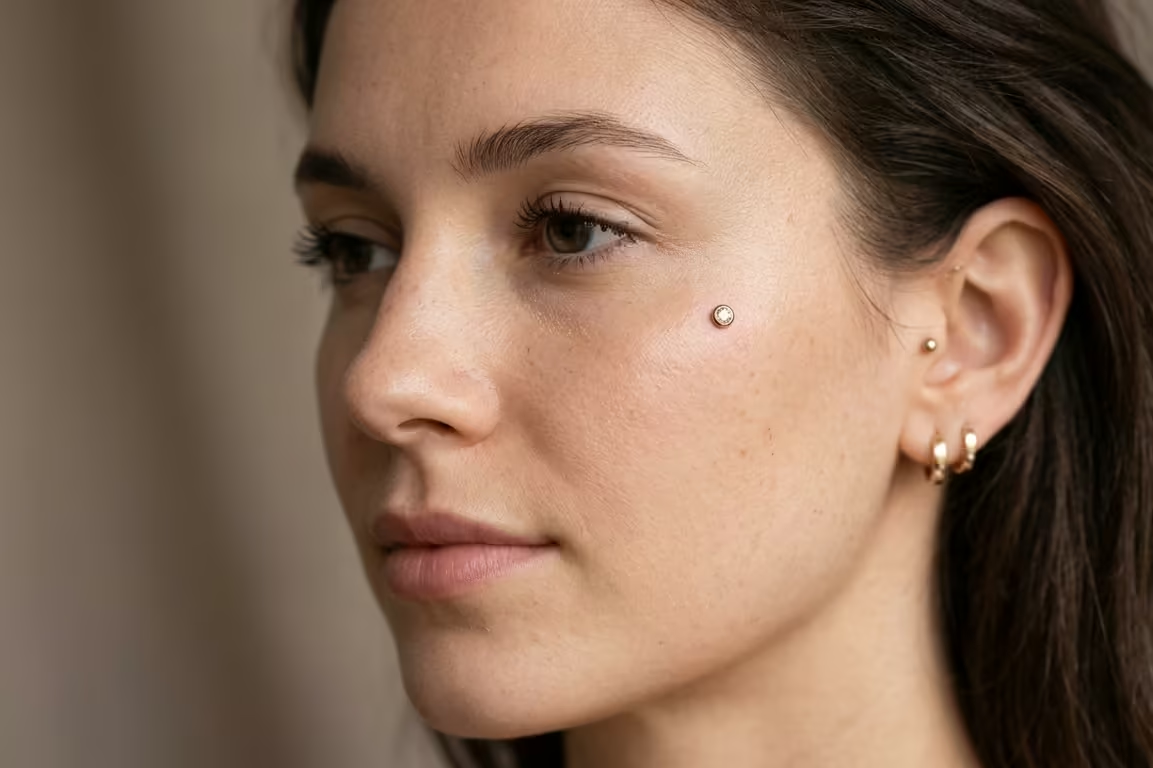
Dermal piercings look like gemstones set directly into the skin. There is no visible entry or exit point. Just a single sparkling top sitting flat against any surface of the body you choose.
That effect is exactly what makes them so popular. But dermals work very differently from standard piercings. Understanding how they work and what they truly cost helps you make a confident, informed decision.
This guide covers every cost involved, from the initial appointment to eventual removal. It also covers what affects the price, what to look for in a studio, and everything else you need to know before booking.
❝ A dermal piercing is a single-point surface piercing. It has only one visible end. The anchor sits beneath the skin and holds the decorative top in place above the surface.
What Is a Dermal Piercing?
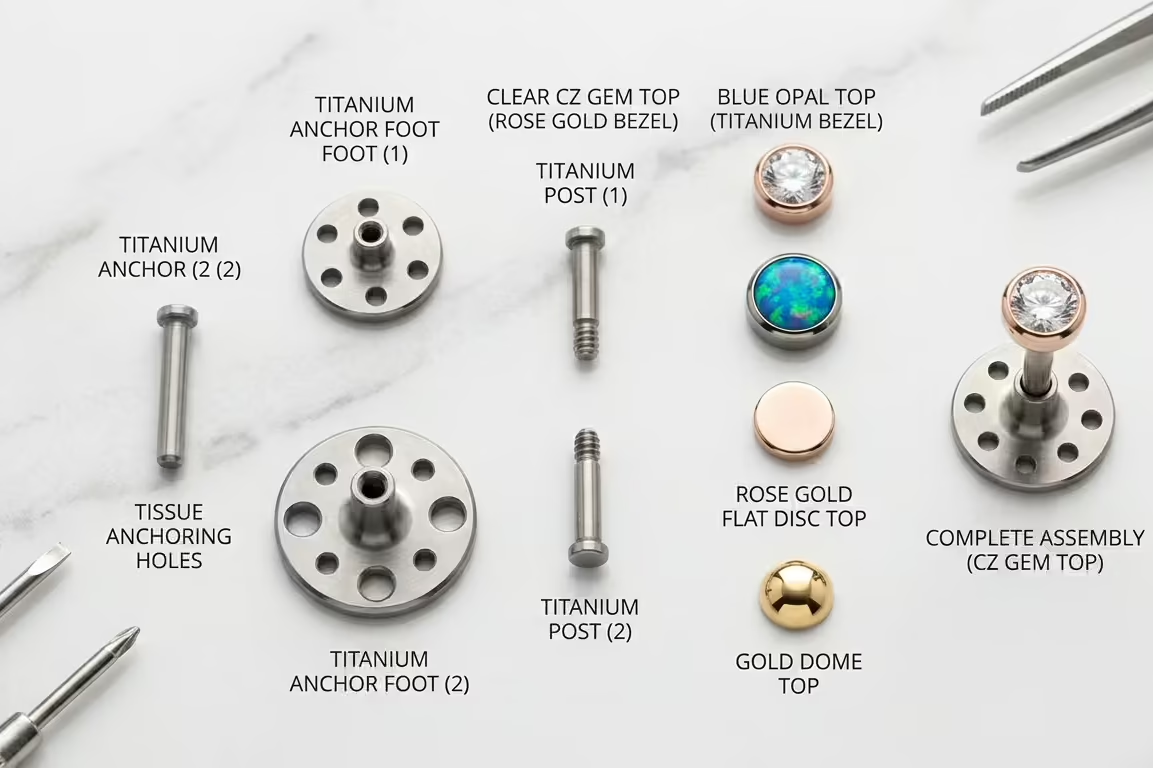
A dermal piercing, also called a microdermal or single-point piercing, uses a small anchor inserted just below the skin surface. The anchor has a flat foot with small holes. Over time, your skin heals around those holes and holds the anchor firmly in place.
The decorative top screws onto the anchor post. Only the top is visible from outside. This creates the look of a gem floating on skin with nothing holding it there.
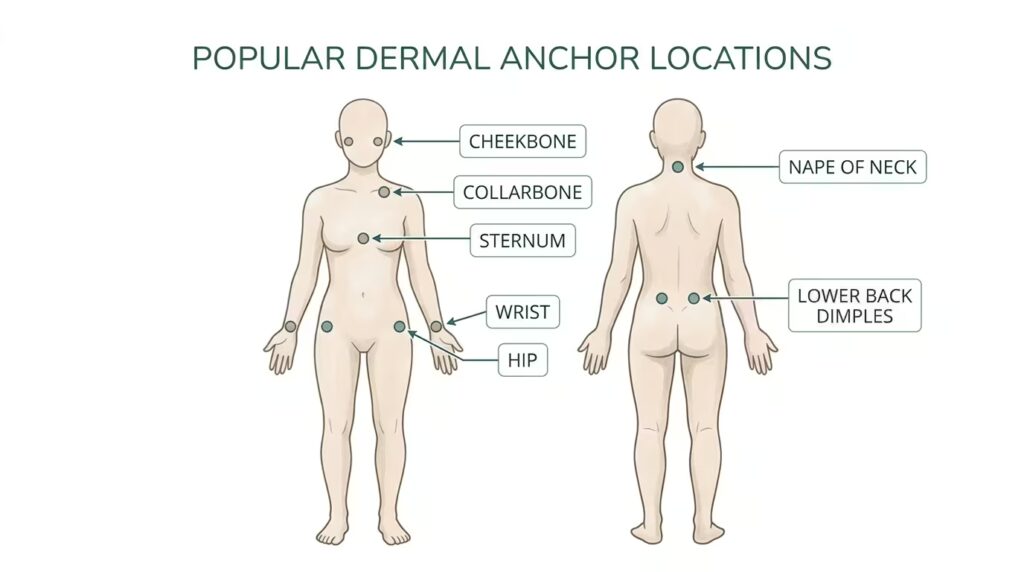
Dermals can be placed almost anywhere on the body with enough flat skin. Popular dermal placements include the cheekbone, collarbone, nape of the neck, chest, lower back, hip, and wrist.
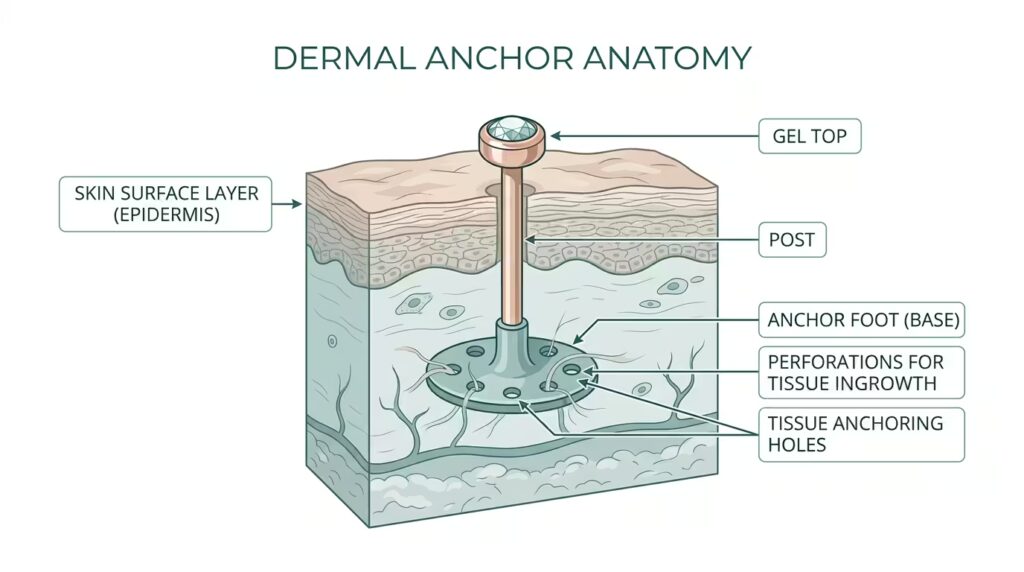
The procedure uses either a hollow needle or a dermal punch. A dermal punch removes a tiny circle of skin to create a pocket for the anchor. The needle method moves tissue aside without removing it.
Both methods are used by professional piercers. Your piercer will recommend the method best suited to your chosen placement and skin type.
How Much Does a Dermal Piercing Cost?
The base price for a single dermal at a reputable studio is $50 to $100. This typically includes the procedure and initial jewelry. But that is rarely the full picture.
When you factor in all real costs, a single dermal runs closer to $88 to $165 all in. Here is the complete breakdown.
| Cost Component | Typical Range (USD) |
| Piercing service fee | $50–$80 |
| Implant-grade titanium anchor and top | $20–$50 |
| Sterile saline aftercare spray | $8–$15 |
| Tip for your piercer (recommended) | $10–$20 |
| Realistic total per dermal | $88–$165 |
Getting multiple dermals at the same placement in one session often earns a small discount. Ask studios about package pricing when booking.
Always confirm what is included in the quoted price before you arrive. Some studios quote the service fee only and bill jewelry separately.
What Affects the Price of a Dermal Piercing?
Studio reputation and location
Studios in major cities with higher operating costs charge more. A reputable studio in New York or Los Angeles may charge $80 to $100 for the service alone.
Location does not equal quality. A skilled piercer in a smaller city may do better work than an average piercer in a trendy urban studio. Portfolio and reputation matter more than address.
Piercer experience
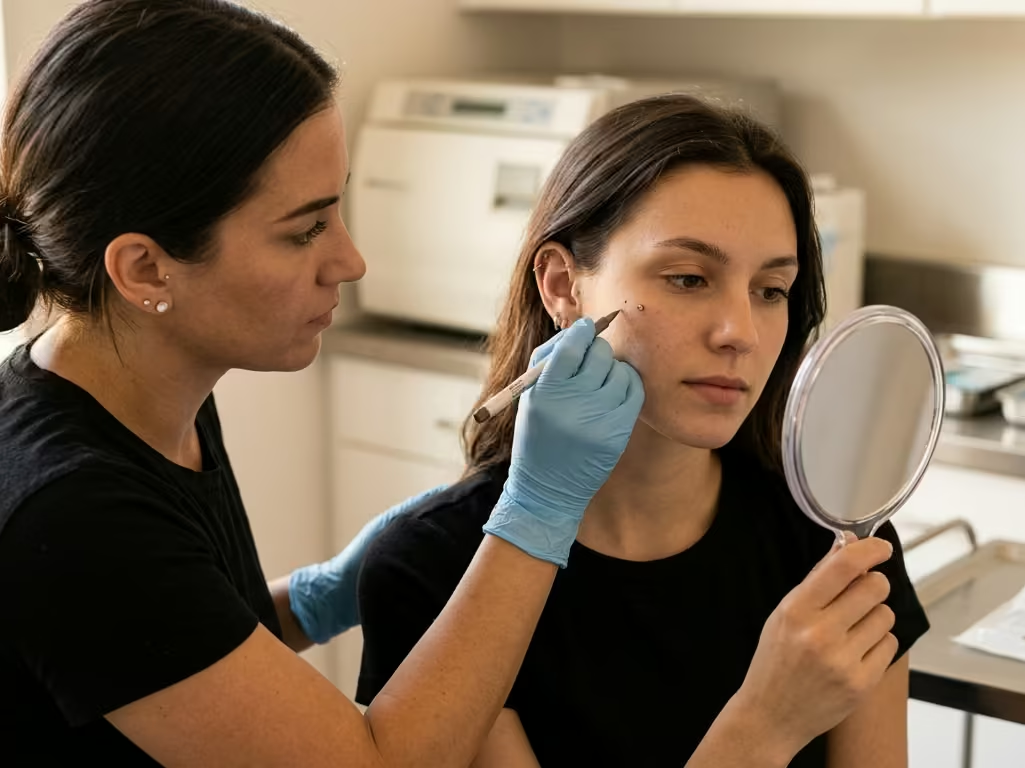
Dermal piercings require precise anchor placement. An anchor set too shallow rejects quickly. One set too deep is more painful to remove. Experienced piercers consistently get this depth right.
That skill and track record justify a higher fee. It is one of the clearest cases in piercing where paying more upfront saves you real money and discomfort later.
Jewelry quality
Implant-grade titanium anchors cost more than steel but are significantly safer for long-term tissue contact. Gold tops for healed dermals still cost more. The jewelry grade directly affects both price and outcome.
Avoid studios using mystery metal or unbranded anchors. The anchor lives beneath your skin for months or years. Material quality matters more here than in almost any other piercing.
Placement complexity
Some placements demand more skill and take more time. High-movement areas like the wrist or hip are technically harder to place correctly and significantly harder to heal.
Some piercers charge a small premium for these placements. That premium reflects genuine additional skill and the extended aftercare guidance these placements require.
Regional Pricing: What to Expect in Your Country
| Country | Budget Studio | Reputable Studio |
| United States | $50–$70 | $80–$130 |
| Canada | CAD 55–75 | CAD 90–145 |
| United Kingdom | £30–£50 | £60–£95 |
| Australia | AUD 60–80 | AUD 100–150 |
| Kenya / East Africa | KES 2,000–4,000 | KES 5,000–9,000 |
These ranges cover the service fee and standard titanium jewelry. Premium gold top upgrades will add to these totals in every market.
Jewelry Options and What They Cost
Dermal jewelry has two components. The anchor goes beneath the skin and stays. The top is the decorative visible piece that screws onto the anchor post.
The anchor foot size affects how well the piercing settles. Larger feet anchor more securely but take longer to heal around. Your piercer will select the right size for your placement.
| Material | Cost Range | Best For | Notes |
| Implant-grade Titanium | $20–$50 | Fresh and healed dermals | Lightweight, hypoallergenic, anodised colours available. |
| Implant-grade Steel | $10–$30 | Non-sensitive skin only | Contains trace nickel. Not ideal for reactive skin. |
| Solid 14k/18k Gold | $60–$150+ | Top upgrades on healed dermals | Premium look. Anchor stays titanium; only the top upgrades. |
| Mystery Metal / Fashion Brand | Under $10 | Avoid entirely for dermals | Not body-safe. Causes irritation, rejection, and infection. |
Gem tops, opal tops, and flat disc tops are the most popular choices for dermal surfaces. Once healed, the top can be changed without disturbing the anchor beneath.
Have your piercer make the first top change. They know how to stabilize the anchor during removal to prevent dislodging it.
Healing Time and Aftercare Costs
Dermal piercings take three to six months for initial healing. Full anchor stabilisation takes up to twelve months for most placements.
High-movement areas like the wrist or hip take longer. Low-movement areas like the cheekbone or collarbone settle more quickly.
Daily aftercare routine
Clean twice daily with sterile saline wound wash. Spray directly onto the dermal top and surrounding skin. Leave for thirty seconds then rinse gently with clean water.
Do not rotate or move the anchor. Unlike traditional piercings, you should never try to shift a dermal. Tissue is actively growing through the anchor foot holes to secure it in place.
Avoid snagging the dermal on clothing, towels, or hair. A snagged anchor can be partially pulled from the skin. This is painful and significantly sets back healing.
What to avoid
Stay out of pools, hot tubs, and open water during healing. Chlorine and natural waterborne bacteria can enter the pocket around the anchor, causing infection.
Keep skincare products, makeup, and sunscreen away from a healing dermal. These introduce bacteria and irritate the tissue around the anchor site.
❝ Aftercare for dermals must be consistent. The anchor is healing into your skin for months. One snagging incident or a missed cleaning routine can set the process back significantly.
The Hidden Cost: Rejection and What It Means for Your Budget
Dermal piercings have a higher rejection rate than standard piercings. This is the most important financial consideration that most dermal cost guides skip entirely.
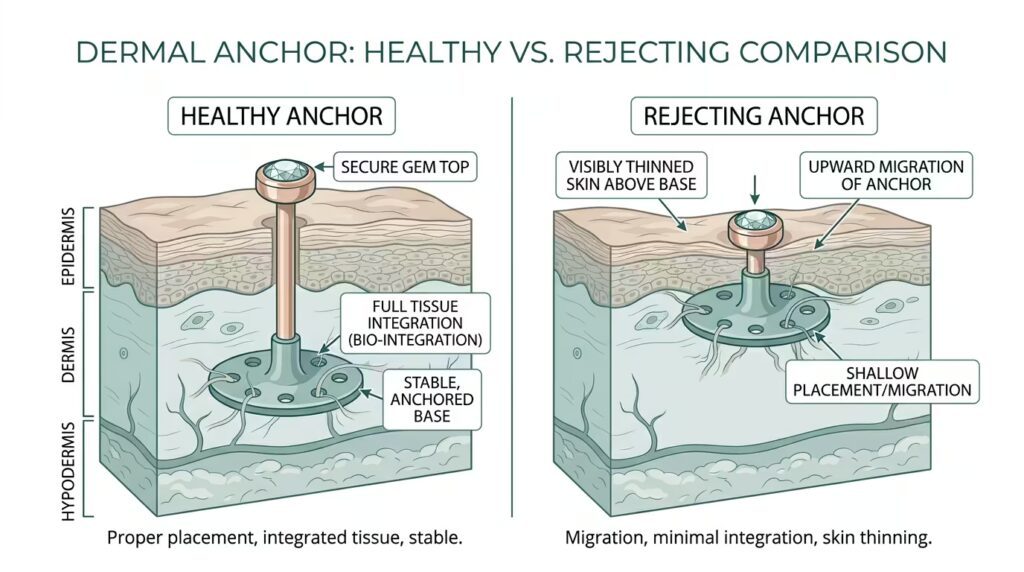
Rejection happens when the body treats the anchor as a foreign object and gradually pushes it toward the surface. The skin above the anchor thins over time until it eventually breaks through.
Some dermals last for years with no issues. Others reject within months despite perfect aftercare. Placement, lifestyle, jewelry quality, and genetics all play a role.
Signs your dermal is rejecting
The top sits visibly higher than it did originally. The skin above the anchor looks thinner and more transparent than before. The area stays persistently red or flaky despite clean aftercare.
Early removal by your piercer results in a small, neat scar. Leaving a rejecting dermal until it fully breaks through leaves a significantly more noticeable scar.
Placement risk at a glance
| Lower Rejection Risk | Moderate Rejection Risk | Higher Rejection Risk |
| Cheekbone, Collarbone, Chest, Nape of neck | Lower back, Hip, Sternum | Wrist, Hand, Ankle, Ribs |
High-movement areas reject faster because the anchor is constantly disturbed by surrounding tissue movement. Placement choice is one of the most important decisions in dermal longevity.
The Cost of Dermal Removal
Dermal removal is not free and not always simple. Many people do not budget for it when getting a dermal, but it is a real and very likely eventual expense.
Professional dermal removal at a piercing studio costs between $30 and $80 per dermal. Price varies with the anchor’s level of embedment and the studio’s standard rates.
How removal works
For a well-maintained dermal that has not become deeply embedded, a skilled piercer uses gentle pressure and a tool to ease the anchor foot out. This is quick and manageable.
For embedded dermals where the skin has completely grown over the anchor, removal is more involved. A small incision may be needed. In some cases, a medical professional must perform it.
Medical removal at a clinic or dermatology office costs $100 to $300 or more. Having a rejecting dermal removed early by your piercer is far smarter financially and physically.
A firm warning on DIY removal
Never attempt to remove a dermal anchor yourself. The anchor foot is designed to stay in place. Pulling without the correct technique tears surrounding tissue and causes significant scarring.
Self-removal also creates an open wound you cannot properly treat. Professional removal is always the correct approach, regardless of how straightforward it may look.
❝ Budget for removal from the day you get your dermal. It is not a question of whether you will need it removed. It is a question of when and how cleanly it comes out.
Why Cheap Dermal Piercings Cost More in the Long Run
A $30 dermal from a budget studio sounds appealing. What that price usually delivers is a very different story.
Low-cost studios often use non-implant-grade anchors. These metals cause chronic inflammation and accelerate rejection. The dermal that cost $30 ends up rejected and scarred within weeks.
Inexperienced piercers frequently set anchors too shallow. A shallow anchor sits in the upper skin layers rather than the dermis. These are rejected almost universally within months, regardless of aftercare.
What quality actually costs
A studio using implant-grade titanium from reputable suppliers, with a piercer who has proven long-lasting dermal results, charges $70 to $120 per dermal. That investment buys proper material and correct placement.
The upfront cost difference between quality and budget is around $40 to $60. The difference in outcomes can be months of healing trouble, early rejection, and a permanent scar on your face or body.
How to Choose the Right Studio for a Dermal Piercing
Ask to see healed dermal results
Any experienced dermal piercer has a portfolio of healed results. Look specifically for dermals that have lasted more than six months and sit flat without visible redness or migration.
Fresh results only show that a piercer can place a needle. Healed results show that they can place an anchor that actually stays.
Ask about their jewelry suppliers
A professional studio can name their jewelry suppliers. Implant-grade titanium from Anatometal, Industrial Strength, or BVLA is a strong positive signal. Unnamed metal is a red flag.
Ask about their anchor insertion method
Both needle and dermal punch methods are legitimate. A piercer who can explain their method clearly and discuss which is better for your placement demonstrates real expertise.
Check licensing and professional body membership
APP (Association of Professional Piercers) membership means a studio has agreed to meet specific safety, sterilisation, and jewelry standards. It is a useful baseline quality check.
In many countries, studios also require local health board licensing. A licensed studio has been inspected for hygiene. Ask to see the certificate if it is not displayed in the studio.
Frequently Asked Questions
Can I change my dermal top myself?
Once the dermal is fully healed, the top can be unscrewed and replaced. For the first change, have your piercer do it.
Applying the wrong angle of pressure while changing a top can dislodge the anchor beneath. Watching your piercer do it once makes subsequent self-changes straightforward and safe.
Do dermal piercings leave permanent scars?
Most dermal piercings leave a small mark when removed. The size depends on how long it was in, whether it was removed proactively or left to reject fully, and your individual skin type.
Dermals removed cleanly and early tend to leave a small, flat, nearly invisible mark. Deeply embedded or fully rejected dermal tend to leave a more noticeable indented or raised scar.
Can I get a dermal piercing if I have sensitive skin?
Sensitive skin does not automatically disqualify you from dermals. The most important factor is the material of the jewelry. Implant-grade titanium is the safest choice for reactive skin.
Discuss your skin sensitivity with your piercer before booking. They can advise on placement and jewelry choice to minimise the risk of a reactive healing response.
How do I know if my dermal is infected or just irritated?
Irritation presents as mild redness and tenderness that responds well to better care. Infection shows as spreading redness, swelling, warmth, throbbing pain, and coloured discharge.
If you suspect an infection, see a doctor. Do not remove the anchor without medical advice. Removing infected jewelry can trap the infection beneath the skin.
Can I get a dermal re-pierced in the same spot?
Yes, but only after the scar tissue from the original piercing has fully softened. This typically takes three to six months after removal.
Re-piercing through scar tissue is more technically demanding. An experienced piercer can assess whether the tissue is suitable and advise on the best approach.
Final Thoughts
The honest price of a well-done dermal piercing is $88 to $165 all in for your first visit. Over its lifetime, factoring in aftercare and eventual removal, budget $150 to $250 per dermal.
That is more than most people expect when they first search for dermal piercing costs. But it reflects the real investment in a piercing that lives beneath your skin for months or years.
Choose a studio with a strong portfolio of healed dermal results. Start with implant-grade titanium. Keep up the aftercare without shortcuts. Do those three things, and a dermal can be one of the most striking pieces of body jewelry you ever choose to wear.For a full overview of body piercing options, check out our guide on types of body piercings with pictures. If you are also considering a surface piercing, like a clavicle piercing, our article on clavicle piercing: everything you need to know covers the experience in useful depth.