Nipple piercings are one of the most popular body piercings for a reason. They are hidden under clothing, versatile in jewelry styles, and genuinely transformative for those who choose them.
But nipple rings are also one of the more demanding piercings in terms of healing time, aftercare commitment, and the importance of getting the procedure done correctly. This guide covers everything: the true cost, the procedure, the healing process, and how to look after your nipple piercings for the long term.
❝ Nipple piercings have one of the longest healing timelines of any common piercing. Understanding that upfront makes the whole experience easier.
What Is a Nipple Piercing?
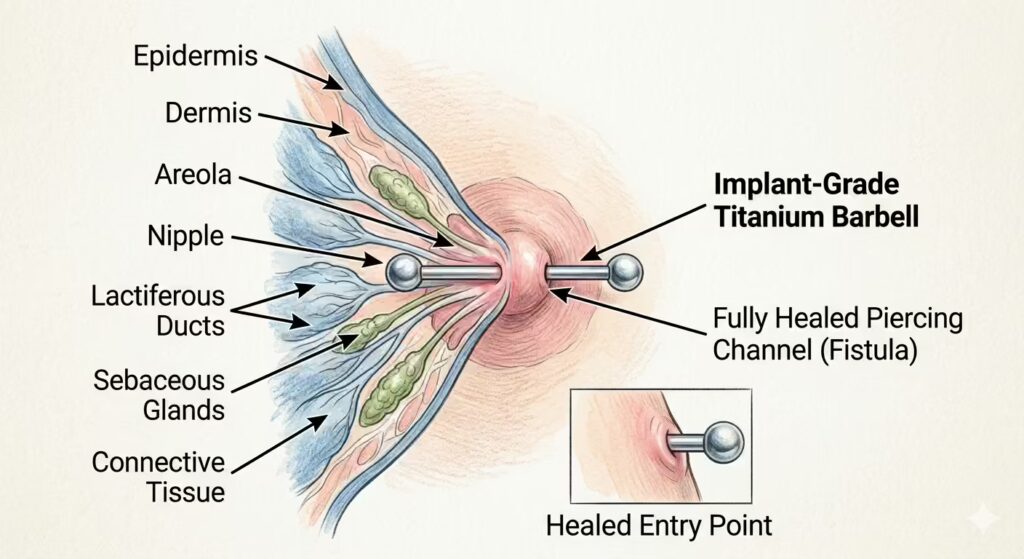
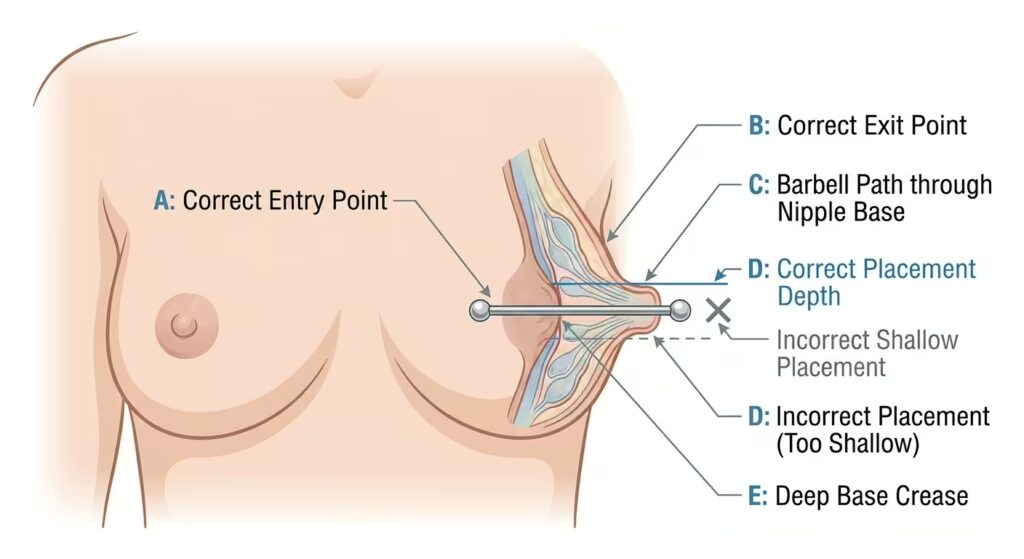
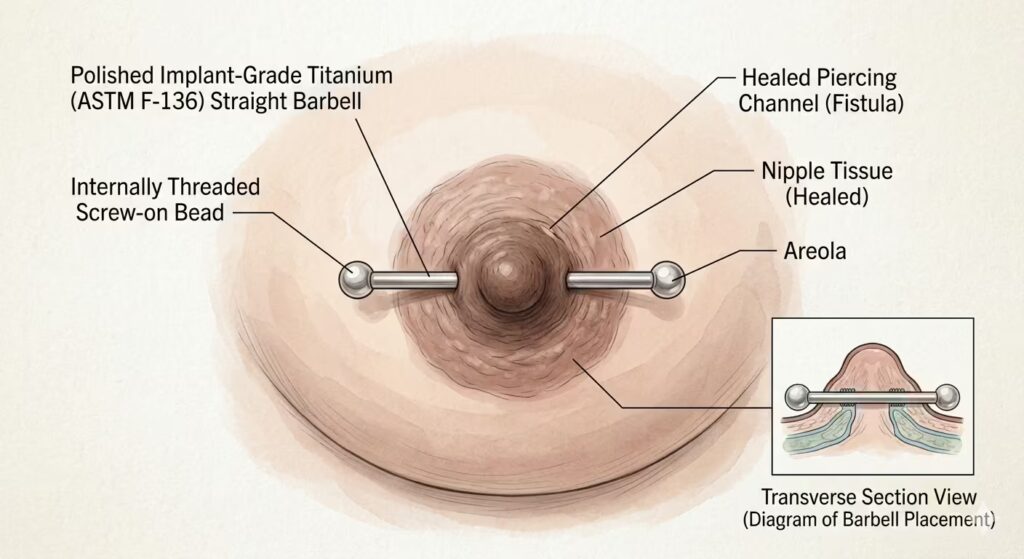
A nipple piercing passes a barbell or ring horizontally through the base of the nipple. The standard placement goes straight through the nipple at its widest point, with jewelry ends visible on each side.
Both men and women get nipple piercings, and the procedure is essentially the same regardless of anatomy. The nipple is a highly vascularised area with concentrated nerve endings, which makes it both sensitive during the procedure and capable of healing relatively well once established.
Many people get both nipples pierced at the same time. This is a personal choice. Healing two simultaneously doubles the care demands but reduces the total healing period to one.
How Much Does a Nipple Piercing Cost?
A single nipple piercing at a reputable studio costs between $40 and $80 for the service fee. Most studios include basic implant-grade titanium jewelry in that price.
When you add aftercare supplies, a potential jewelry upgrade, and an appropriate tip, the realistic all-in cost for one nipple piercing is $65 to $130. For both nipples in one session, many studios offer a small paired discount.
| Cost Component | Typical Range (USD) |
| Service fee (one nipple) | $40–$80 |
| Service fee (both nipples) | $70–$130 |
| Implant-grade titanium barbell (per piercing) | $15–$40 |
| Sterile saline aftercare spray | $8–$15 |
| Tip for piercer (recommended) | $10–$20 |
| Realistic total (both nipples, all-in) | $108–$205 |
Always ask upfront whether the quoted price includes jewelry. Some studios list a service-only fee. Knowing the full picture before you book avoids surprises.
What Affects the Price?
Piercer experience and studio reputation
An experienced piercer charges more because nipple piercings require precise placement. The barbell must pass through the base of the nipple at the correct depth and angle. Placement that is too shallow leads to rejection. Too deep causes unnecessary trauma.
A studio with a track record of well-healed nipple piercings is worth the premium. Ask to see healed examples in their portfolio before booking.
Jewelry material
The material you start with directly affects how the piercing heals. Implant-grade titanium is the professional standard for fresh nipple piercings. It is lightweight, hypoallergenic, and reduces the inflammatory response during healing.
Solid gold is an excellent long-term choice once the piercing is healed. It is not recommended for the initial jewelry because it is heavier than titanium, which can put strain on healing tissue.
Geographic location
Studios in major cities charge more due to higher operating costs. This is not always a reliable guide to quality, but it does reflect the reality of different markets.
Regional Pricing Guide
| Country | Budget Studio (per nipple) | Reputable Studio (per nipple) |
| United States | $40–$55 | $65–$110 |
| Canada | CAD 45–65 | CAD 70–120 |
| United Kingdom | £25–£45 | £55–£90 |
| Australia | AUD 55–80 | AUD 95–150 |
| Kenya / East Africa | KES 2,000–4,000 | KES 5,000–9,000 |
Nipple Piercing Jewelry: What to Use and When
Nipple jewelry comes in two main styles: straight barbells and rings. Each has its own considerations for healing and long-term wear.
Straight barbells
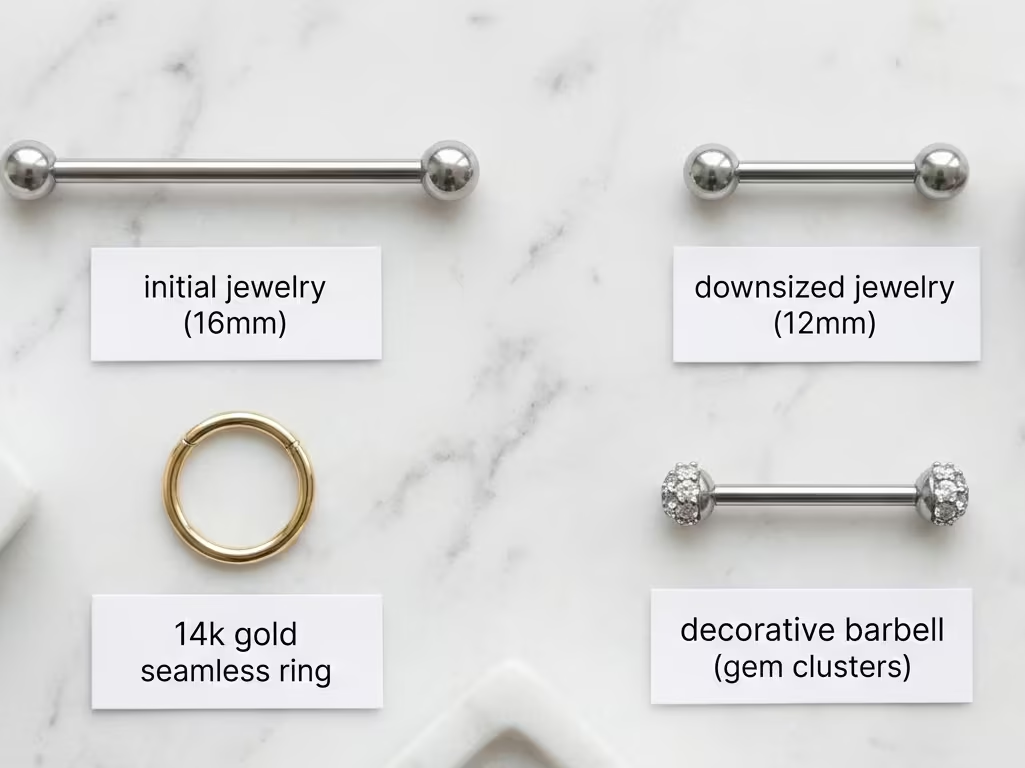
Straight barbells are the professional recommendation for fresh nipple piercings. They sit still, move less, and allow the tissue to heal around the jewelry without constant rotation or irritation.
The initial barbell is slightly longer than your final healed jewelry to allow for swelling. Once the initial swelling settles, around six to eight weeks in, your piercer replaces it with a correctly fitted shorter barbell.
Rings and hoops
Rings are popular for healed nipple piercings and look striking. They are not recommended for the initial healing period because they rotate and move with every body movement, creating constant friction in the healing tissue.
Once your nipple piercing is fully healed, switching to a ring is straightforward. Have your piercer make the first style change to confirm the piercing is genuinely ready.
| Material | Cost Range | Best For | Notes |
| Implant-grade Titanium | $15–$45 | Fresh and healed piercings | Best all-round choice. Lightweight, hypoallergenic. |
| Implant-grade Steel | $10–$30 | Non-sensitive individuals | Contains trace nickel. Not ideal for sensitive skin. |
| Solid 14k/18k Gold | $60–$150+ | Healed piercings | Premium and durable. Too heavy for fresh piercings. |
| Fashion / Mystery Metal | Under $10 | Avoid entirely | Not body-safe. Causes irritation and delayed healing. |
How Painful Is a Nipple Piercing?
Nipple piercings rank among the more painful common piercings. Most people rate the procedure at 6 to 8 out of 10. The nipple has a high concentration of nerve endings, which makes the initial needle pass sharp and intense.
The sensation is brief. The needle pass itself takes less than a second. The few minutes of throbbing that follow settle quickly for most people. The real challenge is the weeks of tenderness during the early stages of healing, not the procedure itself.
People who have gotten both nipples pierced in one session often say the second feels slightly more manageable. The adrenaline from the first helps carry them through.
❝ Eating a proper meal before your appointment and staying well hydrated significantly reduces the intensity of the lightheadedness some people feel after a nipple piercing.
How Long Do Nipple Piercings Take to Heal?
This is where most guides get it wrong. Nipple piercings take 9 to 12 months to fully heal. Some people take up to 18 months. The commonly quoted “3 to 6 months” refers to initial healing, not full maturation.
The nipple heals in a warm, enclosed environment under clothing for most of the day. That warmth and moisture can slow healing and increase the risk of irritation if aftercare is inconsistent.
What healing looks like month by month
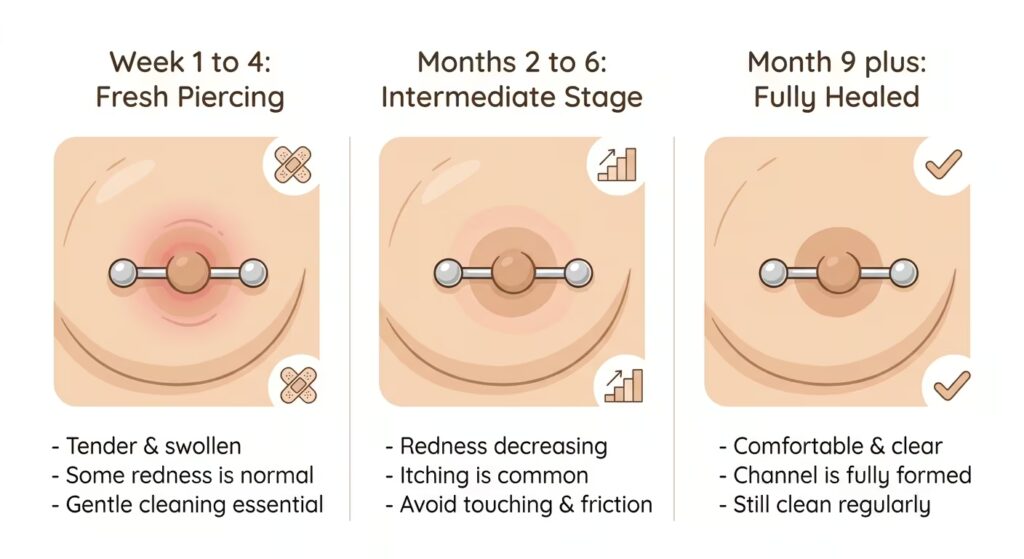
In the first two to four weeks, expect tenderness, some swelling, and clear or whitish discharge around the ends of the barbell. This is normal lymph fluid, not infection.
From weeks four to twelve, the tenderness reduces, and the discharge becomes minimal. The piercing starts to feel more settled but remains reactive to friction from clothing, exercise, and physical contact.
From three months onward, a well-cared-for nipple piercing begins to feel genuinely comfortable most of the time. Discharge is rare. The tissue around the barbell is firmer. You are making real progress, but the piercing is not yet fully healed.
Full healing at nine to twelve months means the piercing is completely comfortable, shows no discharge, and does not react to normal daily movement. Only at this point is it safe to comfortably change to rings or other jewelry styles.
Aftercare: What You Need to Do Every Day
Cleaning routine
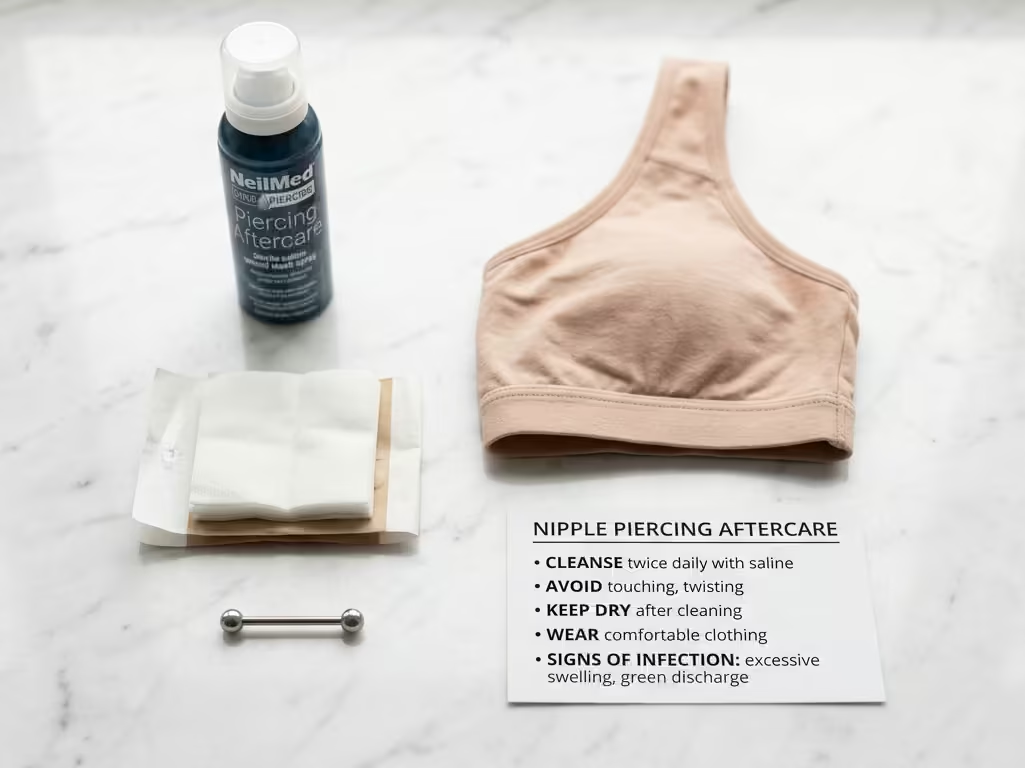
Clean both entry and exit points twice daily with sterile saline wound wash. Spray directly onto the ends of the barbell and the surrounding skin. Let it soak for thirty seconds, then rinse with clean water.
Avoid cotton wool or cotton buds for cleaning. Fibres can catch on the ends of the jewelry and cause irritation. Use non-woven gauze or simply rinse in the shower under clean running water.
Clothing considerations
Friction from clothing is one of the primary causes of slow healing and irritation bumps in nipple piercings. Soft, breathable fabrics that do not rub directly against the jewelry are best during the first few months.
Many people find that a soft sports bra or fitted t-shirt worn directly against the skin reduces how much jewelry moves during the day. Anything that limits unnecessary movement helps.
Avoid lace, rough-textured fabrics, or anything with embellishments over the chest area during healing. These catch on the jewelry ends repeatedly throughout the day.
What to avoid
Do not submerge healing nipple piercings in pools, hot tubs, or open water. The risk of bacterial contamination is high enough to significantly delay healing.
Avoid topical products near healing piercings. Body lotions, perfumes, and shower gels should not make direct contact with the jewelry or the surrounding skin during healing.
Avoid physical contact with the piercing during the healing period. This is one of the most common causes of infection in nipple piercings and is worth being direct about.
❝ Nipple piercings that seem healed at three months often are not. Many people experience a setback by switching to rings or discontinuing aftercare too early. Stay patient.
Risks and What to Watch For
Infection vs. irritation
Irritation is the most common issue with healing nipple piercings. It presents as redness, small bumps around the ends of the jewelry, and tenderness. It responds well to improved aftercare and reduced friction.
Infection is less common but more serious. Signs include spreading redness, significant swelling, throbbing pain, warmth, and coloured discharge. See a doctor if you suspect an infection. Do not remove the jewelry without medical advice.
Rejection and migration
Nipple piercings can reject, particularly if the initial placement was too shallow. Signs of rejection include the barbell appearing to sit higher or closer to the surface over time, and the skin above the bar becoming thin and translucent.
If you suspect rejection, see your piercer promptly. Early removal results in a smaller, neater scar than leaving a piercing to fully break through.
Breastfeeding considerations
Nipple piercings and breastfeeding can coexist but require careful management. Jewelry must always be removed before nursing. Milk ducts are not typically damaged by correctly placed nipple piercings, but professional medical advice from a healthcare provider or lactation consultant is strongly recommended.
If you are planning to breastfeed, discuss the timing of your nipple piercing with both your piercer and your doctor. Getting pierced well in advance and allowing full healing before pregnancy is the most straightforward approach.
Nipple Jewelry: What You Can Wear Once Healed
Once your nipple piercings are fully healed, the jewelry options open up considerably. This is the reward for all those months of patience.
Straight barbells
Straight barbells remain the most stable and comfortable long-term option. Decorative barbells with gem ends, opal tops, or custom-designed heads are widely available. Many people choose matching pairs for a cohesive look.
Rings and circular barbells
Captive bead rings, seamless rings, and circular horseshoe barbells are popular choices for healed nipple piercings. They move with the body more naturally than straight barbells once the tissue is fully established.
Sizing matters. A ring that is too large creates unnecessary movement. A ring that is too small puts pressure on the tissue. Your piercer can advise on the correct diameter for your anatomy.
Shields and specialty jewelry
Nipple shields are decorative pieces that frame the nipple with an ornate outer design, while a standard barbell passes through the center. They create a dramatic look and are available in a huge range of styles.
Shields require a fully healed piercing and are not suitable for everyday long-term wear. They are best reserved for special occasions to avoid the extra weight and movement they introduce.
Frequently Asked Questions
Can I get my nipples pierced if I have inverted nipples?
Yes, inverted nipple piercings are possible and are actually one of the reasons many people seek out nipple piercings. The piercing can encourage the nipple to remain everted over time.
The procedure requires an experienced piercer who understands how to work with the specific anatomy. Placement and depth considerations differ from standard nipple piercings. Always book a consultation first.
Will a nipple piercing affect nipple sensitivity?
Many people report increased sensitivity after a healed nipple piercing. The piercing stimulates the nerve endings in the area, which some people find very positive.
Some people experience temporary reduced sensitivity during the healing period as the tissue adjusts. This typically resolves once the piercing is fully healed. Permanent changes in sensitivity are rare.
Can I exercise with a new nipple piercing?
Light exercise is fine from early on, but high-impact activities that cause significant chest movement should be reduced for the first few weeks. The friction and impact of running or intense training put stress on healing tissue.
Wear a firm, supportive layer directly over the piercing during exercise throughout the healing period. This limits the jewelry’s movement and reduces friction with clothing.
How do I know if my nipple piercing is healed?
A healed nipple piercing is completely comfortable during normal daily activity. There is no discharge. The skin around the jewelry ends looks clear and settled. The jewelry moves smoothly without resistance or discomfort.
If you are unsure, book a check-in with your piercer. They can assess the tissue and give you an honest assessment of where you are in the healing process.
What happens if I want to remove my nipple piercings?
Nipple piercings can be removed at any point. Fresh piercings close quickly once jewelry is removed. Well-healed piercings may remain open for weeks to months after removal, but will eventually close for most people.
Any visible hole or mark left behind typically fades significantly over time. The final appearance depends on how long the piercing has been in place and individual skin characteristics.
Final Thoughts
A nipple piercing costs between $65 and $130 all in per piercing at a reputable studio in 2025. The investment covers not just the procedure but the skill, the safe jewelry, and the guidance that gives you the best chance of a healthy, long-lasting result.
The healing process is the real commitment. Nine to twelve months of consistent aftercare, thoughtful clothing choices, and patience are what stand between you and a fully healed nipple piercing you love.
Choose an experienced piercer. Start with implant-grade titanium. Follow the aftercare without shortcuts. The result is absolutely worth it.
For a broader look at body piercing types and what each involves, see our guide to body piercing types with pictures. For a look at where nipple piercings rank on the pain scale compared to other piercings, read our article on what are the most painful piercings.