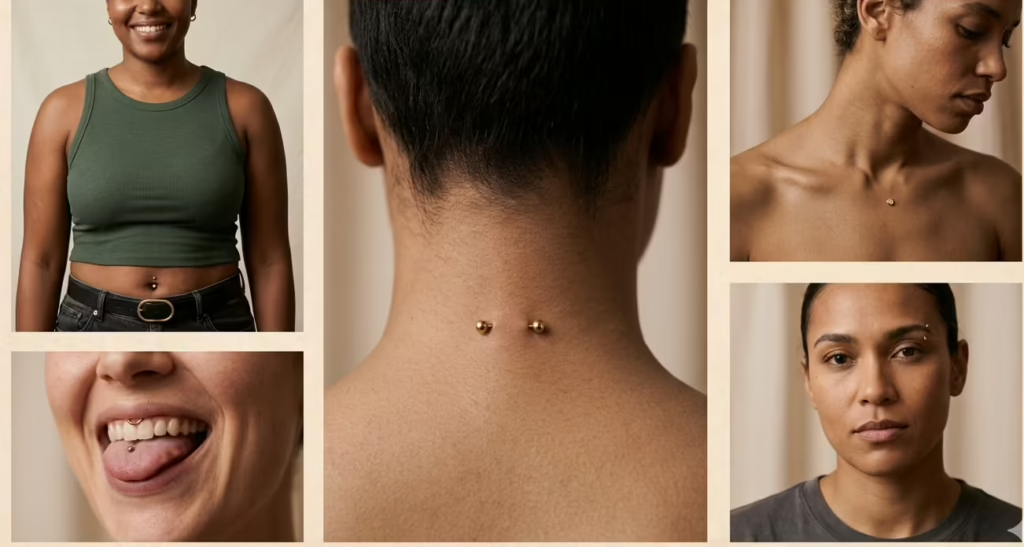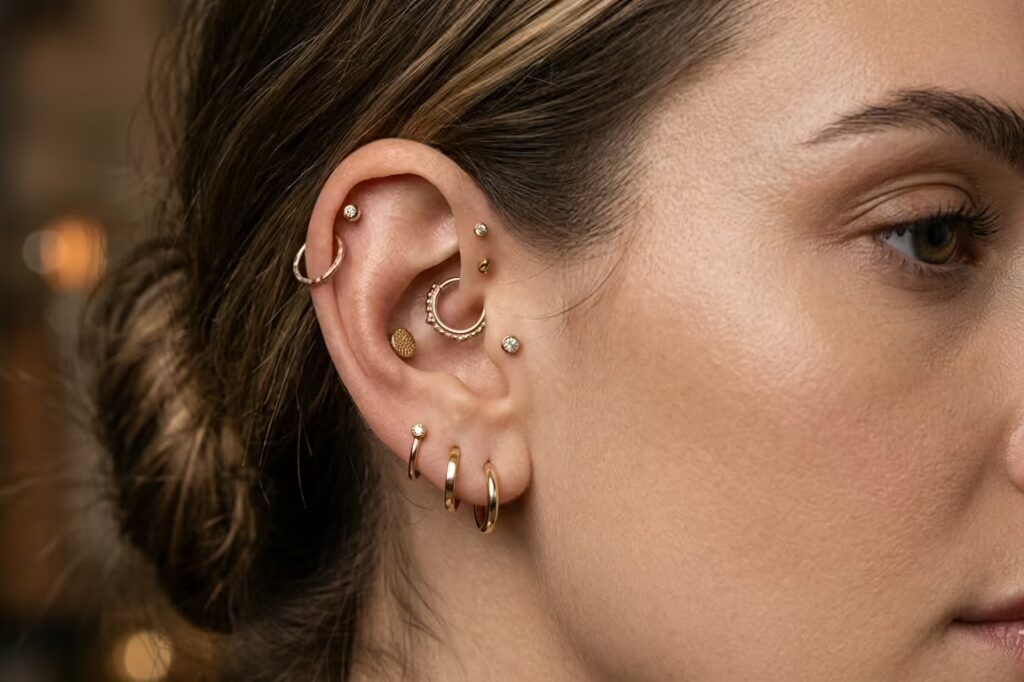
A belly button piercing is one of the most searched piercings online, and for good reason. It is one of the few piercings that is easily hidden at work, genuinely flattering on most body types, and has a long history as a popular choice in body jewelry.
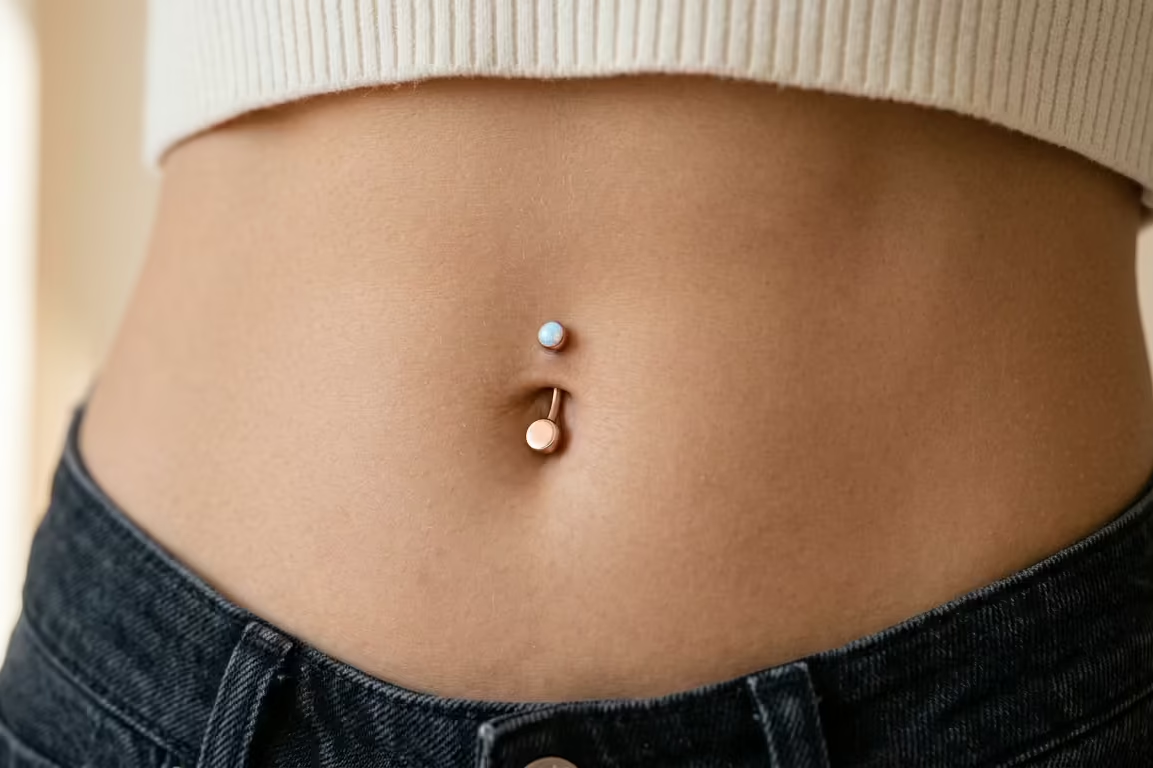
But between the studio fee, jewelry, aftercare, and the long healing timeline, the true cost is often higher than people expect. This guide breaks down every dollar involved so you can budget properly and avoid surprises.
❝ The belly button piercing has one of the longest healing timelines among common piercings. Understanding what that means for your budget and lifestyle upfront saves a lot of frustration later.
What Is a Belly Button Piercing?
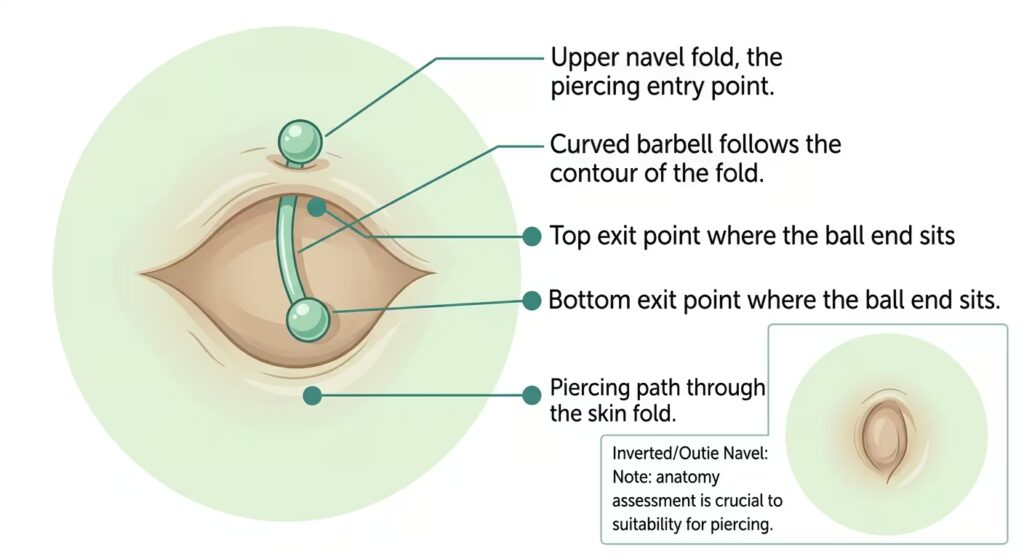
A belly button piercing, also called a navel piercing, passes through the skin at the upper rim of the navel. The most common placement goes through the thin fold of skin just above the belly button opening.
It is technically a surface piercing, which means it passes through a fold of skin rather than a fleshy body part. This is important because surface piercings carry a higher risk of rejection than piercings through thicker tissue, such as earlobes.
The anatomy of your navel significantly affects whether a belly button piercing will work well for you. Deep or inverted navels, very shallow skin folds, or an inward-facing navel rim can all make placement more difficult and increase the risk of rejection. A good piercer will assess your anatomy before committing to a placement.
How Much Does a Belly Button Piercing Cost?
At a reputable studio, a belly button piercing costs between $40 and $80 for the service fee. This typically includes basic implant-grade jewelry. When you add aftercare, a tip, and the potential for a jewelry upgrade, the realistic all-in cost is $60 to $130.
| Cost Component | Typical Range (USD) |
| Piercing service fee | $40–$80 |
| Implant-grade titanium curved barbell | $15–$40 |
| Sterile saline aftercare spray | $8–$15 |
| Tip for piercer (recommended) | $10–$20 |
| Realistic total all-in | $73–$155 |
Some studios quote a single all-in price including jewelry. Others quote the service fee separately from the cost of the jewelry. Always ask which one you are looking at before comparing prices between studios.
What Affects the Price?
Piercer experience and studio reputation
A belly button piercing looks simple, but placement precision matters more than people realise. The angle of the piercing affects how the jewelry sits, how healing goes, and whether the piercing lasts long term.
An experienced piercer charges more because they understand navel anatomy, can read whether your body shape suits the standard placement, and know how to adjust for unusual anatomy. That knowledge is worth paying for.
Jewelry material
The material you start with is one of the most important decisions you make. Implant-grade titanium is the professional recommendation for fresh navel piercings. It is lightweight, hypoallergenic, and causes the least inflammatory response during the long healing period.
Avoid studios that use surgical steel as their standard starting jewelry without discussing alternatives. Steel contains trace nickel, which can cause persistent irritation in a piercing that already takes up to a year to heal.
Geographic location
Studios in major cities charge more. A $40 belly button piercing in a smaller town and a $75 one in a city centre may represent similar quality levels. Location affects operating costs, not skill.
Regional Pricing: What to Expect
| Country | Budget Studio | Reputable Studio |
| United States | $40–$55 | $65–$100 |
| Canada | CAD 45–65 | CAD 75–120 |
| United Kingdom | £25–£45 | £55–£85 |
| Australia | AUD 50–70 | AUD 85–140 |
| Kenya / East Africa | KES 2,000–3,500 | KES 4,500–8,000 |
Belly Button Piercing Jewelry: What You Need to Know
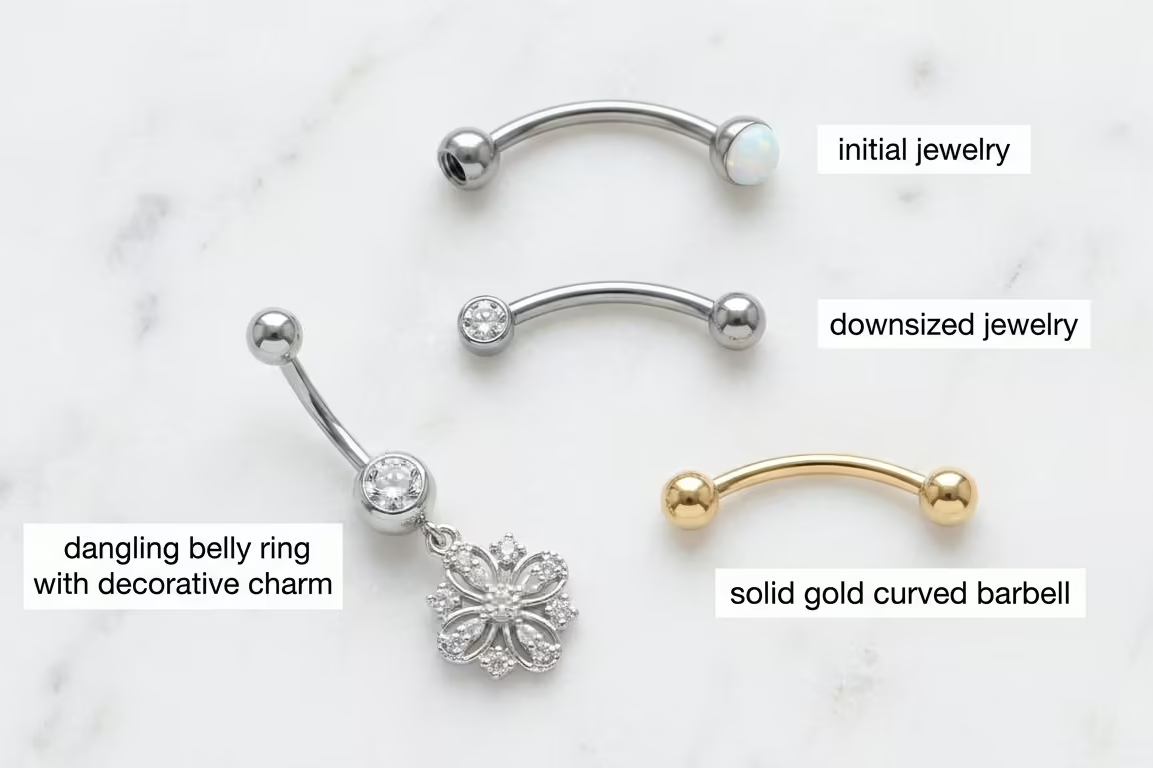
The curved barbell, also called a banana barbell, is the standard jewelry for a belly button piercing. Its curved shape follows the natural contour of the navel fold, allowing the ends to sit flat against the skin rather than pulling outward.
Initial jewelry sizing
Your initial barbell will be slightly longer than your final healed jewelry. This extra length accommodates swelling during the first few weeks. Once swelling settles, your piercer replaces it with a shorter bar that fits correctly.
This downsizing appointment is important and often overlooked. A barbell that is too long for a healed piercing catches on clothing, gets knocked during daily activity, and slows healing significantly. Budget for it from day one.
| Material | Cost Range | Best For | Notes |
| Implant-grade Titanium | $15–$45 | Fresh and healed piercings | Best all-round choice. Lightweight, hypoallergenic. |
| Implant-grade Steel | $10–$30 | Non-sensitive individuals only | Trace nickel content. Not ideal for slow-healing piercings. |
| Solid 14k/18k Gold | $50–$150+ | Healed piercings only | Beautiful long-term choice. Too heavy for fresh piercings. |
| Fashion / Acrylic | Under $10 | Avoid entirely | Not body-safe for healing tissue. Causes irritation and rejection. |
How Painful Is a Belly Button Piercing?
Most people rate a belly button piercing at 3 to 5 out of 10 on a pain scale. The skin of the navel fold is relatively thin, and the area has fewer nerve endings than parts of the face or cartilage.
The sensation is typically a sharp pinch followed by a brief throbbing that fades within minutes. Because the needle passes through a fold of skin rather than through thick tissue, the procedure is usually quick.
The days following the piercing are generally more uncomfortable than the procedure itself. The navel is in constant motion when you sit, bend, and move throughout the day. This movement fosters ongoing tenderness during the early stages of healing.
❝ A belly button piercing is not one of the most painful piercings available. But the long healing timeline and the area’s constant movement make consistency in aftercare more important than with most piercings.
How Long Does a Belly Button Piercing Take to Heal?
This is where most people get caught out. The honest healing timeline for a belly button piercing is 6 to 12 months. Some people take up to 18 months to reach full maturity.
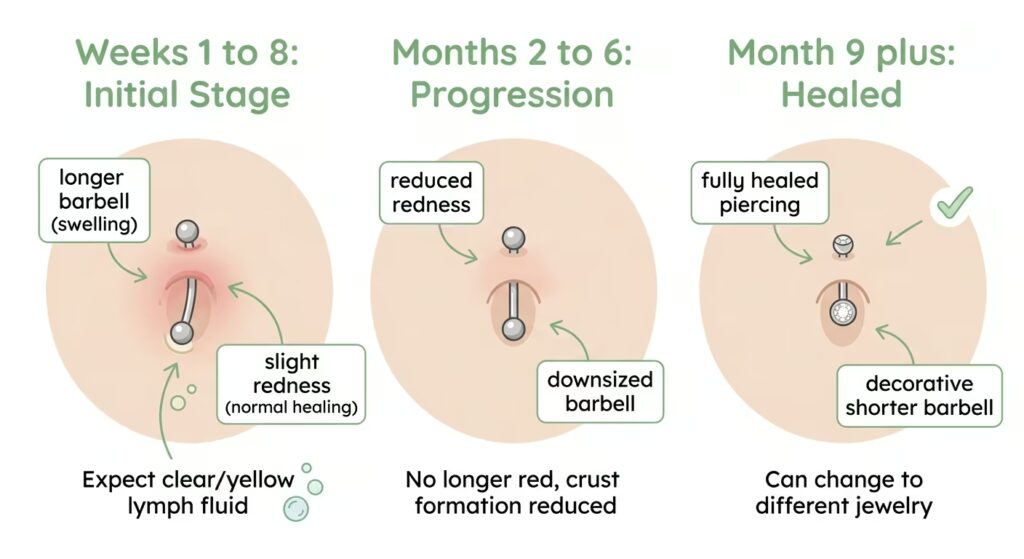
The commonly repeated “6 to 8 weeks” refers to the initial healing phase, when the skin on the surface closes over. The deeper tissue beneath takes much longer to fully stabilise around the jewelry.
Why belly button piercings take so long
The navel sits right at the waistline where clothing waistbands sit, belts fasten, and the body bends constantly. Every time you sit down, stand up, or twist, the skin around the piercing flexes.
That constant movement is the primary reason this piercing takes so long to heal. The tissue must form a stable fistula around the curved barbell despite ongoing flexion and pressure. It takes time and consistent care.
Month by month
In the first four to eight weeks, expect tenderness, some swelling, and clear or whitish discharge around the balls of the barbell. This is normal lymph fluid. The piercing will be sensitive to waistbands, bending, and touch.
From two to six months, the piercing settles significantly. Discharge reduces, tenderness becomes occasional rather than constant, and the tissue starts to feel more established. However, it is still healing and needs full aftercare.
At six to twelve months, a well-cared-for navel piercing feels comfortable during normal daily activity. The fistula is stable and the jewelry sits without pulling or shifting. This is when you can safely experiment with jewelry styles.
Aftercare: The Daily Routine That Matters
Cleaning
Clean the piercing twice daily with sterile saline wound wash. Spray directly onto both ball ends of the barbell and the surrounding skin. Leave for thirty seconds, then rinse clean in the shower.
Do not use cotton wool near the piercing. Fibres from cotton catch on the ball ends, leaving residue that irritates the tissue. Use non-woven gauze or let the shower water rinse it naturally.
Clothing choices
High-waisted jeans, tight waistbands, and anything that presses directly against the navel for extended periods are the main enemies of a healing belly button piercing.
Low-rise bottoms, loose waistbands, and soft fabrics work best during the healing period. If you need to wear tighter clothing, a small piece of breathable medical tape over the piercing creates a barrier between the jewelry and the fabric.
Physical activity
Light daily activity is fine from day one. High-impact exercise, contact sports, and swimming should be avoided for the first six to eight weeks. After that, a waterproof dressing over the piercing for swimming is a reasonable precaution during the healing period.
What to avoid
Avoid submerging in pools, hot tubs, lakes, and the ocean during the healing process. Chlorinated and natural water both carry bacteria that can enter the piercing channel and cause infection.
Keep skincare products, body lotions, perfumes, and shower gels from coming into direct contact with the jewelry or surrounding skin. These products introduce chemicals that irritate healing tissue.
Rejection: The Risk Nobody Warns You About
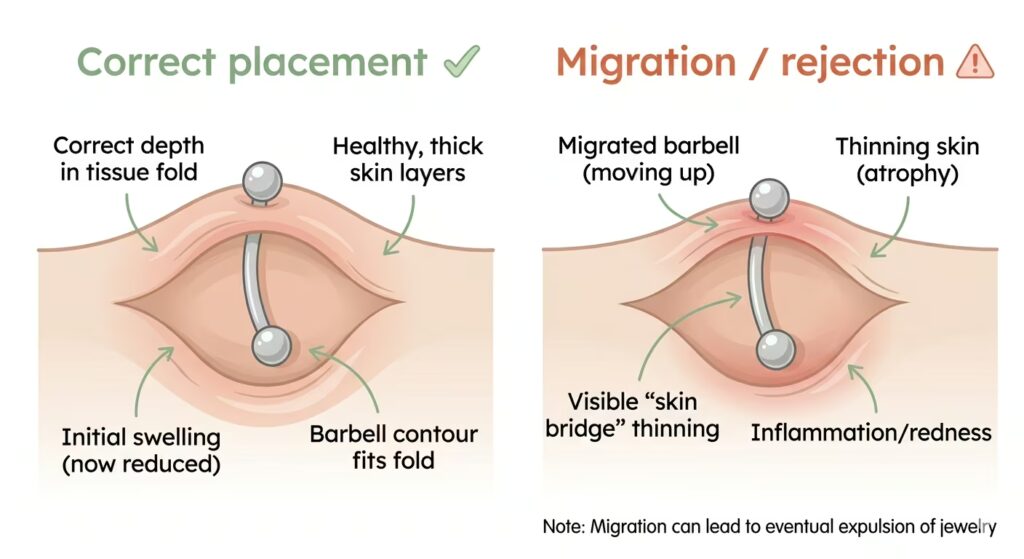
Belly button piercings have one of the highest rejection rates among common piercings. Because it is a surface piercing through a skin fold, the body sometimes treats the jewelry as a foreign object and gradually pushes it out.
This process, called rejection or migration, happens slowly over weeks or months. The jewelry appears to move closer to the skin’s surface. The skin between the two balls becomes thinner and more translucent.
Signs your belly button piercing may be rejecting
The jewelry sits noticeably higher or more shallowly than it did when first pierced. The skin between the balls looks thinner, or you can see the shape of the bar through the skin. The area stays persistently red despite good aftercare.
If you notice these signs, visit your piercer immediately. Removing a rejected piercing early results in a small, flat scar. Leaving it until it rejects completely leaves a more visible, sometimes raised scar.
Who is most at risk of rejection?
Anatomical factors increase rejection risk. Very shallow navel skin folds give the piercing less tissue to anchor through. Significant weight fluctuations during the healing period stretch and shift the tissue around the jewelry.
Lifestyle factors matter too. Wearing tight waistbands consistently, playing contact sports, or having a job that requires frequent bending and physical movement all increase the mechanical stress on the healing piercing.
❝ A belly button piercing that rejects is not a failure. It is the body responding to its own anatomy. You can always be re-pierced once the area has healed, often with a small adjustment to placement.
Belly Button Piercing Jewelry Styles Once Healed
Once your navel piercing is fully healed, the jewelry options open up considerably. This is the stage most people are excited about from the start.
Standard curved barbells
The curved banana barbell remains the most comfortable and stable long-term option. Decorative versions with gem tops, dangling charms, and custom-designed top balls are widely available. These are the most popular choices for everyday healed wear.
Reverse belly bars
A reverse navel piercing uses a curved barbell that is flipped so the decorative top sits below the navel opening rather than above. Some people prefer this look aesthetically. It works on healed piercings without changing the underlying piercing itself, just a different jewelry style.
Dangle and charm styles
Dangle belly rings feature a pendant or charm that hangs below the navel. They are striking and popular for occasions where the midriff is visible. However, they add weight and movement to the piercing, so they are better suited to occasional wear rather than everyday use.

Is a Belly Button Piercing Right for You?
A belly button piercing suits people whose lifestyle allows for six to twelve months of consistent aftercare. It suits people who can manage their clothing choices to reduce friction on the navel area during healing.
It is a harder choice for people who play contact sports regularly, work in physically demanding jobs that require constant bending, or cannot adjust their wardrobe during recovery. None of these are disqualifiers, but they do mean a longer, more demanding healing process.
Body weight and anatomy are also worth considering, honestly. Navel piercings on bodies where the waistband sits directly on the navel crease experience more pressure and friction than those where the navel sits clear. A good piercer will discuss this with you during a consultation.
Frequently Asked Questions
Can I get a belly button piercing if I have an outie or inverted navel?
It depends on your specific anatomy. Some outie navels have enough of a skin fold to pierce successfully. Others do not. The same applies to inverted navels.
The only way to know for certain is to have an experienced piercer assess your anatomy in person. A good piercer will tell you honestly whether the placement will work well long term, rather than pierce you regardless.
Will a belly button piercing leave a scar?
If the piercing is removed cleanly and before any rejection has progressed significantly, most people are left with a small, flat mark that fades considerably over time. Many people find it is barely noticeable after a year.
Piercings that fully reject before being removed, or that become infected, tend to leave a more visible scar. This is another reason why acting quickly when you see signs of rejection matters.
Can I get a belly button piercing during pregnancy?
Getting a fresh belly button piercing while pregnant is not recommended. The body changes rapidly during pregnancy, and the navel area stretches significantly, making healing essentially impossible.
If you already have a healed belly button piercing and become pregnant, a flexible PTFE or bioplast barbell can be worn throughout the pregnancy and is much more comfortable than rigid metal jewelry as the belly grows.
How much does it cost to remove a belly button piercing?
If the jewelry is a standard curved barbell in a fully healed piercing, you can remove it yourself at no cost. Simply unscrew the top ball and slide the bar out.
If the piercing has become embedded, partially rejected, or if the top ball is stuck, a professional piercer can remove it for $15 to $40. Medical removal is rarely needed for navel piercings, but is available at a doctor’s office or clinic for cases where the piercing is embedded.
What is the average price for re-piercing a closed belly button?
Re-piercing a closed or healed-over belly button piercing costs the same as a fresh piercing, typically $40 to $80 for the service. The piercer will assess the scar tissue from the original piercing and place the new piercing appropriately.
In some cases, scar tissue makes placement slightly more complex. Some piercers charge a small premium for re-piercings through scar tissue. Always book a consultation first so the piercer can assess the site before committing to the appointment.
And There You Have The Complete Belly Button Piercing Price Guide
A belly button piercing costs between $73 and $155, all-in, at a reputable studio in 2025. The service fee is only part of the picture. Quality jewelry, aftercare supplies, and an appropriate tip round out the true cost.
The real investment is time and consistency. Six to twelve months of aftercare, thoughtful clothing choices, and patience are what take a fresh belly button piercing to a fully healed, beautiful piece of body jewelry.
Choose an experienced piercer who assesses your anatomy before booking. Start with implant-grade titanium. Keep up the aftercare. Know the signs of rejection and act on them early. Do all of that, and a belly button piercing can be one of the most rewarding body piercings you get. For more on body piercing types and what each one involves, see our full guide to body piercing types with pictures. And if you are comparing this to the pain scale, our article on the most painful piercings has the full breakdown.