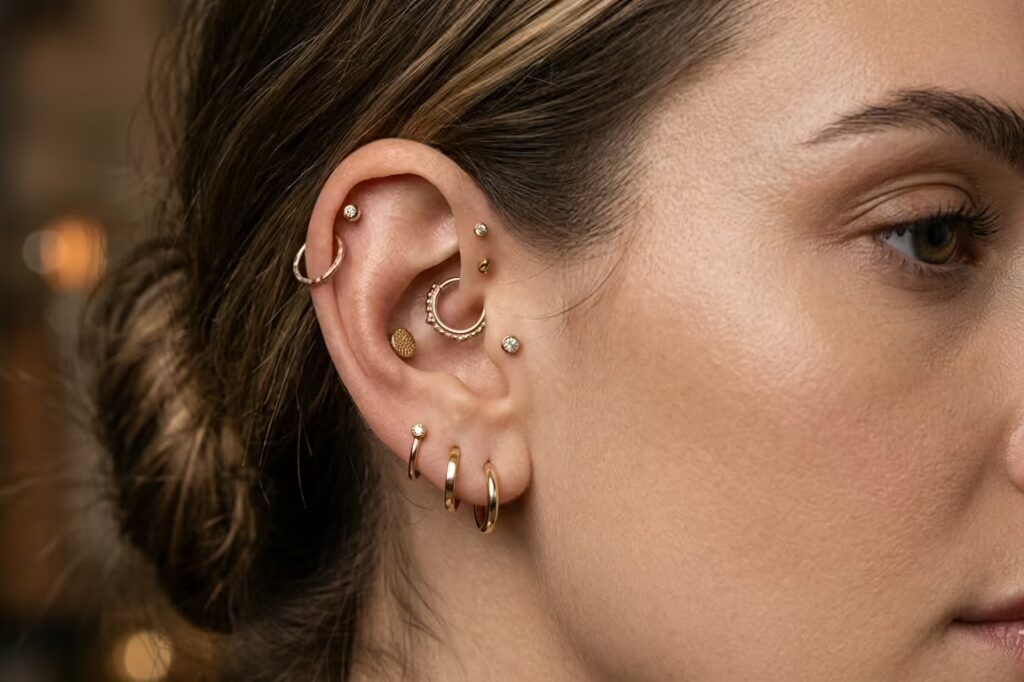
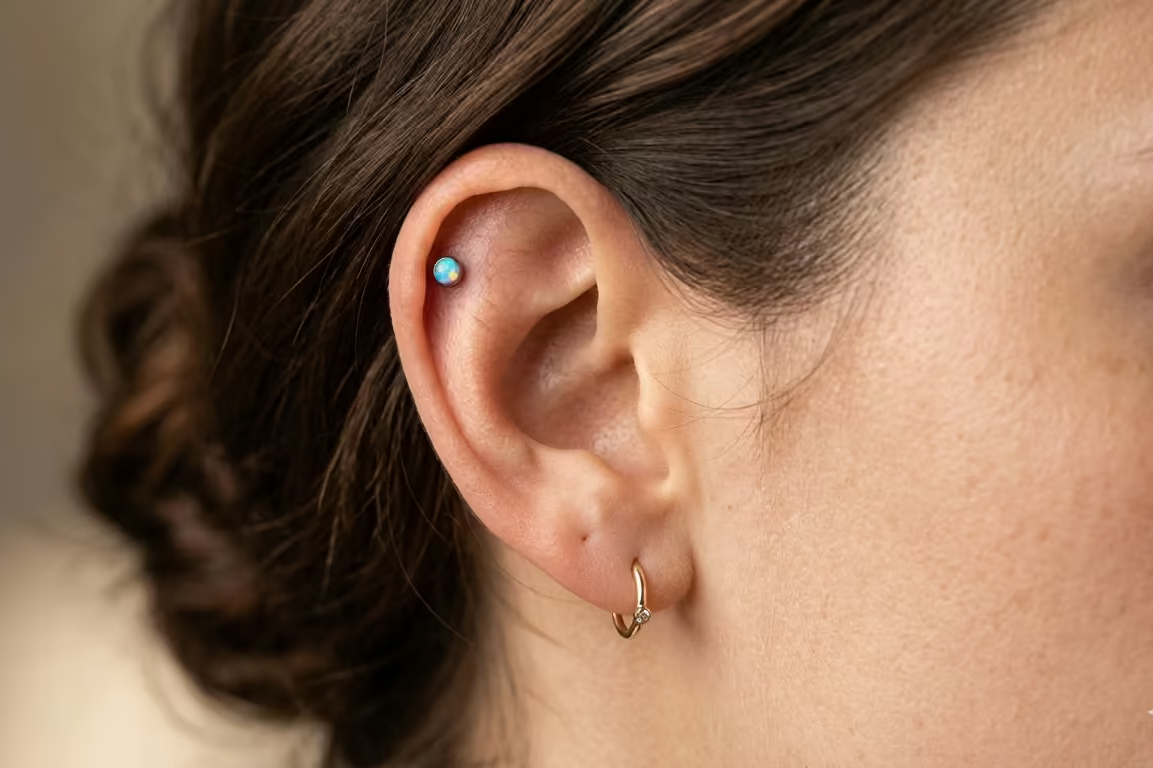
Helix piercings are among the most popular ear piercings worldwide right now. It sits on the outer cartilage rim of the upper ear; it is endlessly versatile in terms of jewelry, and it is the foundation of the curated ear stacking look that has taken over social media.
It is also a cartilage piercing, which puts it in a different category from a lobe piercing. Cartilage heals more slowly, requires more consistent aftercare, and reacts more strongly to disturbance. Understanding both sides of the experience helps you get the most out of it.
This guide covers the full cost of a helix piercing in 2025, what affects the price, the honest healing timeline, and everything you need to walk into your appointment fully prepared.
❝ The helix is the go-to starting point for most curated ears. It is affordable, widely available, and heals well with consistent care. It just takes longer than most people expect.
What Is a Helix Piercing?
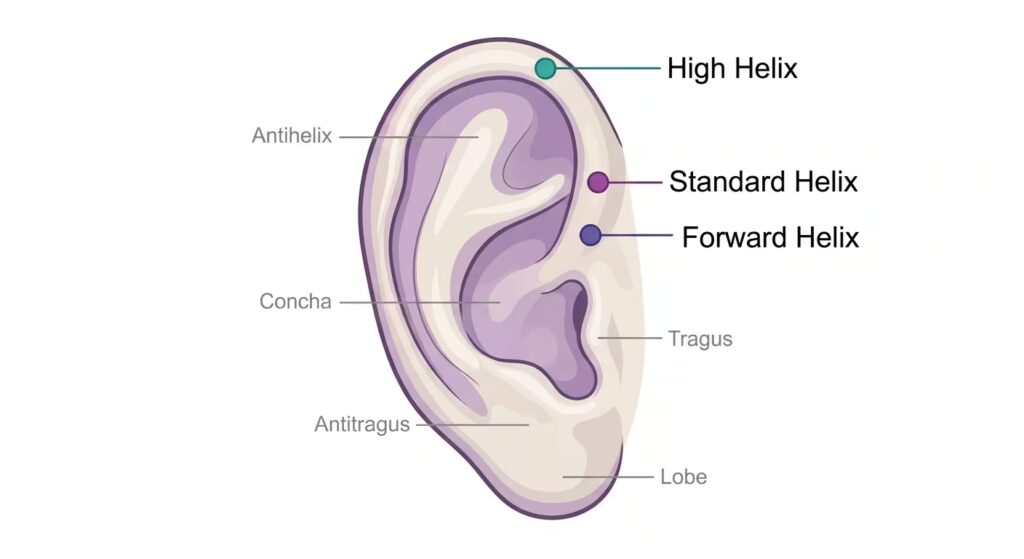
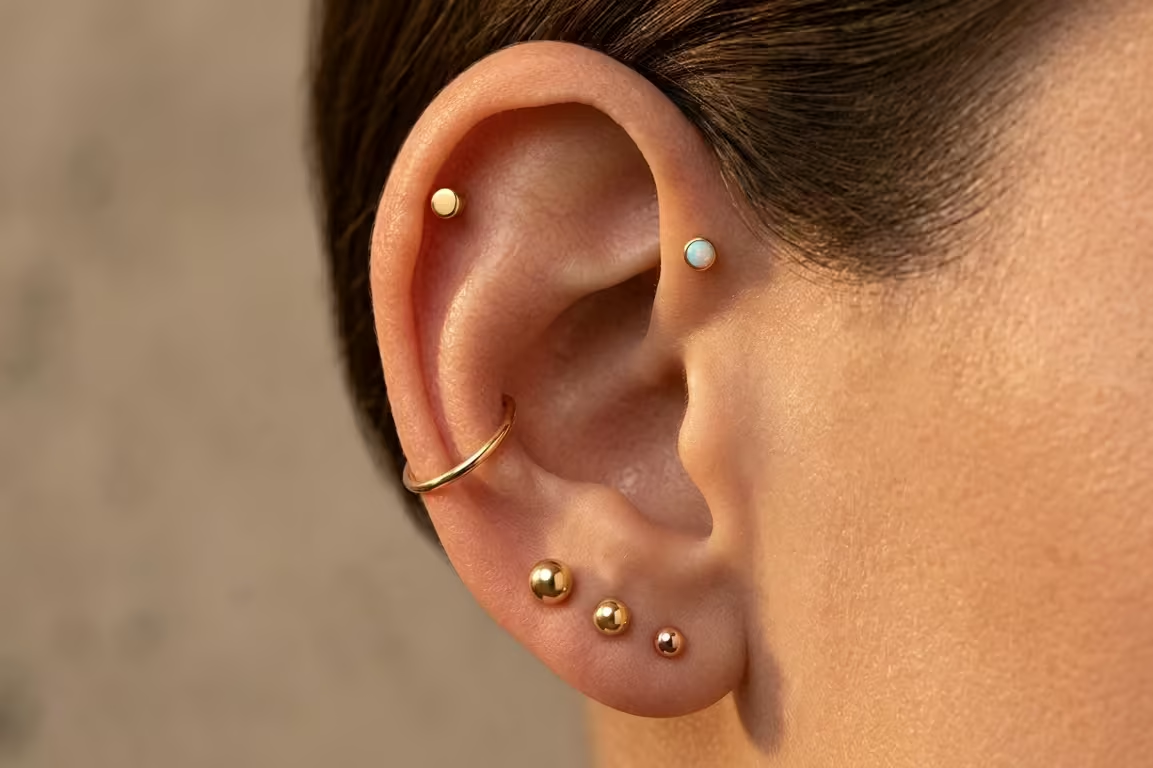
A helix piercing is placed in the outer cartilage rim of the ear. The most common position is anywhere along the upper outer edge, though the exact spot varies by preference and ear shape.
Unlike a lobe piercing through soft tissue, the helix needle passes through firm cartilage. Cartilage has lower blood flow, which is why it heals significantly more slowly and is more sensitive to disruption than a lobe.
The helix is often the first step in building a curated ear. For the full history of how ear piercing evolved from ancient civilisations to the modern stacking trend, see our article on the evolution of ear piercings: from ancient Egypt to modern trends.
How Much Does a Helix Piercing Cost?
At a reputable studio, a helix piercing costs between $30 and $75 for the service fee, usually including basic implant-grade jewelry. With aftercare and a tip, the realistic all-in cost is $55 to $120.
| Cost Component | Typical Range (USD) |
| Piercing service fee | $30–$75 |
| Implant-grade titanium stud or ring | $15–$40 |
| Sterile saline aftercare spray | $8–$15 |
| Tip for piercer (recommended) | $10–$20 |
| Realistic total all-in | $63–$150 |
The helix sits at the more affordable end of the ear piercing range. It costs more than a standard lobe but less than a daith or rook. For a full comparison of every ear piercing type and what each involves, our guide to ear piercing types and pain levels is a useful reference.
What Affects the Price?
Piercer experience
Cartilage piercings require more precision than lobe piercings. The angle and depth of placement affect how well the helix heals. An experienced piercer knows how to position the jewelry to minimise irritation and maximise longevity.
A helix placed at a slightly wrong angle can cause persistent irritation bumps and jewelry that never sits flat. Getting it right the first time is worth paying for.
Studio location
Studios in larger cities charge more. A helix in a major city commonly runs $50 to $75 for the service alone. The same quality of work in a smaller city may be $30 to $50. Portfolio and reputation matter more than location.
Jewelry material and style
Implant-grade titanium flat-back labret studs are the current professional standard for fresh cartilage piercings. They sit flush against the ear, do not rotate, and are light enough to minimise pressure on healing cartilage.
Hoops and rings are popular for healed helix piercings, but should not be used on fresh ones. A hoop rotates with every movement, creating constant friction on healing tissue. Start with a flat-back stud and switch to a hoop only after full healing.
Regional Pricing Guide
| Country | Budget Studio | Reputable Studio |
| United States | $30–$50 | $55–$90 |
| Canada | CAD 35–55 | CAD 65–110 |
| United Kingdom | £20–£38 | £45–£75 |
| Australia | AUD 40–60 | AUD 75–120 |
| Kenya / East Africa | KES 1,500–2,800 | KES 3,500–6,500 |
Types of Helix Piercings and Their Costs
The helix is not fixed in a single position. Several distinct variations sit within the helix family, each with its own aesthetic and slightly different cost.
| Type | Typical Cost | Placement | Notes |
| Standard Helix | $30–$75 | Anywhere along the outer upper cartilage rim | Most common. Good starting point for cartilage piercings. |
| Forward Helix | $35–$80 | Front of the ear near the face, top of the inner cartilage fold | Tighter cartilage. Slightly more precise placement needed. |
| Double Helix | $55–$130 | Two piercings along the same helix rim | Best done one at a time to reduce healing load. |
| Triple Helix | $80–$180 | Three piercings along the helix rim | High healing demand. Space them out over time for the best results. |
The forward helix deserves a specific mention. The cartilage there is firmer and denser than the standard helix rim. It is more painful and requires a piercer comfortable working in a tighter anatomical space.
For a full, honest ranking of which ear piercings hurt the most and why, our guide to the most painful ear piercings ranked from least to most painful covers every placement.
How Painful Is a Helix Piercing?
Most people rate a helix piercing at 4 to 6 out of 10. The cartilage is firmer than lobe tissue, so the sensation is sharper and more pressure-like than a lobe piercing. The actual needle pass takes less than a second.
The soreness in the days that follow is usually the most noticeable. Cartilage remains tender longer than soft tissue because of its reduced blood flow.
The forward helix and piercings near the top of the ear tend to rate slightly higher on the pain scale due to denser cartilage. Our most painful ear piercings guide breaks down the specifics of each placement.
Healing Time: The Honest Timeline
A helix piercing takes 6 to 12 months to fully heal. Surface skin at the entry and exit points may close over in 8 to 12 weeks, but the cartilage beneath takes much longer to stabilise.
Treating a helix as healed at three months is one of the most common causes of irritation, bumps, and healing setbacks. The tissue beneath is still actively building the fistula around the jewelry at that stage.
Month by month
In the first 4 to 6 weeks, expect soreness, redness, and mild swelling. The piercing is sensitive to pressure and touch. Sleeping on the pierced side is uncomfortable and should be avoided.
From two to six months, tenderness gradually reduces. The piercing becomes less reactive to everyday disturbance. Discharge becomes minimal, but healing is still actively underway.
At six to twelve months, a well-cared-for helix is fully settled. The jewelry sits flat, the skin around it is clear, and the piercing is comfortable during normal daily activity.
❝ Cartilage heals from the outside in. The surface may look healed months before the deeper tissue is truly stable. Patience with a helix always pays off.
Helix Piercing Jewelry: What Works at Each Stage
For fresh piercings
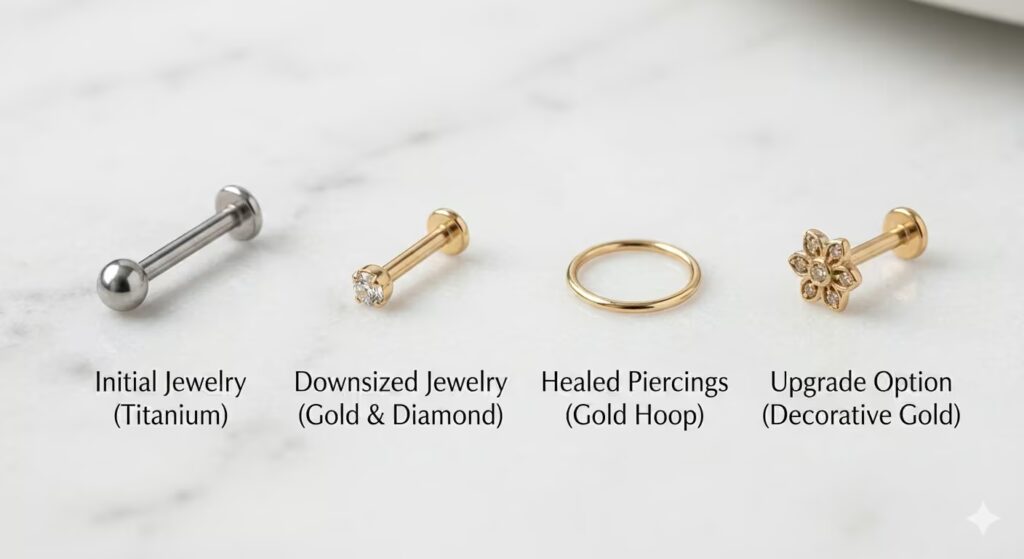
A flat-back labret stud in implant-grade titanium is the current professional standard for fresh helix piercings. The flat disc back sits flush against the inside of the ear. The post is slightly longer than your final jewelry to accommodate swelling.
At six to eight weeks, once swelling has settled, your piercer replaces the longer post with a shorter one. This downsize appointment reduces movement inside the helix channel and lowers the risk of snagging throughout the day.
For healed piercings
Once fully healed, hoops, huggie rings, seamless rings, and clicker rings all become viable. Decorative flat-back studs with gem, opal, or shaped ends are extremely popular for curated ear looks.
| Material | Cost Range | Best For | Notes |
| Implant-grade Titanium | $15–$50 | Fresh and healed piercings | Lightweight, hypoallergenic. Anodised colours available. |
| Implant-grade Steel | $10–$30 | Non-sensitive individuals | Heavier than titanium. Trace nickel content. |
| Solid 14k/18k Gold | $55–$180+ | Healed piercings | Premium long-term choice. Avoid fresh cartilage piercings. |
| Fashion / Mystery Metal | Under $10 | Avoid entirely | Causes persistent irritation in cartilage. Never use for healing piercings. |
Aftercare: Daily Habits That Make the Difference
Cleaning
Clean the helix twice daily with sterile saline wound wash. Spray directly onto the front and back of the piercing site, leave for thirty seconds, then rinse gently under clean running water in the shower.
Do not rotate the jewelry during cleaning. Rotating cartilage jewelry disrupts healing tissue and introduces bacteria into the healing channel. Modern professional advice is to leave the jewelry completely still.
Sleeping position
Sleeping on the pierced ear applies direct pressure to the healing cartilage for hours at a time. This is one of the biggest contributors to prolonged healing and irritation bumps in helix piercings.
A travel pillow worn around the neck keeps your head from rolling onto the pierced side. It takes a few nights to get used to, but the difference in healing speed is significant.
Hair and headphones
Long hair can wrap around the jewelry or drag across the piercing during brushing. Tying hair back reduces accidental snagging significantly during the first few months of healing.
Over-ear headphones that press against the helix area should be avoided during healing. Earbuds that sit in the ear canal are generally fine as long as they do not contact the piercing site directly.
❝ Sleeping position and hair care are the two aftercare factors that catch most helix piercing owners off guard. Both are easy to manage once you are aware of them.
Irritation Bumps: What They Are and How to Handle Them
Irritation bumps are small raised areas that form around the entry or exit point of a healing helix. They are not infections. They are the body’s response to ongoing mechanical stress and are telling you something in your routine needs to change.
Sleeping on the piercing is the most frequent cause. Jewelry that is too long for the healed anatomy, hair snagging, harsh cleaning products, and early jewelry changes all contribute to this.
Identify and remove the irritant first, then maintain consistent saline cleaning and leave the piercing completely alone. Most irritation bumps resolve within two to four weeks once the cause is addressed.
The Helix as Part of a Curated Ear
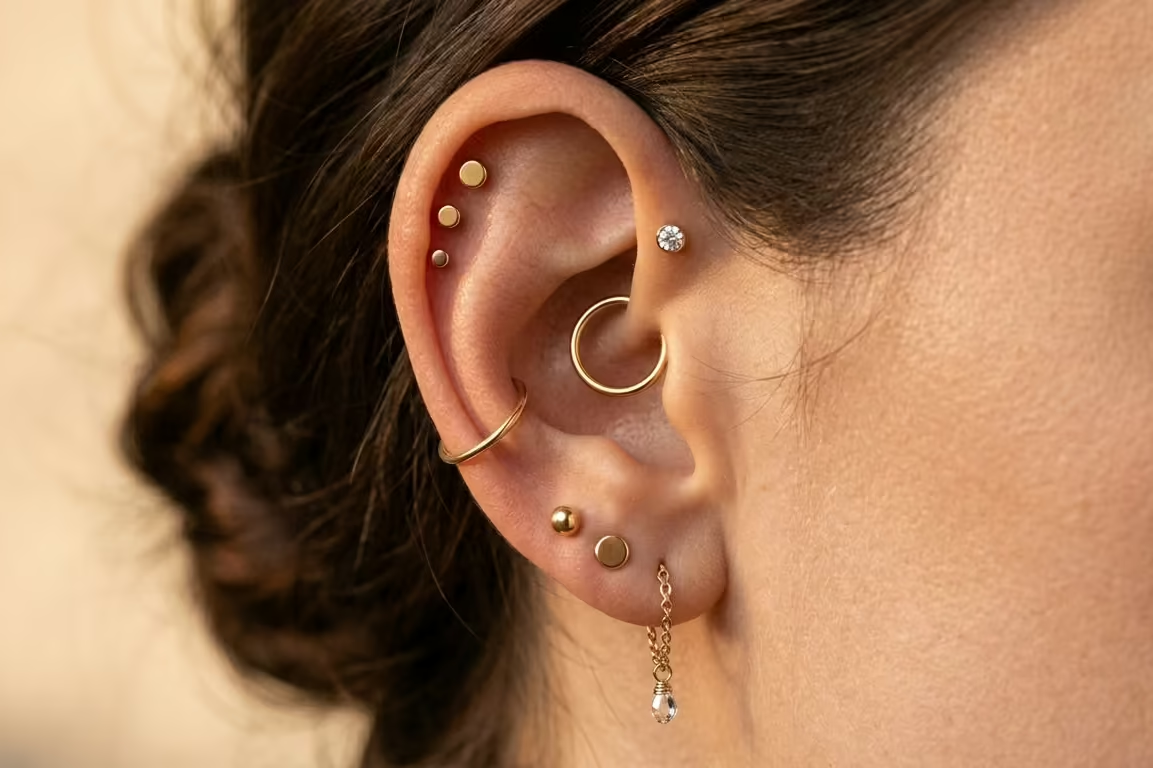
The helix is arguably the most important piercing in a curated ear. It sits at the top of the ear and serves as a visual anchor for the entire arrangement. Everything below it is framed by whatever jewelry sits in the helix.
Most piercers recommend healing one new cartilage piercing fully before adding another. Getting multiple cartilage piercings at once significantly increases the demands on healing and the risk of irritation across all of them.
If you are planning a full curated ear, our article on types of ear piercings and pain levels covers every placement available and what each one involves, which is essential reading before you start mapping out your ear.
Frequently Asked Questions
Can I change my helix jewelry before it is healed?
No. Changing cartilage jewelry before full healing disrupts the fistula that the tissue is building around the jewelry. It restarts the healing process and significantly increases the risk of infection and irritation bumps.
The first change happens at the downsize appointment with your piercer around six to eight weeks in. After that, wait for full healing, which takes six to twelve months, before trying different styles.
Why does my helix hurt more than my lobe piercing?
Cartilage has significantly less blood supply than lobular tissue. It heals more slowly, is more sensitive to disturbance, and stays tender for longer. The firmness of the cartilage also means the needle meets more resistance during the procedure.
Can I get a helix piercing with a gun?
No. Piercing guns cannot be fully sterilised and crush cartilage tissue rather than puncturing it cleanly. Using a gun on cartilage dramatically increases healing time, pain, and complication risk.
Any studio offering cartilage piercings with a gun should be avoided. A hollow single-use needle in a properly sterilised professional studio is the only appropriate method for cartilage work.
How much does it cost to add more helix piercings later?
Each additional helix piercing costs the same as the first, typically $30 to $75 plus jewelry. Some studios offer a small discount for multiple piercings in one session, but most professionals advise against doing more than one or two cartilage piercings at once.
What is the difference between a helix and a conch piercing?
The helix sits on the outer cartilage rim of the upper ear. The conch sits in the large concave bowl of cartilage in the center of the ear. Both are cartilage piercings with similar healing timelines, but the conch involves thicker cartilage and tends to be rated as slightly more painful.
Is a Helix Piercing Worth the Cost and Commitment?
A helix piercing costs between $63 and $150, all-in, at a reputable studio in 2025. For what it delivers, that is excellent value. It is one of the most versatile ear piercings available, beautiful on its own, and the cornerstone of almost every curated ear look.
The commitment is real. Six to twelve months of consistent aftercare, sleeping adjustments, and patience is what stands between you and a fully healed result. It is a longer road than a lobe piercing, but shorter than most people fear when they first start researching.
Choose an experienced piercer. Start with a flat-back titanium stud. Get the downsize done in six to eight weeks. Keep your hair back during healing. Do those things, and your helix will be one of the best additions to your ear jewelry collection.