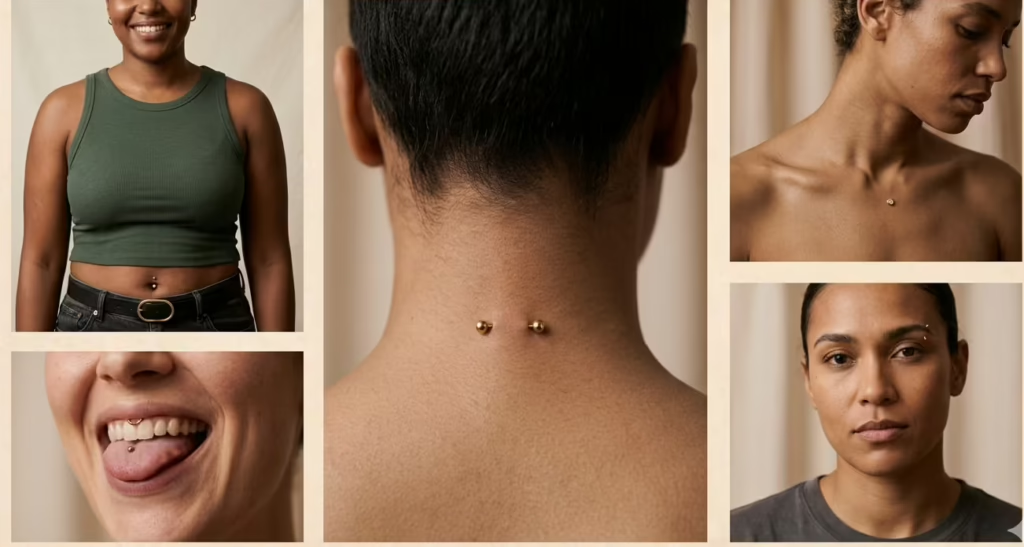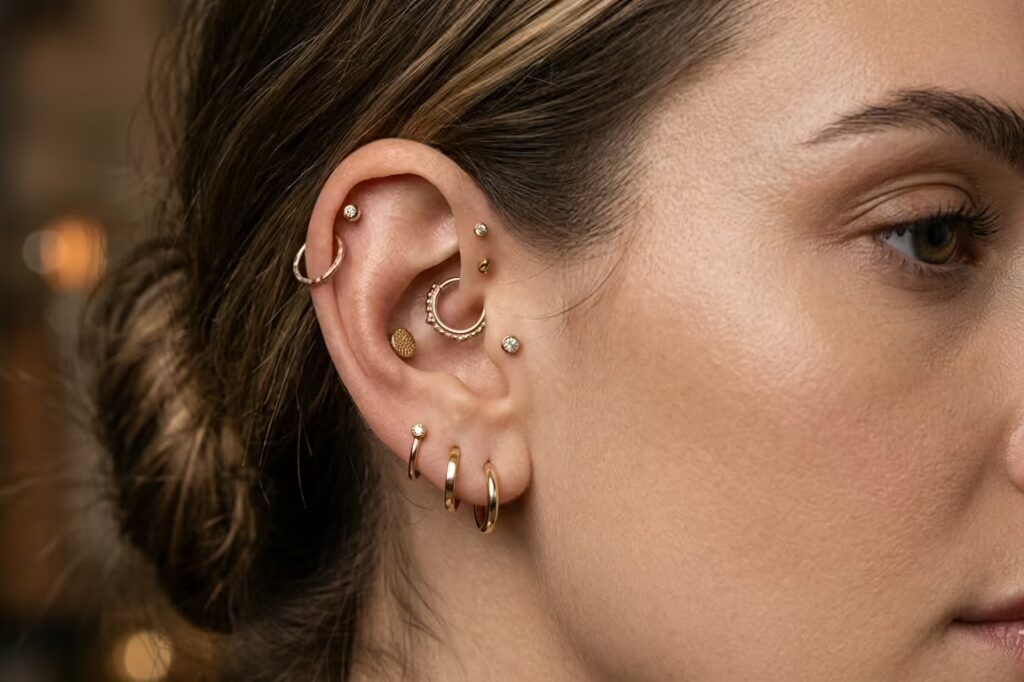
A tongue piercing is one of the most popular oral piercings in the world. It heals faster than most cartilage piercings, can be easily hidden at work, and offers a wide variety of jewelry styles.
But the tongue is also one of the most vascularised parts of the human body. It is full of blood vessels and nerves. Getting a tongue piercing done correctly requires a piercer who genuinely knows the anatomy.
This guide covers every cost involved in getting a tongue piercing done properly. It also covers what makes tongue piercings different from other piercings, the anatomy risks you need to understand, and everything the healing process involves.
❝ A tongue piercing is quick to get and relatively fast to heal. But placement matters enormously. An incorrectly placed tongue piercing can permanently damage blood vessels or nerves.
What Is a Tongue Piercing?
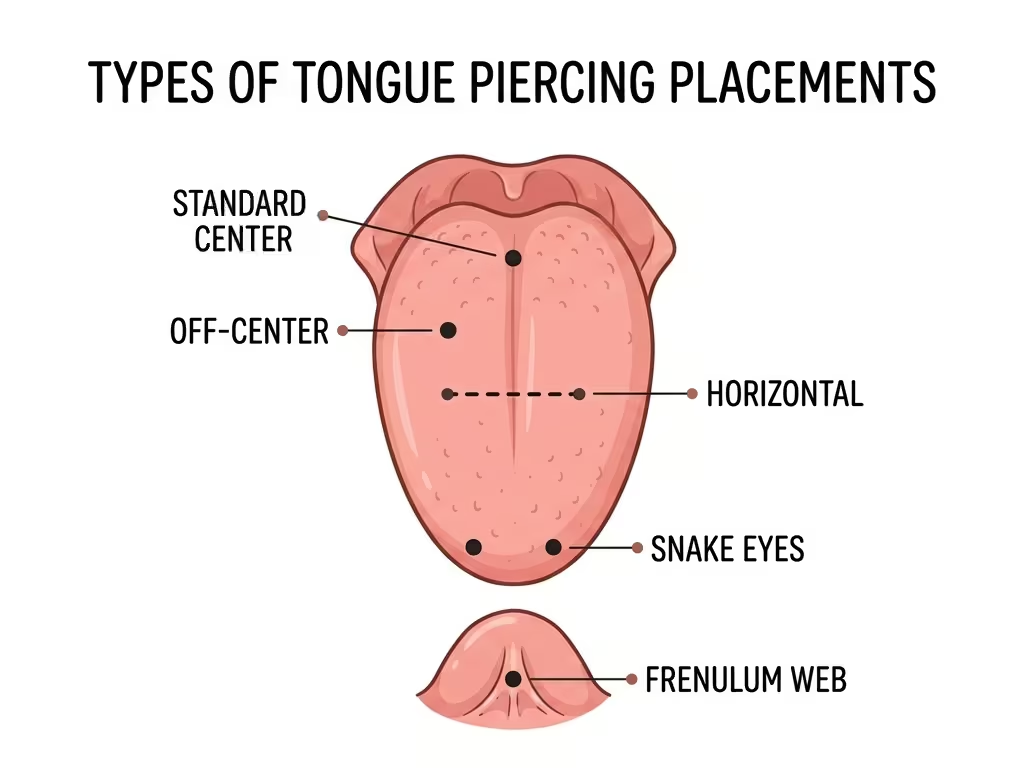
A standard tongue piercing passes vertically through the tongue, usually centered and placed behind the tip. The jewelry used is a straight barbell with a ball on each end.
The tongue is a thick muscle. A tongue piercing passes through the muscle tissue itself, not just surface skin. This is what makes it fundamentally different from a lip or nose piercing.
The tongue has a large blood vessel running through its center called the lingual vein. It also has the lingual artery and several nerve branches on each side. A skilled piercer marks the placement carefully to avoid all of these structures. An inexperienced one may not.
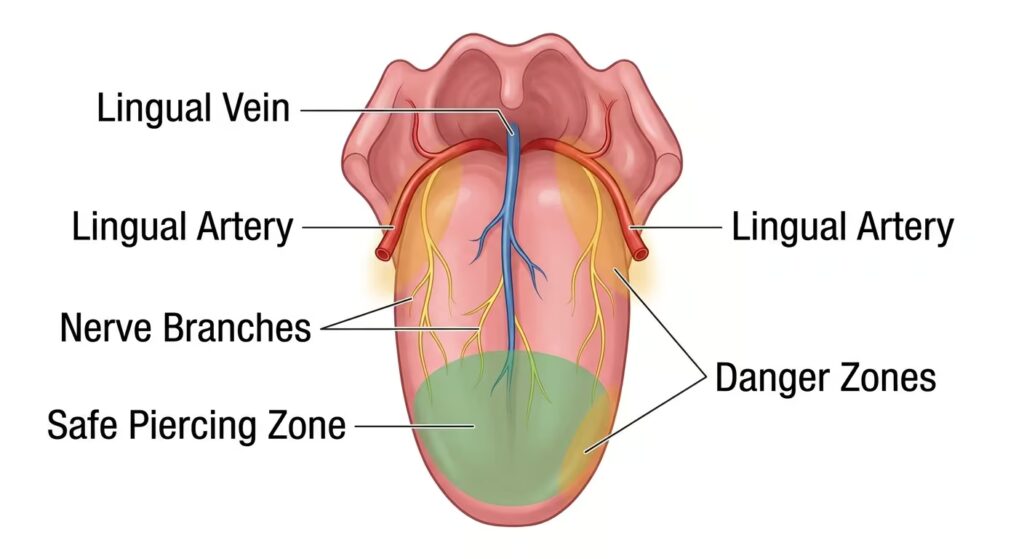
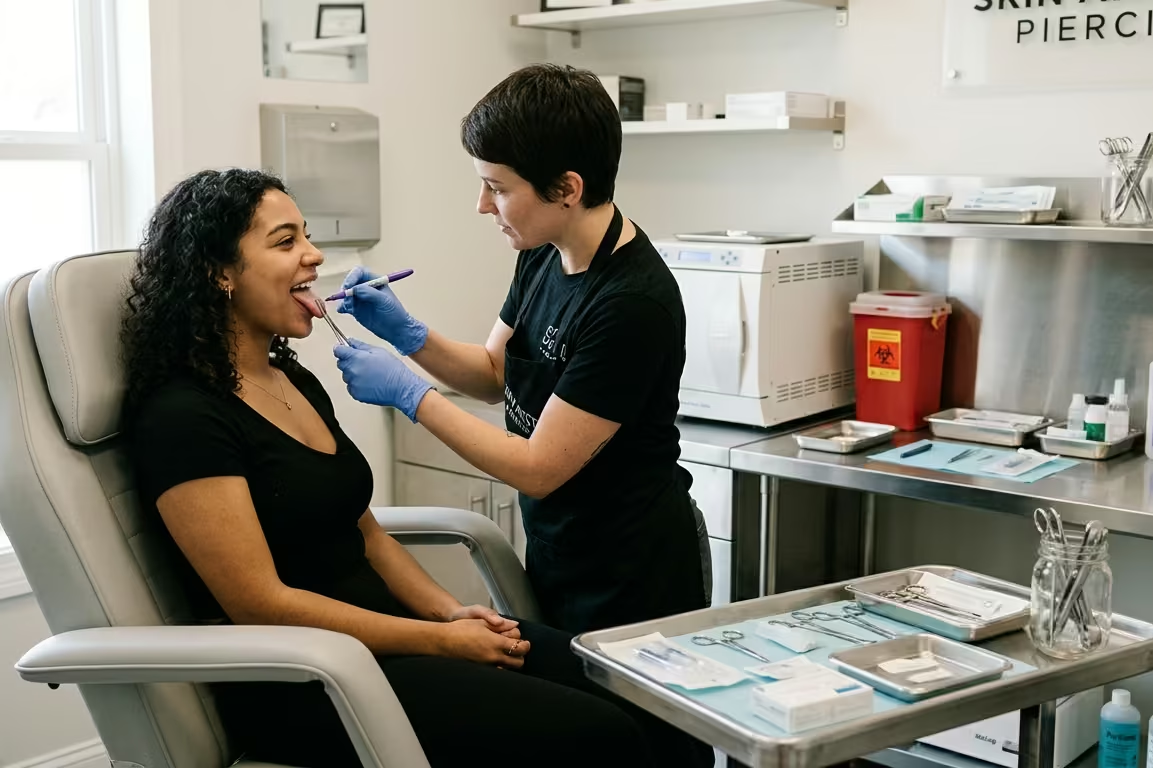
Most piercers use a receiving tube during the procedure. This is a hollow tube placed beneath the tongue to guide the needle safely through the correct path and protect the floor of the mouth.
The whole procedure takes about five minutes, including marking, cleaning, and inserting the initial jewelry. The actual needle pass takes a fraction of a second.
How Much Does a Tongue Piercing Cost?
A tongue piercing at a reputable studio costs between $40 and $100. This typically includes the service and basic titanium jewelry.
When you add aftercare supplies, a mandatory downsize appointment, and an appropriate tip, the realistic all-in cost is $75 to $150. Here is the full breakdown.
| Cost Component | Typical Range (USD) |
| Piercing service fee | $40–$80 |
| Implant-grade titanium barbell | $15–$40 |
| Sterile saline aftercare spray | $8–$15 |
| Alcohol-free mouthwash | $5–$10 |
| Downsize appointment at 4 to 6 weeks | $10–$25 |
| Tip for your piercer (recommended) | $10–$20 |
| Realistic total all-in | $88–$190 |
Always ask upfront whether jewelry is included in the quoted price. Some studios list a base fee that does not include the barbell. Knowing this before you book prevents surprises.
The downsize appointment is not optional. It is an essential step in tongue piercing aftercare and should be budgeted for from the start. More on this shortly.
What Affects the Price of a Tongue Piercing?
Studio location
Studios in major cities charge more due to higher rent and operating costs. In New York or Los Angeles, a tongue-piercing service fee of $70 to $90 is standard. In smaller cities, $40 to $60 is more typical.
City pricing does not automatically mean better quality. A smaller studio with an experienced piercer and a strong portfolio may outperform a larger urban studio in every way that matters.
Piercer experience
Tongue piercing placement requires genuine anatomical knowledge. A piercer who understands where the lingual vein and arteries run, and who marks placement precisely before touching a needle to your tongue, is worth paying more for.
Ask specifically about their experience with tongue piercings. Ask to see healed results in their portfolio. A confident, knowledgeable piercer will welcome these questions.
Jewelry material
Basic implant-grade titanium barbells are the standard starting jewelry and are usually included in the service fee. Upgrading to solid gold or decorative ends at the time of piercing increases the total cost.
For a fresh tongue piercing, implant-grade titanium is the best choice. It is lightweight, which matters because a heavy barbell puts strain on the healing tissue. It is also completely hypoallergenic.
Type of tongue piercing
Standard center tongue piercings are the most straightforward and typically fall at the lower end of the price range. More complex placements, such as horizontal tongue piercings or snake eyes, cost more due to their technical difficulty.
Regional Pricing: What to Expect Where You Are
| Country | Budget Studio | Reputable Studio |
| United States | $40–$60 | $70–$110 |
| Canada | CAD 45–65 | CAD 75–120 |
| United Kingdom | £25–£45 | £55–£85 |
| Australia | AUD 50–75 | AUD 90–140 |
| Kenya / East Africa | KES 1,500–3,000 | KES 4,000–8,000 |
These figures cover the service fee and standard titanium barbell. Aftercare costs and the downsize appointment are additional in all markets.
Types of Tongue Piercings and Their Costs
Not all tongue piercings are the same. The placement significantly affects the complexity, the price, and the risk profile. Here is what you need to know about each type.
| Type | Typical Cost | Healing Time | Key Considerations |
| Standard Center | $40–$80 | 4 to 8 weeks initial, 3 to 6 months full | Most common, safest placement. Best for first-timers. |
| Off-Center / Side | $50–$90 | 4 to 8 weeks initial | Can be done alongside a center piercing. Requires care around side vessels. |
| Horizontal | $60–$100 | 6 to 12 weeks or longer | Rare. Complex placement. High rejection risk. Not all piercers offer it. |
| Snake Eyes | $60–$100 | 6 to 12 weeks minimum | Controversial. High dental damage risk. Many professional piercers refuse to do it. |
| Frenulum (Web) | $40–$70 | 4 to 8 weeks | Placed in the thin web under the tongue. Surface piercing, prone to rejection. |
A note on snake eyes piercings
Snake eyes piercings are placed horizontally near the tip of the tongue with two ball ends visible on each side. They look striking. Many experienced piercers refuse to perform them.
The barbell passes through the tip of the tongue, connecting both sides of the tip muscle. This restricts the natural independent movement of the tongue tip. Over time, it can cause permanent changes to speech.
The jewelry also sits in near-constant contact with the backs of the lower front teeth, causing significant enamel and gum damage over time. If a studio readily offers snake eyes without discussing these risks, that is a concern.
❝ The APP and many experienced piercers do not recommend snake-eye piercings due to the documented risk of dental damage and long-term speech effects. Know the risks before choosing this placement.
Jewelry for Tongue Piercings: What to Use and When
The right jewelry at each stage of the healing process makes a real difference to the outcome. Getting this wrong is one of the most common avoidable problems with tongue piercings.
Initial jewelry
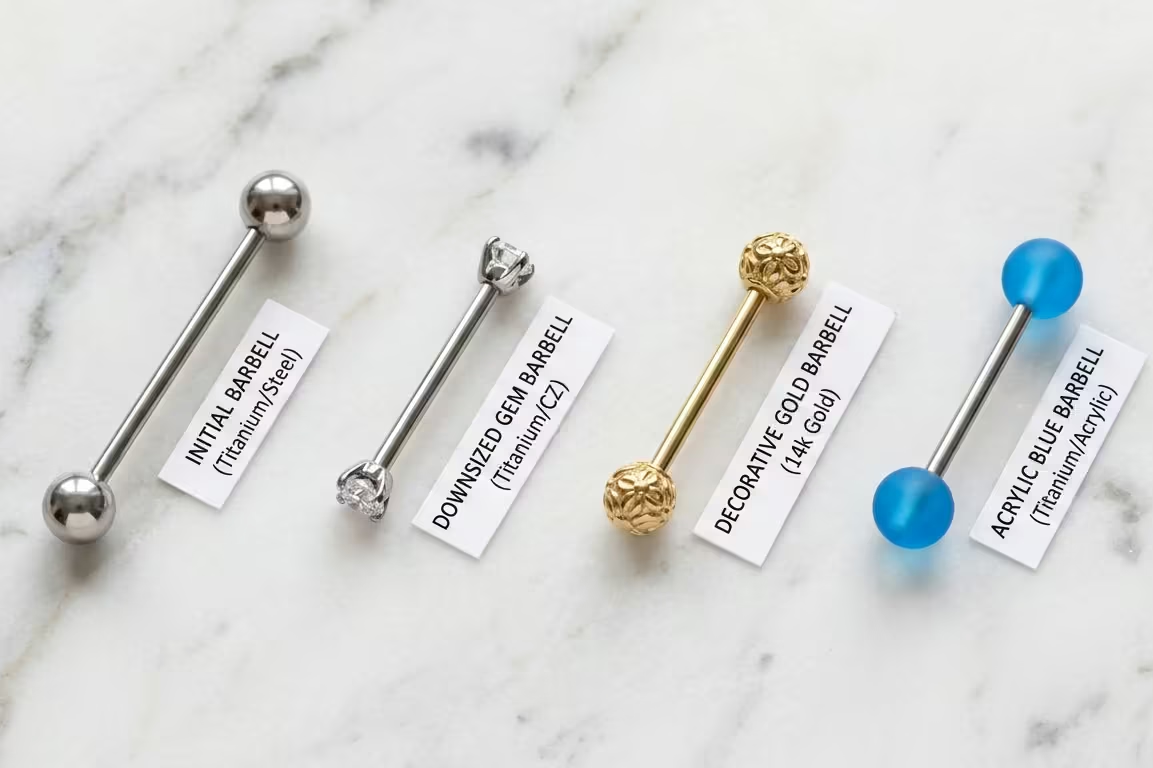
Your initial tongue barbell will be longer than your final jewelry. This extra length accommodates the significant swelling that happens in the first week after piercing. A 16mm to 18mm barbell is typical for initial tongue piercings.
The balls on the initial barbell are usually smaller than your final jewelry. This reduces unnecessary weight and pressure on the swelling tongue tissue during the most sensitive healing phase.
The downsize appointment
At four to six weeks, once the initial swelling has fully settled, you must return to your piercer for a downsize. The longer initial barbell is replaced with a shorter one that fits your healed anatomy correctly.
This step is not optional. A long barbell in a healed tongue creates excessive movement inside the mouth. That movement is one of the main causes of tooth and gum damage from tongue piercings.
The downsize appointment typically costs $10 to $25 plus the cost of the shorter barbell. Budget for it before you get pierced. It is a required part of tongue piercing aftercare, not an upsell.
| Material | Cost Range | Best For | Notes |
| Implant-grade Titanium | $15–$45 | Fresh and healed tongue piercings | Lightweight, hypoallergenic, best all-round choice. |
| Implant-grade Steel | $10–$30 | Non-sensitive individuals only | Contains trace nickel. Not ideal for reactive tissue. |
| Solid 14k/18k Gold | $50–$120+ | Fully healed tongue piercings | Premium and durable. Heavier than titanium. |
| Acrylic / Plastic Balls | $3–$10 | Ball ends only on healed piercings | Softer material reduces tooth contact damage. Post must still be implant-grade metal. |
Acrylic ball ends on an implant-grade titanium post are a popular choice for healed tongue piercings. The softer ball causes less enamel abrasion than a metal ball when it inevitably contacts the teeth.
Healing: What the Process Actually Looks Like
The commonly quoted four to six week healing time for tongue piercings is the initial healing timeline, not the full one. Full maturation of a tongue piercing takes three to six months.
The tongue heals faster than cartilage piercings because it has an excellent blood supply. But faster initial healing does not mean the piercing is stable or ready for jewelry changes at six weeks.
Week one: the hardest part
Swelling in the first week is significant. Your tongue will noticeably increase in size. Speaking and eating will feel awkward. This is completely normal and passes for most people by day five to seven.
Some people experience severe swelling that can cause difficulty breathing. This is rare, but it is the reason tongue piercings should always be done with a long initial barbell that allows full room for swelling.
Eat soft foods during the first week. Ice chips and cold water help manage swelling naturally. Avoid hot foods, alcohol, and anything spicy or acidic.
Weeks two to four
Swelling has reduced significantly. The piercing starts to feel more comfortable during eating and speaking. A white or off-white discharge around the barbell is normal lymph fluid, not infection.
Continue your full aftercare routine throughout this phase. The fact that things feel better does not mean the piercing is finished healing. The internal tissue is still building the fistula around the barbell.
The downsize at four to six weeks
At this point, the swelling has settled, and the piercing is stable enough for a shorter barbell. Book the downsize appointment with your piercer around the four-week mark.
Do not skip this step or delay it significantly. A long barbell flopping around a mostly healed tongue hits your teeth and gums repeatedly throughout the day. This causes damage that compounds over weeks and months.
Months two through six
The piercing settles into fully healed tissue. Discomfort becomes rare. The fistula is stable, and the barbell sits comfortably. You can safely change jewelry to your preferred style during this phase.
Have your first jewelry change done by your piercer. After seeing it done once, most people are comfortable doing subsequent changes themselves.
❝ The tongue piercing timeline catches many people off guard. The initial healing feels fast. But the full three to six months of maturation is what determines the long-term health and stability of the piercing.
Aftercare: The Daily Routine
Rinsing
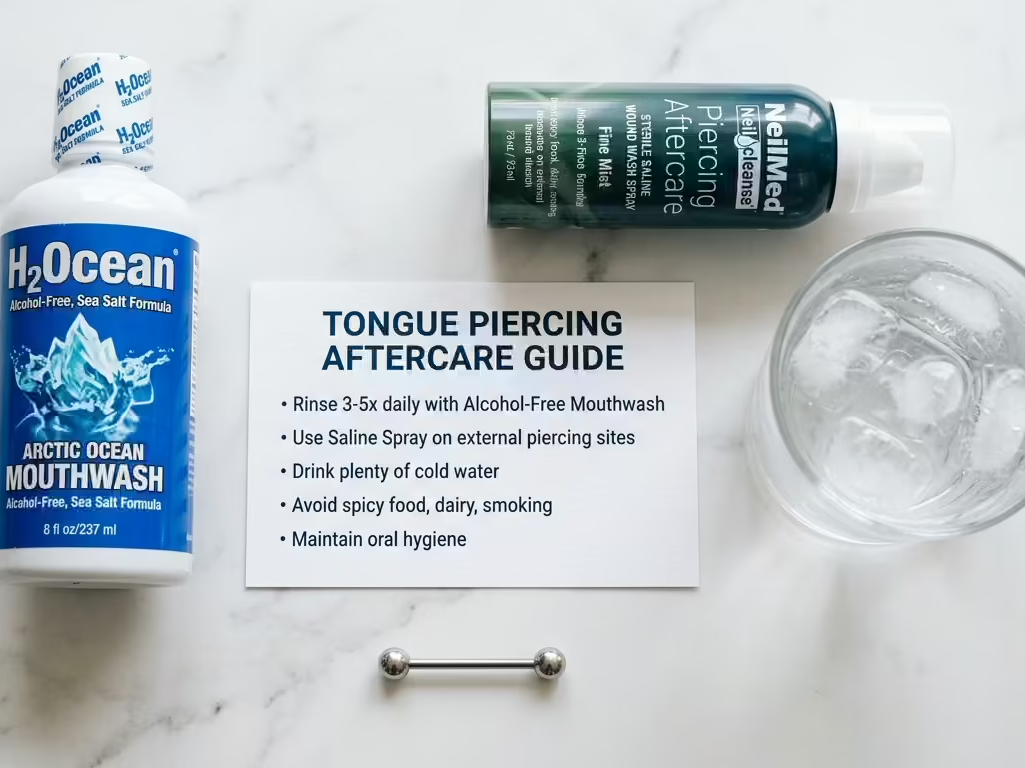
Rinse gently with alcohol-free mouthwash after every meal and snack. This removes food debris from around the barbell before it has a chance to irritate the tissue.
Alcohol-based mouthwash is too harsh for healing oral tissue. It dries out the mucous membrane and creates additional irritation. Alcohol-free formulas are the correct choice throughout the healing period.
External cleaning
Gently clean the entry and exit points of the piercing twice daily with sterile saline wound wash. Apply to the top and bottom ball areas and rinse clean.
Do not rotate the barbell. Rotating a tongue barbell disrupts the healing tissue and is not necessary for healing. Leave the jewelry in place and let the tissue settle around it.
Diet during healing
Soft foods are your primary tool for reducing trauma to the healing tongue. Yogurt, mashed foods, smoothies, oatmeal, and soft-cooked vegetables all work well in the first two weeks.
Avoid very hot foods and drinks, spicy and acidic foods, alcohol, and anything hard and crunchy for the first three to four weeks. All of these create additional irritation to healing oral tissue.
Habits to avoid
Do not play with the barbell using your teeth. This is one of the most common causes of enamel chips and is very hard to stop once it becomes a habit. Be conscious of it from day one.
Avoid kissing and oral activity during the initial healing phase. This introduces foreign bacteria directly to the healing tissue and creates physical pressure on the jewelry.
Stop smoking if you can during healing. With every puff, smoke bathes healing oral tissue in toxins, significantly increasing the risk of infection and healing complications.
The Dental Risk: What You Need to Know
The dental risks of tongue piercings are real and well-documented. It is also very manageable with the right jewelry choices and habits. Understanding it fully helps you protect your teeth for the long term.
Enamel wear
A metal ball tapping against the backs of the upper or lower front teeth causes gradual enamel erosion over time. This is not immediately visible but accumulates over months and years.
Using acrylic or soft silicone ball ends on a healed tongue barbell significantly reduces this risk. The softer material cushions contact rather than grinding against enamel.
Gum recession
Repeated contact between the barbell or ball and the gum line at the back of the lower front teeth can cause localised gum recession. This exposes the root surface of the tooth and can lead to sensitivity and decay.
Correctly sizing the barbell after the downsize appointment significantly reduces this. A well-fitted barbell has minimal excess movement. That means less accidental contact with the gum line.
Chipped or cracked teeth
Accidentally biting down on the barbell is the primary cause of tooth chips from tongue piercings. This risk is highest in the first few weeks before you develop spatial awareness of the jewelry.
It reduces substantially over time as wearing the barbell becomes second nature. Some people never chip a tooth from a tongue piercing. Others do it once and never again.
Minimising dental risk long-term
Tell your dentist you have a tongue piercing. They can monitor enamel wear and gum recession at regular check-ups. They can also advise on positioning the barbell for dental treatments.
A well-fitted barbell, soft ball ends, and not playing with the jewelry with your teeth are the three things that matter most for protecting your dental health long-term.
Risks and Complications to Know About
Infection
Signs of tongue piercing infection include spreading redness or discolouration of the tongue, significant worsening swelling after the first 72 hours, throbbing pain, and fever.
A yellow or green discharge is concerning. Normal healing produces white or off-white lymph fluid discharge, not coloured discharge. See a doctor if you suspect an infection.
Nerve damage
A poorly placed tongue piercing can nick a nerve branch. This causes persistent numbness, tingling, or altered sensation in part of the tongue. In rare cases, this can be permanent.
This is the strongest argument for choosing an experienced, knowledgeable piercer who marks placement precisely. The risk of anatomical injury from tongue piercing is real and directly related to the piercer’s skill.
Blood vessel damage
The lingual vein and arteries run through the tongue. Piercing too close to these structures causes significant, rapid bleeding. This is the most serious acute risk of tongue piercing.
An experienced piercer examines the underside of the tongue carefully before marking. Visible vein patterns vary by individual. Good placement accounts for your specific anatomy, not just a standard template.
Swelling affecting breathing
In rare cases, post-piercing swelling is severe enough to restrict breathing. This is most likely to occur in people with smaller-than-average oral cavities or existing respiratory sensitivities.
It is also why tongue piercings should always use a longer initial barbell. A barbell that is too short can be drawn into the tongue tissue when swelling occurs, creating a medical emergency.
❝ If you experience difficulty breathing after a tongue piercing, seek medical attention immediately. This is rare but serious and requires prompt professional assessment.
Is a Tongue Piercing Right for You?
Tongue piercings suit people who want a piercing they can largely conceal when needed. With the ball in a resting tongue position, a tongue piercing is not visible in normal conversation.
They are a more demanding commitment than many people expect. The dietary restrictions during healing, the downsize appointment, the dental care considerations, and the long-term management of enamel and gum health all require genuine attention.
If you work in an environment with strict visible piercing policies, a tongue piercing is one of the few facial or oral piercings that can genuinely be concealed on demand. A clear retainer makes it very difficult to spot in normal circumstances.
People with bleeding disorders, those on blood thinners, or anyone with existing gum disease or dental issues should consult a doctor or dentist before getting a tongue piercing. These are genuine contraindications worth discussing before booking.
Frequently Asked Questions
How badly does a tongue piercing hurt?
Most people rate the tongue piercing procedure itself at 3 to 5 out of 10. The needle pass is very fast. The discomfort that follows from swelling is typically more challenging than the actual piercing.
The first two to three days of swelling and awkward eating are the most uncomfortable part of the whole experience for most people. After that, it improves steadily.
Can I eat normally after getting my tongue pierced?
You can eat right after you get pierced, but your diet needs to adapt for the first week to two weeks. Soft foods that do not require hard chewing are the right approach.
Most people are eating normally or close to normally by week two. The main thing to avoid for longer is very hard foods that could be bitten down on with force near the barbell.
Can I talk normally after a tongue piercing?
Speech is affected for the first week, mostly due to swelling rather than the piercing itself. Many people notice a slight lisp or change in articulation in the early days.
This resolves as the swelling subsides and your tongue learns to compensate for the barbell’s presence. Most people are speaking completely normally within two weeks.
When can I change my tongue ring?
The first change from your initial longer barbell to a shorter one should happen at your piercer’s studio, four to six weeks later. This is the downsize appointment.
After that, full jewelry changes to your preferred style are best done after three months at a minimum. Have your first style change done by your piercer before attempting it yourself.
Can a tongue piercing close up?
Yes, tongue piercings close relatively quickly if the jewelry is removed, especially during the first year. Fresh tongue piercings can begin to close within hours of jewelry removal.
Even well-healed tongue piercings that have been in place for years can close within days to weeks after removal. If you need to remove it temporarily, let your piercer do it and reinsert it as quickly as possible.
Final Thoughts
A tongue piercing costs between $75 and $190 all-in when done properly at a reputable studio in 2025. That total covers the service, quality jewelry, aftercare supplies, the downsize appointment, and a fair tip for your piercer.
It is one of the most concealable piercings available and one of the fastest healers in the oral piercing category. But the anatomy risks are real, the dental care requirements are ongoing, and the downsize appointment is non-negotiable.
Choose an experienced piercer who examines your anatomy before marking placement. Use implant-grade titanium. Get the downsize done on schedule. Tell your dentist. Do all of that, and a tongue piercing can be a comfortable, enjoyable, and long-lasting piece of body jewelry.
For more on oral and facial piercings, check out our guide to different types of lip piercings and our article on cyber bites piercing: everything you need to know. For a full look at body piercing types, our guide to body piercing types with pictures covers all the options across the body.