Tragus Piercing: Benefits, Costs, and Everything You Need to Know
The Full Guide Including the Migraine and Anxiety Claims
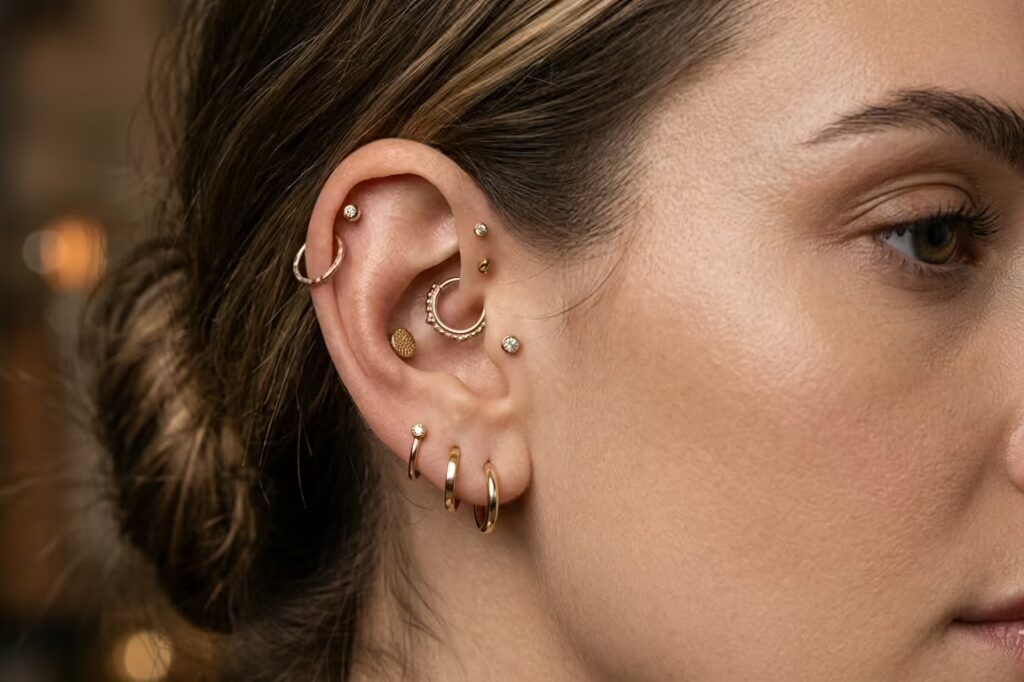
The tragus piercing sits on that small cartilage flap right in front of the ear canal. It is subtle enough to look refined, visible enough to make a statement, and sits in a position that most people find endlessly interesting because it is so different from a standard lobe or helix.
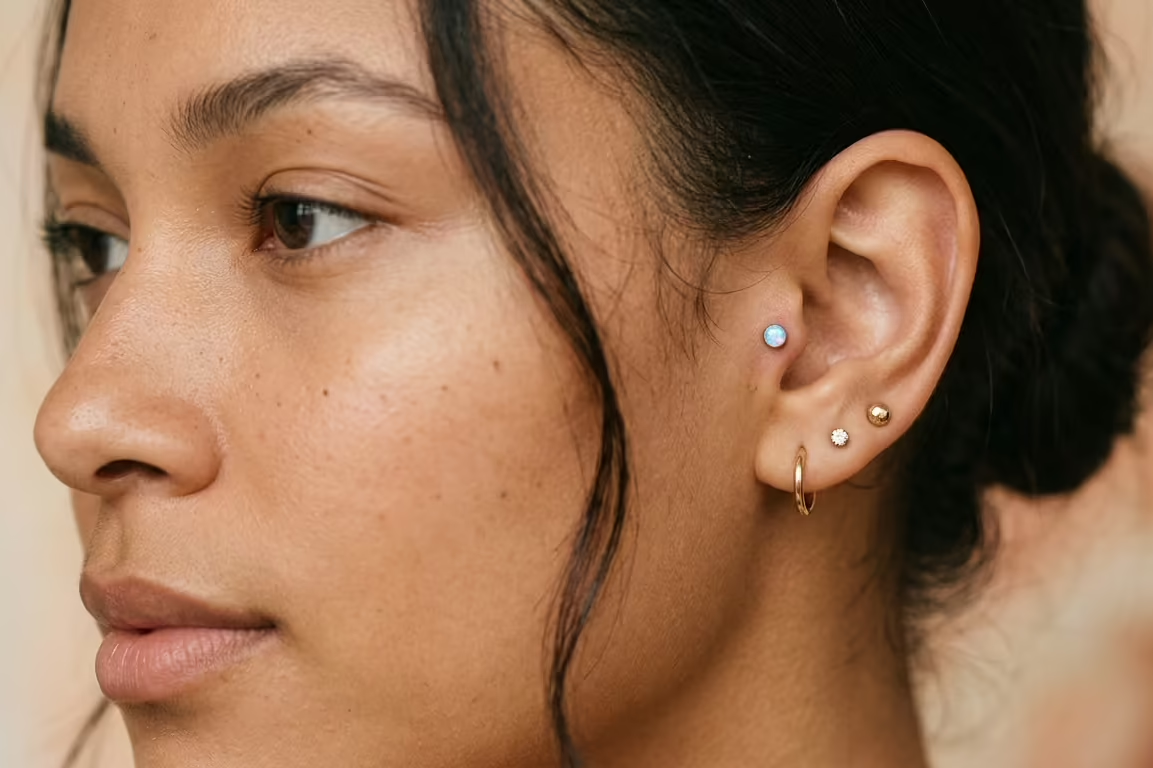
It is also one of the most discussed piercings online for a reason that goes beyond aesthetics. The tragus is associated with a specific pressure point in traditional acupressure systems, and a significant number of people report getting it specifically because of claimed benefits for migraines, anxiety, and sleep. Whether those claims hold up is a question this guide addresses honestly.
Whether you are drawn to the tragus for its looks, its wellness associations, or both, this guide covers everything: what the piercing entails, how much it costs, what healing looks like, the evidence behind the health claims, and how to care for it properly.
❝ The tragus is one of the more technically demanding ear cartilage piercings. The small size of the cartilage flap means placement precision matters significantly. An experienced piercer is not optional here.
What Is a Tragus Piercing?
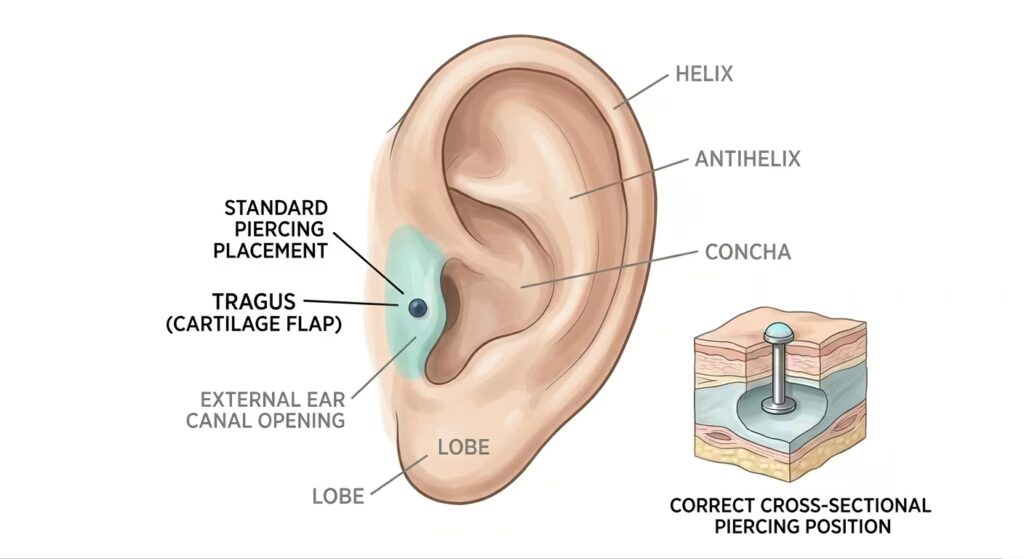
The tragus is the small, triangular flap of cartilage that sits directly in front of the ear canal opening. A tragus piercing passes a needle through this flap from front to back, with the jewelry sitting in the cartilage itself.
It is a cartilage piercing, which means it follows the same general rules as a helix or daith: it heals more slowly than a lobe, requires consistent aftercare for months, and reacts more strongly to disturbance than soft tissue piercings do.
The tragus is smaller than most other cartilage areas, which is what gives it its precise, delicate appearance. That same small size is also why placement and piercer experience matter more here than in more spacious cartilage areas like the helix. There is simply less room for error.
For a full comparison of the tragus against other ear piercing placements, our guide to types of ear piercings and pain levels ranks every placement from earlobe to industrial.
How Much Does a Tragus Piercing Cost?
At a reputable studio, a tragus piercing costs between $35 and $80 for the service fee. With jewelry, aftercare, and a tip, the realistic all-in cost is $60 to $130.
| Cost Component | Typical Range (USD) |
| Piercing service fee | $35–$80 |
| Implant-grade titanium flat-back stud | $15–$40 |
| Sterile saline aftercare spray | $8–$15 |
| Tip for piercer (recommended) | $10–$20 |
| Realistic total all-in | $68–$155 |
Regional Pricing Guide
| Country | Budget Studio | Reputable Studio |
| United States | $35–$55 | $65–$100 |
| Canada | CAD 40–60 | CAD 70–115 |
| United Kingdom | £22–£40 | £50–£80 |
| Australia | AUD 45–65 | AUD 80–130 |
| Kenya / East Africa | KES 1,500–3,000 | KES 4,000–7,000 |
How Painful Is a Tragus Piercing?
Most people rate a tragus piercing at 5 to 7 out of 10. It sits at the higher end of ear cartilage piercings for pain, primarily because the cartilage there is dense and the area sits close to the ear canal, which amplifies sound and sensation during the procedure.
Many people report hearing a crunching sound when the needle passes through the cartilage. This is simply the sound of the needle moving through dense tissue. It is disconcerting to some people and less significant to others. Knowing it is coming helps.
The sensation itself is a sharp, focused pressure followed by a deep ache that fades over the following hour. The area remains tender for longer than most ear piercings due to its position and the density of the cartilage. Our full, most painful ear-piercings ranked guide places the tragus near the top of the ear-piercings pain scale.
Healing Time and What to Expect
A tragus piercing takes 6 to 12 months to fully heal. Surface healing at the entry and exit points happens within a few months, but the dense cartilage beneath takes considerably longer to stabilise.
The tragus sits right at the ear canal opening, which means it is in contact with earbuds, phone calls, pillows, and hands more than most cartilage piercings. All of that contact creates an ongoing disturbance that slows the healing process compared to a helix or rook in a less-trafficked position.
What the healing period looks like
In the first six to eight weeks, expect soreness, possible swelling of the tragus flap, and some clear discharge around the stud. The ear canal area will feel more sensitive than usual. Earbuds should be avoided entirely during this phase.
From two to six months, the tenderness reduces, and the piercing becomes less reactive to daily activity. However, it is still healing actively. This is not the time to change jewelry or reintroduce earbuds.
At six to twelve months, a well-cared-for tragus is fully settled. The stud sits flat and comfortably; there is no discharge, and the tissue around the piercing looks completely normal.
❝ The tragus is one of the piercings most disrupted by daily habits people do not think about in advance: earbuds, phone calls, and sleeping position. Planning for all three before you book makes the healing process significantly easier.
The Claimed Health Benefits: What Does the Evidence Actually Say?
This is the section that generates the most searches about tragus piercings. The claims that a tragus piercing can reduce migraines, ease anxiety, improve sleep, and even assist with weight loss come up regularly online. It is important to address them honestly.
The pressure point theory
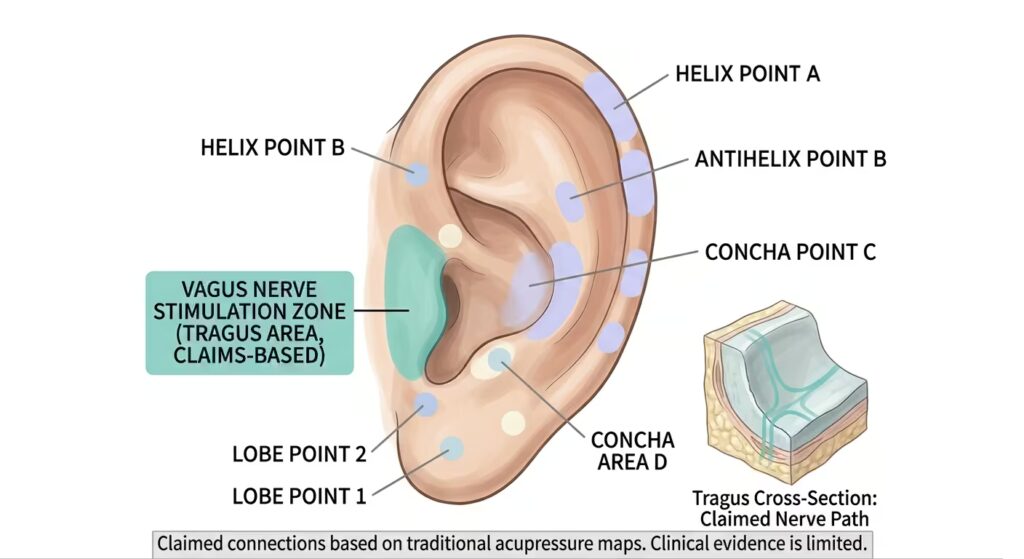
Traditional acupressure and ear acupuncture (auriculotherapy) map specific points on the ear to the body’s internal organs, systems, and functions. In some of these systems, the tragus area is associated with the vagus nerve, which regulates heart rate, digestion, mood, and pain response.
The idea behind the claimed benefits is that constant low-level stimulation of the tragus pressure point, provided by the piercing jewelry, mimics the effect of deliberate acupressure or auriculotherapy at that location.
Migraines and headaches
The daith piercing is more widely discussed for migraine claims, but the tragus gets associated with similar claims because of its proximity to the same auriculotherapy zones. The theory is that stimulation of these ear pressure points may interrupt pain-signaling pathways involved in migraine.
The evidence is mixed and inconclusive. There are anecdotal reports from people who say their migraine frequency reduced after getting a tragus or daith piercing. However, there are no controlled clinical studies that establish a causal link. The improvements reported may reflect the placebo effect, lifestyle changes made around the time of piercing, or natural fluctuation in migraine patterns.
The honest position is this: some people who get this piercing report fewer migraines, and some do not. There is no reliable way to predict which group you will be in. Getting a tragus piercing specifically to treat migraines is making a healthcare decision based on very limited evidence.
Anxiety and sleep
Similar logic applies to the anxiety and sleep claims. Vagus nerve stimulation has genuine research support as a tool for anxiety and mood regulation. The question is whether the presence of a small piece of metal in the tragus meaningfully activates the vagus nerve in the same way.
Dedicated clinical vagus nerve stimulation devices deliver precisely calibrated electrical impulses. The mechanical presence of a tragus stud is a far more diffuse stimulus. Whether it produces measurable neurological effects is genuinely unknown.
Again, some people report feeling calmer or sleeping better after getting a tragus piercing. Some do not. The evidence does not support recommending it as an anxiety or sleep treatment, but it also does not categorically disprove individual experiences.
Weight loss
The weight-loss claim is the least supported of the tragus-piercing health claims. Auriculotherapy practitioners sometimes identify specific ear points associated with appetite regulation, and some practitioners perform ear stapling or ear acupressure specifically for weight management.
The evidence for ear-based weight loss interventions is weak overall. There is no credible mechanism by which a tragus piercing would produce meaningful weight loss. This claim should not factor into your decision to get the piercing.
The realistic position
If you want a tragus piercing for its aesthetic value and also happen to find that it helps with your migraines or anxiety, that is a genuine bonus. If the health claims are your primary reason for getting pierced, you should know that the evidence does not reliably support that outcome.
The only thing a tragus piercing reliably delivers is a beautifully placed, subtle, and distinctive ear piercing. That is already a good reason to get one.
Tragus Piercing Aftercare
Cleaning
Clean the tragus twice daily with sterile saline wound wash. The position of the tragus makes it slightly more awkward to clean than a helix. Spray gently from the front, let the saline soak around both sides of the stud, then rinse under warm running water in the shower.
Avoid inserting cotton buds near the ear canal when cleaning the tragus. Fibres from cotton products are a common source of irritation. Non-woven gauze or simple rinsing is sufficient and safer for this placement.
Earbuds and headphones
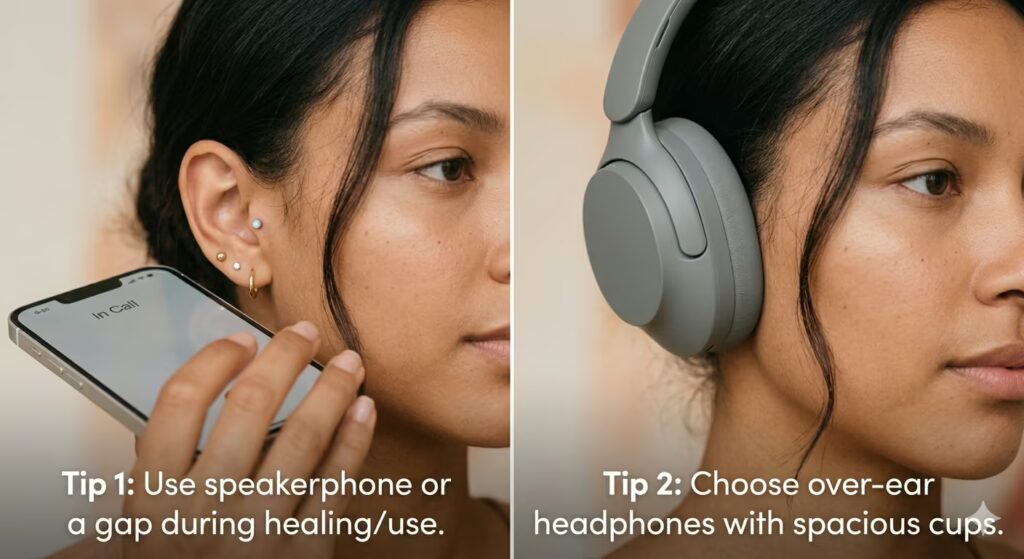
This is the main aftercare challenge that catches tragus piercing owners off guard. In-ear earbuds sit directly in the ear canal, right next to the tragus piercing. Using them during healing creates direct pressure on the healing tissue with every insertion.
Avoid in-ear earbuds entirely for the first three to four months. Over-ear headphones that do not make contact with the tragus are a practical alternative. After the initial healing phase, some people return to earbuds with caution. Others find that earbuds remain uncomfortable on the tragus side indefinitely and adjust their habits accordingly.
Phone calls
Holding a phone against the ear for extended calls presses the phone body against the tragus. During healing, this creates the same kind of prolonged pressure as sleeping on the piercing. Use speakerphone or wireless earphones on the non-pierced ear during the healing period.
Sleeping
Sleeping on the pierced side is a primary cause of prolonged healing in tragus piercings. A travel pillow worn around the neck during sleep keeps the head from rolling onto the pierced ear. The few weeks of adjustment are worth the significantly faster healing that results.
Tragus Piercing Jewelry
Initial jewelry
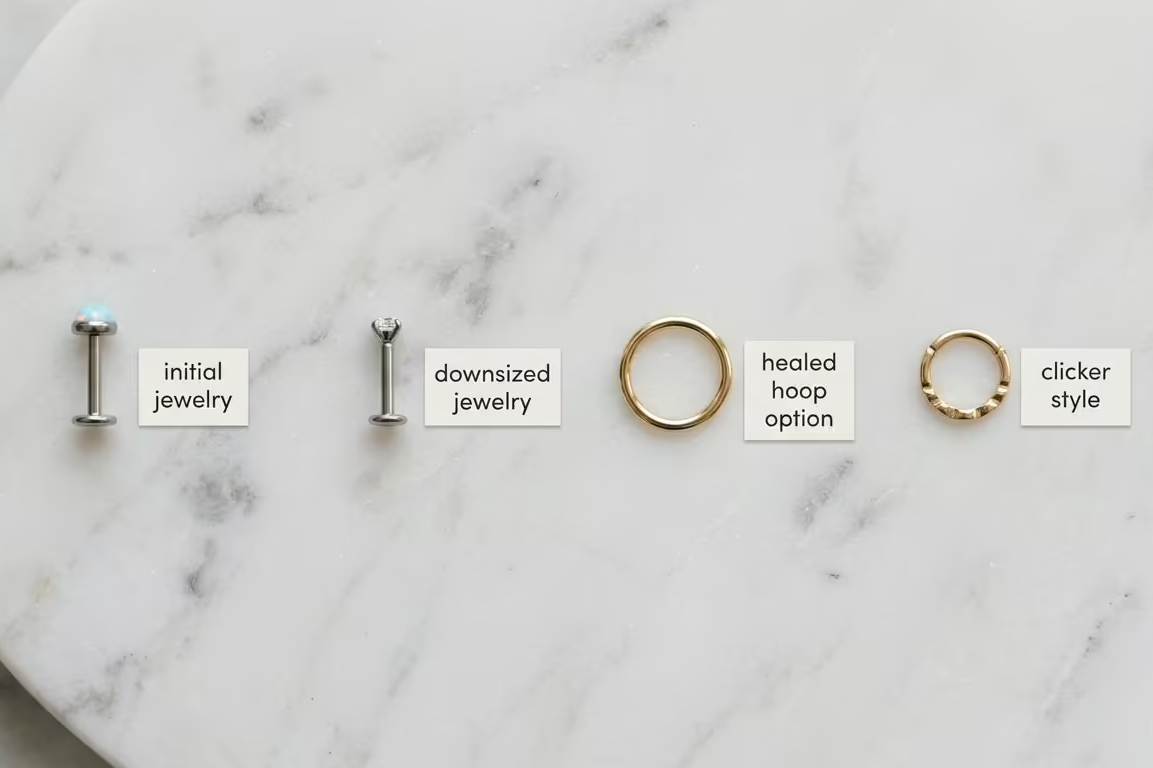
A flat-back labret stud in implant-grade titanium is the professional standard for a fresh tragus piercing. The flat disc sits flush against the inner side of the tragus cartilage without creating pressure points. The post is slightly longer than the final jewelry to accommodate initial swelling.
At six to eight weeks, your piercer replaces the initial longer post with a shorter downsized one that fits the healed anatomy. This is an essential step for comfort and to reduce movement within the healing channel.
For healed tragus piercings
Once the tragus is fully healed, small hoops, clicker rings, and seam rings become viable. The tragus suits delicate jewelry well — its small size makes oversized pieces look disproportionate and can create pressure on the cartilage. A hoop diameter of 6mm to 8mm typically fits a tragus well.
| Material | Cost Range | Best For | Notes |
| Implant-grade Titanium | $15–$45 | Fresh and healed piercings | Best all-round choice. Lightweight, hypoallergenic. |
| Implant-grade Steel | $10–$30 | Non-sensitive individuals | Heavier than titanium. Trace nickel content. |
| Solid 14k/18k Gold | $55–$150+ | Fully healed piercings | Beautiful long-term choice. Small, delicate designs suit the tragus best. |
| Fashion / Mystery Metal | Under $10 | Avoid entirely | Not body-safe. Causes persistent irritation in cartilage. |
Tragus Piercing Pros and Cons
| Pros | Cons |
| Subtle, delicate appearance that works with any style | Earbuds require management for 3 to 4 months minimum |
| Less visible than helix or lobe piercings in most hairstyles | One of the more painful ear cartilage piercings |
| Lower rejection risk compared to surface piercings | Phone and headphone habits need adjustment during healing |
| Wide jewelry options once healed, particularly small hoops | A 6 to 12-month healing timeline requires patience |
| Some people report wellness benefits, though evidence is limited | Health benefits cannot be reliably predicted or guaranteed |
Frequently Asked Questions
Does a tragus piercing help with migraines?
Some people report fewer migraines after getting a tragus or daith piercing. There is no clinical evidence establishing this as a reliable or predictable outcome. The anecdotal reports are real, but the mechanism is not scientifically proven.
If you have migraines and are considering this piercing specifically for that reason, speak with your doctor alongside your piercer. The piercing will not harm you, but it may not produce the result you are hoping for.
Does a tragus piercing help with anxiety?
Some people report feeling calmer after getting a tragus piercing. As with the migraine claims, the evidence is anecdotal rather than clinical. Vagus nerve stimulation has real research support as a therapeutic tool, but whether a tragus stud produces meaningful vagus nerve activation is unknown.
If you are managing anxiety, evidence-based treatments, including therapy, medication, and lifestyle interventions, have far more reliable support than ear piercing. A tragus piercing might be a welcome addition to your life, but it is not a substitute for professional mental health support.
Can I use earbuds with a tragus piercing?
Not during the healing period. Avoid in-ear earbuds for the first three to four months. After the initial healing phase, you can cautiously try earbuds and assess how the tragus responds. Some people use them comfortably on a healed tragus. Others find they prefer to use them only on the non-pierced side permanently.
Is the tragus the most painful ear piercing?
The tragus is one of the more painful ear cartilage piercings, but not the most painful. The snug, industrial, and daith typically rank higher. The dense cartilage and proximity to the ear canal make it more intense than a standard helix but less so than the innermost ear cartilage placements.
Our most painful ear piercings ranked guide provides a full ranking of common ear piercings, with honest pain ratings and what each sensation actually feels like.
Can I wear glasses with a tragus piercing?
Yes. Glasses frames typically sit above the tragus and do not contact the piercing. Check this before you leave the studio by putting your glasses on and confirming the frame arm does not press against the tragus stud.
If your frame style contacts the tragus area, a small placement adjustment can usually avoid the conflict. This is worth discussing during your consultation before the piercing is done.
What size jewelry do I need for a tragus piercing?
The standard gauge for a tragus piercing is 16g (1.2mm), though 18g (1mm) is used in some studios for very small tragus cartilage. The initial post length is typically 6-8mm to allow for swelling. The downsized jewelry at six to eight weeks is usually 4mm to 5mm, depending on the thickness of your specific tragus cartilage.
Do not guess on sizing. Have your piercer measure and select the appropriate jewelry for your anatomy at both the initial piercing and the downsizing appointment.
Is a Tragus Piercing Right for You?
A tragus piercing costs between $68 and $155, all-in, at a reputable studio in 2025. It is one of the most elegant and distinctive ear cartilage piercings available, and for many people, it becomes a long-term favourite in their ear jewelry collection.
The healing commitment is real. Six to twelve months of consistent aftercare, three to four months of no in-ear earbuds, and careful management of phone and sleeping habits. All of that is manageable with planning and patience.
The health benefit claims are worth approaching with balanced expectations. Some people get genuine relief from migraines or anxiety symptoms. Many do not. The piercing is worth getting for its aesthetic value. If it happens to bring additional benefits, that is a bonus rather than a guarantee.
If you are building a curated ear and thinking about where the tragus fits, our guide to when I can change my ear piercing covers the full healing timeline comparison so you can plan your piercing sequence intelligently.