Africa is a continent of over fifty countries, thousands of ethnic groups, and hundreds of distinct jewelry-making traditions. To treat African piercing jewelry as a single category would be like treating European cuisine as a single cuisine. The diversity is staggering — and that is exactly what makes it so worth exploring.
What African piercing jewelry traditions share, across all their differences, is a seriousness of purpose. In most African cultures where piercing is practiced, the jewelry worn in those piercings is never merely decorative. It communicates identity, marks life transitions, signals social status, stores wealth, invokes protection, and connects the wearer to their ancestors. Every material choice, every design decision, every specific placement carries meaning.
This is the final article in our piercing history and culture series. If you are catching up, the full series covers the ancient history of ear piercings, nose piercing traditions in India and the Middle East, tribal septum piercings worldwide, and Victorian-era piercing culture. This article brings the series home by examining the extraordinary materials and heritage of African piercing jewelry.
❝ African piercing jewelry is not one tradition but hundreds — each with its own materials, meanings, and centuries of craft knowledge behind it.
The Maasai: Beads, Stretched Ears, and a Visual Language
The Maasai people of Kenya and Tanzania are among the most recognisable cultures in Africa, and their jewelry traditions are central to that recognition. The Maasai system of adornment is a complete visual language — and the ear is one of its primary pages.
Maasai ear piercing typically begins in childhood, with both the upper cartilage and the lower lobe pierced. Over time, the lower lobe is progressively stretched using weights, plugs, and coils, sometimes reaching several inches in length. The stretched lobe is considered beautiful and is a mark of cultural identity. A Maasai person who has not had their ears stretched is visually signaling that they have stepped outside traditional practice.
The earrings and ear ornaments worn in these piercings are primarily made from beads. But not just any beads — the colour, pattern, and arrangement of Maasai beadwork is a sophisticated code. Red signifies bravery, strength, and unity. Blue represents the sky and energy. White symbolises purity and health. Green is associated with land and sustenance. A Maasai woman’s full set of jewelry — including her ear ornaments — communicates her age group, marital status, number of children, and clan affiliation at a glance.
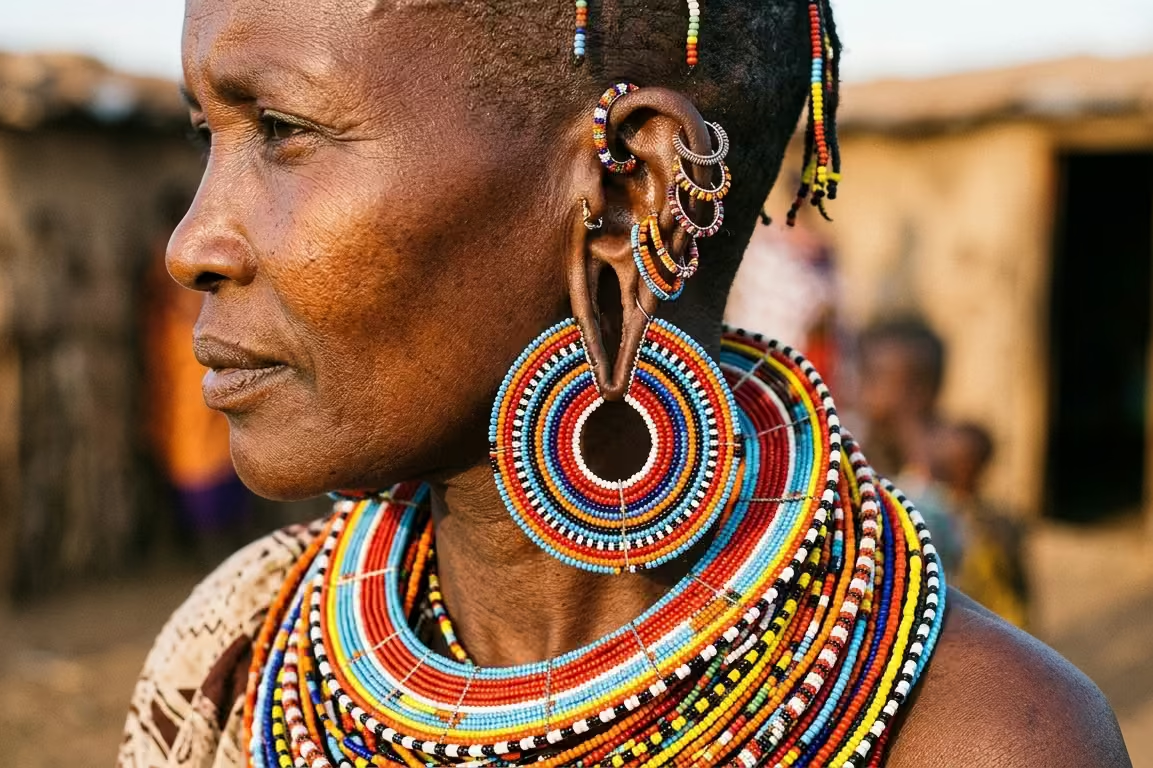
Glass beads — introduced through trade with Arab and later European merchants — largely replaced earlier materials like bone, shell, and clay beads from the 19th century onward. The Maasai enthusiastically adopted them, incorporating them into their existing visual system with remarkable creative energy. The result is a tradition that is both ancient in its grammar and continuously evolving in its vocabulary.
The Fulani: Gold, Identity, and Portable Wealth
The Fulani — one of the largest and most widely distributed ethnic groups in Africa, present across more than twenty countries from Senegal to Sudan — have one of the most distinctive jewelry traditions on the continent. And their large gold hoop earrings, known as kwottenai kanye, are among the most iconic pieces of jewelry in African cultural history.
These earrings are substantial. Large, twisted gold hoops, in some cases heavy enough to require support from a cord attached to the hair, make an immediate visual statement. But they are much more than fashion. For Fulani women, these earrings are the most important piece of jewelry they own. They are given at marriage, inherited across generations, and represent a significant portion of a family’s wealth in portable, wearable form.
The gold used in Fulani earrings is traditionally 18 to 24 carat, high-purity gold with real financial value. In communities that have historically faced discrimination, displacement, and limited access to formal financial systems, body-worn jewelry is not just beautiful. Economic security follows you and cannot easily be taken away. This is a pattern we see across many African jewelry traditions — adornment and financial strategy are inseparable.
❝ For the Fulani and many other African peoples, gold earrings are not just worn wealth — they are a financial system worn on the body, developed over centuries by communities who had reason to keep their assets close.
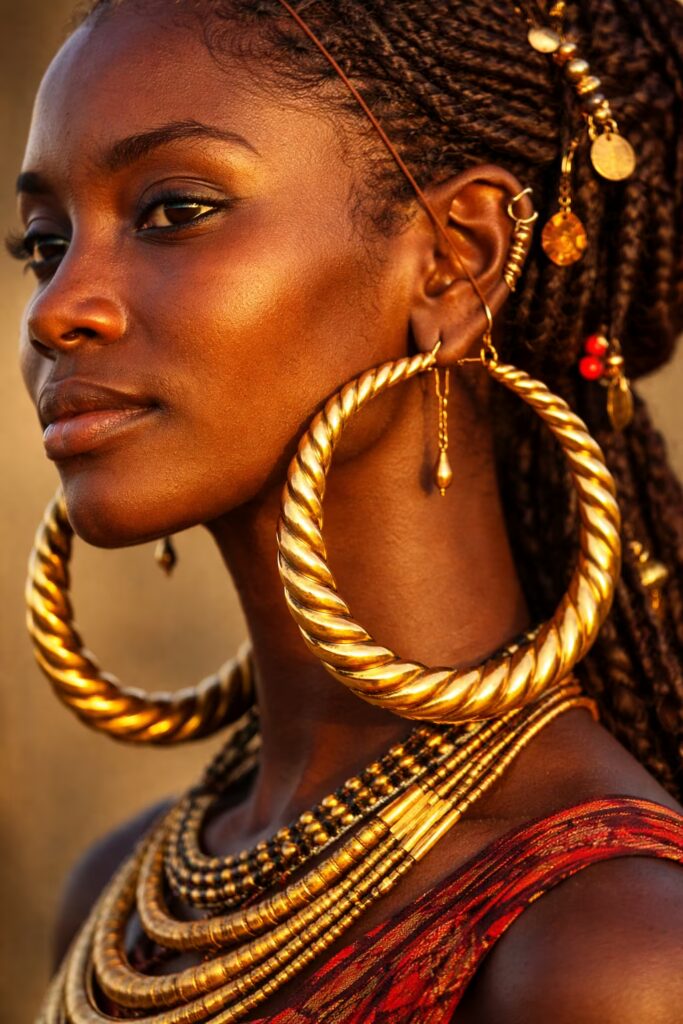
Fulani nose jewelry is equally distinctive. Small gold nose rings and studs, often paired with large hoop earrings and elaborate amber-and-gold hair ornaments, create a complete look that is immediately identifiable as Fulani across West Africa. The nose piercing here, as in the Indian traditions we explored earlier in this series, carries both aesthetic and cultural weight—it says who you are and where you come from.
Materials of the Earth: What African Jewelry Is Made From
One of the most remarkable things about African piercing jewelry is the extraordinary range of materials from which it is made. Long before trade brought glass beads and foreign metals, African craftspeople were making jewelry from materials found in their immediate environment — and developing sophisticated techniques to work with them.
Bone and ivory have been used for piercing jewelry across the continent for thousands of years. In many East and Central African cultures, carved ivory earplugs and ornaments were among the most prestigious items a person could wear, associated with elephant-hunting prowess and high social status. As elephant populations have declined and the international ivory trade has been restricted, many contemporary craftspeople now use cow bone or synthetic alternatives while maintaining traditional design patterns.
Shell has been equally important, particularly in landlocked communities where shells obtained through long-distance trade carried exotic prestige. Cowrie shells — smooth, glossy, and shaped in a way many cultures have associated with femininity and fertility — appear in ear and body jewelry across the continent. Ostrich eggshell beads, made by grinding eggshell into tiny discs and drilling holes through them, are among the oldest forms of jewelry in human history. Examples from southern Africa have been dated to over 70,000 years ago.
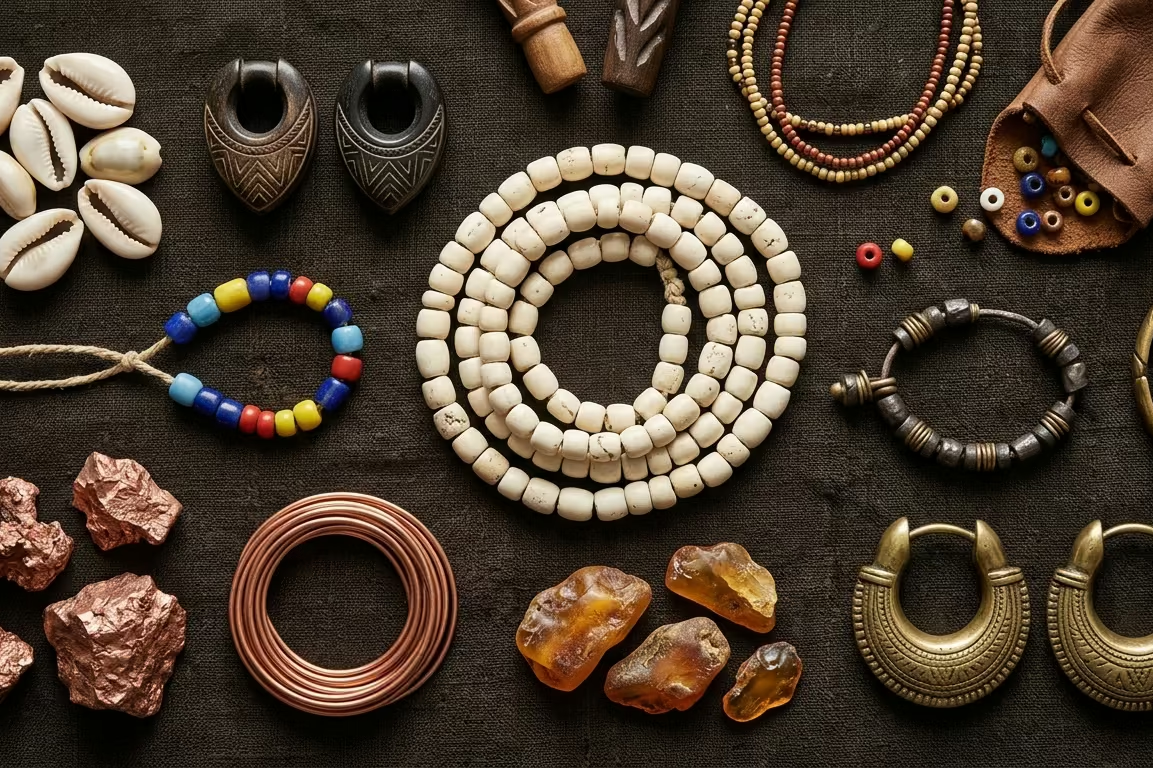
Copper and brass hold special significance in many African cultures. In the Kuba Kingdom of the Congo Basin, copper was associated with royal authority and spiritual power. Elaborate copper and brass ear ornaments were worn by royalty and those of high rank as visible markers of their position. The Kuba developed extraordinarily sophisticated metalworking techniques, producing jewelry of remarkable intricacy that drew admiring attention from European explorers and later became highly sought-after by museum collectors.
Amber — the fossilised resin traded across North and West Africa for centuries — carries its own symbolic weight. Among the Berber peoples of North Africa and the Tuareg of the Sahara, amber beads are incorporated into ear and nose jewelry as protective talismans. The warm, golden colour is associated with the sun, life force, and protection from evil. Old amber beads, darkened with age and worn smooth by generations of hands, are particularly prized — their age is part of their power.
Craft Traditions and the Knowledge Behind the Jewelry
Understanding African piercing jewelry is not just about the finished pieces. It is about the knowledge systems behind them — the craft traditions, the training of makers, and the spiritual dimensions of the making process itself.
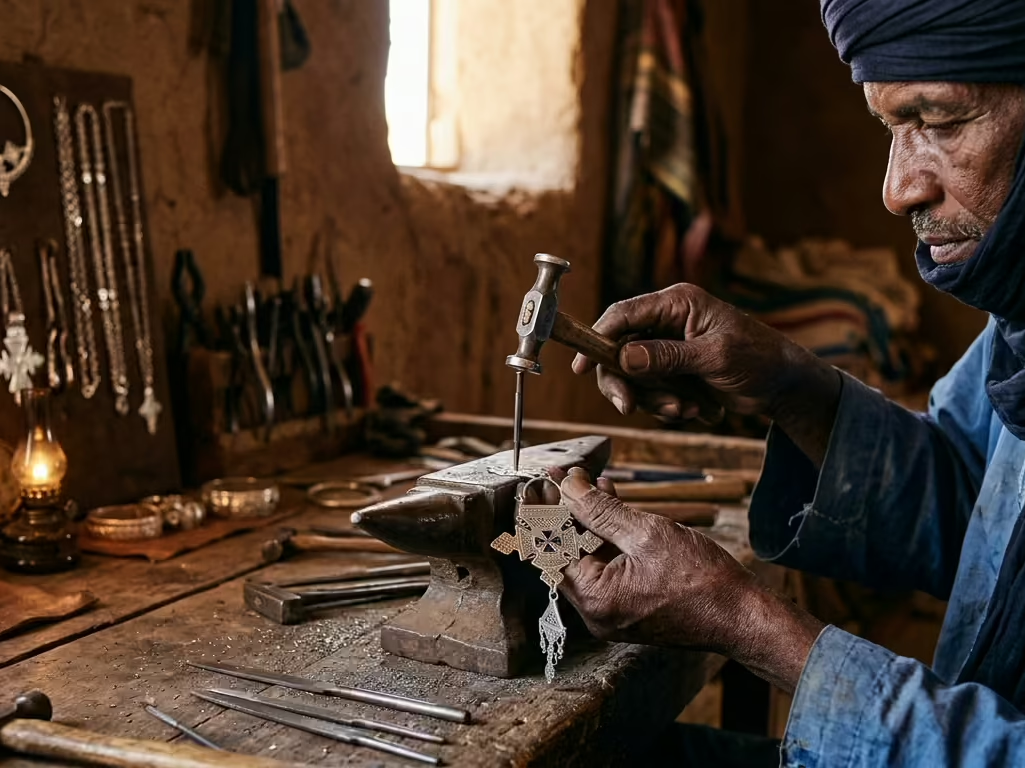
In many African cultures, jewelry-making is a specialized occupation passed down across generations within specific families or castes. Among the Tuareg of the Sahara, smiths — known as inadan — occupy a distinctive social position. They are simultaneously respected for their skills and set apart from the rest of Tuareg society. They make the silver jewelry, including the elaborate ear and nose ornaments, that are central to Tuareg ceremonial life. Their knowledge is closely guarded, passed from parent to child, and embedded in spiritual practice as much as technical skill.
Tuareg silver jewelry is immediately recognisable for its bold geometric designs, distinctive cross motifs (each regional cross design specific to a particular area), and the quality of its silversmithing. The large earrings worn by Tuareg women, often combined with elaborate head ornaments and necklaces, represent some of the finest traditional metalwork in the world. Each piece is hand-made, and the specific techniques used have remained largely unchanged for centuries.
❝ A Tuareg silversmith does not just make jewelry — they are custodians of centuries of technical and spiritual knowledge, embedded in every piece they create.
Among the Yoruba people of Nigeria — one of Africa’s largest and most culturally influential ethnic groups — jewelry-making for piercing and adornment is embedded in a rich artistic tradition that includes bronze casting, textile production, and woodcarving. Yoruba brass and bronze castings, some dating back to the Benin Kingdom of the 13th century and earlier, demonstrate a level of technical sophistication that astonished European observers upon first encountering them. The same technical mastery applied to jewelry — including ear and nose ornaments worn by royalty and priests — was applied to pieces made to the highest possible standard, as they were meant to honour the orishas, the Yoruba spiritual beings.
Piercing as Passage: Ceremony and Community
Across African cultures, the act of piercing is rarely separate from ceremony. The specific practices vary enormously, but the underlying pattern is consistent: piercing marks a transition, and that transition is witnessed and celebrated by the community.
Among the Krobo people of Ghana, the dipo initiation ceremony marks the transition of young women into adulthood. The ceremony features elaborate beaded adornment, including ear jewelry, specific to the Krobo tradition and signifying the wearer’s successful initiation. The beads used in the dipo adornment are not ordinary beads. Krobo powdered glass beads, made using a technique unique to the Krobo people, are among the most celebrated traditional beads in Africa and are now sought by collectors worldwide.
The Ndebele women of South Africa are renowned for their extraordinary beadwork, applied not only to jewelry but also to clothing, walls, and ceremonial objects. Ndebele girls receive their first piercing earrings and beaded ornaments during initiation ceremonies, and their adornment becomes progressively more elaborate as they progress through life stages. A fully adorned Ndebele woman’s appearance is a detailed autobiography written in bead and metal.
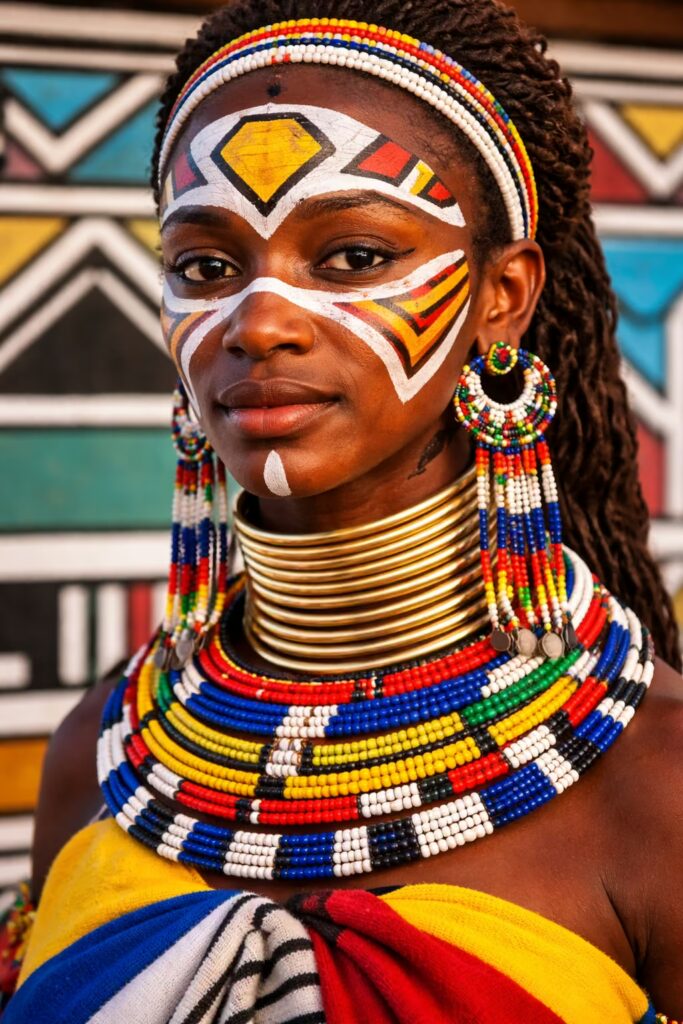
What is striking about these ceremonies is how completely the jewelry and the ritual are integrated. You cannot understand the jewelry without understanding the ceremony, and you cannot understand the ceremony without understanding what the jewelry means within it. The beads are not added to the ritual—they are part of its structure, meaning, and memory.
Heritage Under Pressure: Preservation and the Modern World
African piercing jewelry traditions face real pressures in the contemporary world. Urbanisation, Western fashion influence, the decline of traditional craft apprenticeships, and the disruption of ceremonial life in many communities have put strain on traditions that took centuries to develop.
The market for authentic traditional African jewelry has also created problems alongside its opportunities. High demand from collectors and tourists has led to a flood of mass-produced imitations that appropriate the visual language of specific cultural traditions without any of the knowledge, craft, or meaning behind them. A machine-made Maasai-style beaded earring sold at an airport souvenir shop is aesthetically similar to an authentic piece but culturally empty — and the profit goes nowhere near the community whose heritage it mimics.
At the same time, there are genuinely encouraging counter-movements. Across Africa, a new generation of designers is working at the intersection of traditional jewelry knowledge and contemporary aesthetics. They are trained in ancestral techniques, using traditional materials and motifs to create pieces that resonate with modern wearers. Nigerian, Ghanaian, Kenyan, and South African designers are gaining international recognition for work that honours heritage without being trapped by it.
❝ The most exciting African jewelry being made today is neither a museum replica nor a wholesale imitation. It is a living conversation between centuries-old knowledge and the present moment.
There are also active preservation efforts within communities themselves. Documenting traditional jewelry-making techniques, establishing craft schools and apprenticeship programmes, and celebrating traditional adornment through festivals and cultural events are all part of communities asserting that their heritage has value and deserves to continue. These are not nostalgia projects. They are acts of cultural self-determination.
What Africa’s Jewelry Heritage Tells Us
We started this series in ancient Egypt, which is itself an African story. We conclude here, with a continent whose piercing jewelry traditions span the full range of human creativity—from ostrich eggshell beads seventy thousand years old to contemporary designers reshaping global jewelry aesthetics today.
What Africa’s piercing jewelry heritage makes clear is something the whole series has been building toward: jewelry is never just jewelry. It is history, identity, economy, spirituality, and art all at once. The bead on a Maasai ear, the gold hoop of a Fulani woman, the silver cross of a Tuareg earring — each one is the visible tip of a vast and deep cultural iceberg.
That depth is worth taking seriously. Whether you are a piercing enthusiast, a jewelry lover, a student of history, or simply someone curious about the world, African piercing traditions offer an extraordinary window into what human beings have always done with their bodies — and why it matters.
Thank you for reading the full series. Here are all five articles if you want to revisit or share any of them:
→ The Evolution of Ear Piercings: From Ancient Egypt to Modern Trends
→ Nose Piercings in Indian and Middle Eastern Traditions