The back gives you more room than any other part of the body. That’s why floral back tattoos land so well there. A stem can follow your spine. A branch can stretch shoulder to shoulder. Nothing has to be squeezed or cropped to fit.
Flowers also carry meaning without spelling it out. Roses, lilies, wildflowers, and vines each say something different, and most people won’t ask you to explain. The twelve designs below cover fine line work, heavy blackwork, spine pieces, and full back coverage, with what each one tends to mean for the women wearing it.
What Makes a Back Floral Work
Three things: scale, flow, and skin left bare.
Scale decides how much of the back the design claims. Flow decides whether the piece follows your body or fights it. Bare skin decides how the tattoo ages, since crowded linework closes up over time.
Good back florals move with the shoulder blades and the curve of the spine. Bad ones sit flat like a sticker. Bring reference photos of the shape you want, not just the flower.
12 Floral Back Tattoo Designs for Women
Full Back Peony Cascade Back Tattoo
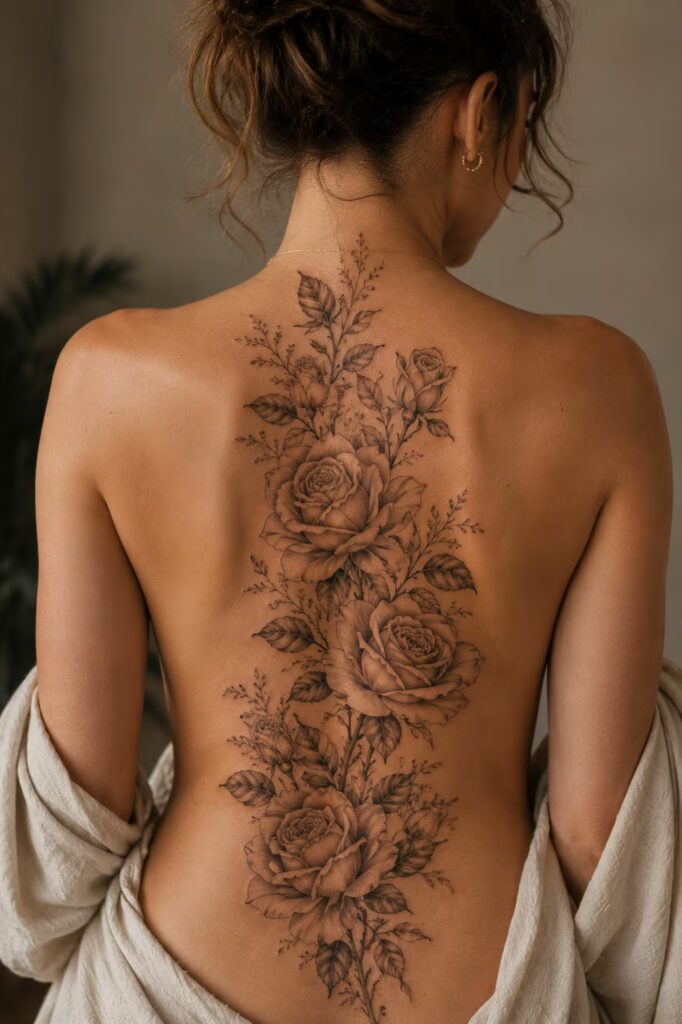
Layered peonies open across both shoulder blades and drift toward the lower back. Soft grey shading gives each petal weight without harsh outlines. Peonies carry old associations with prosperity, honor, and beauty that arrives slowly. At this scale, the design reads as a quiet statement about growth over time.
Delicate Spine Blossom Trail Back Tattoo
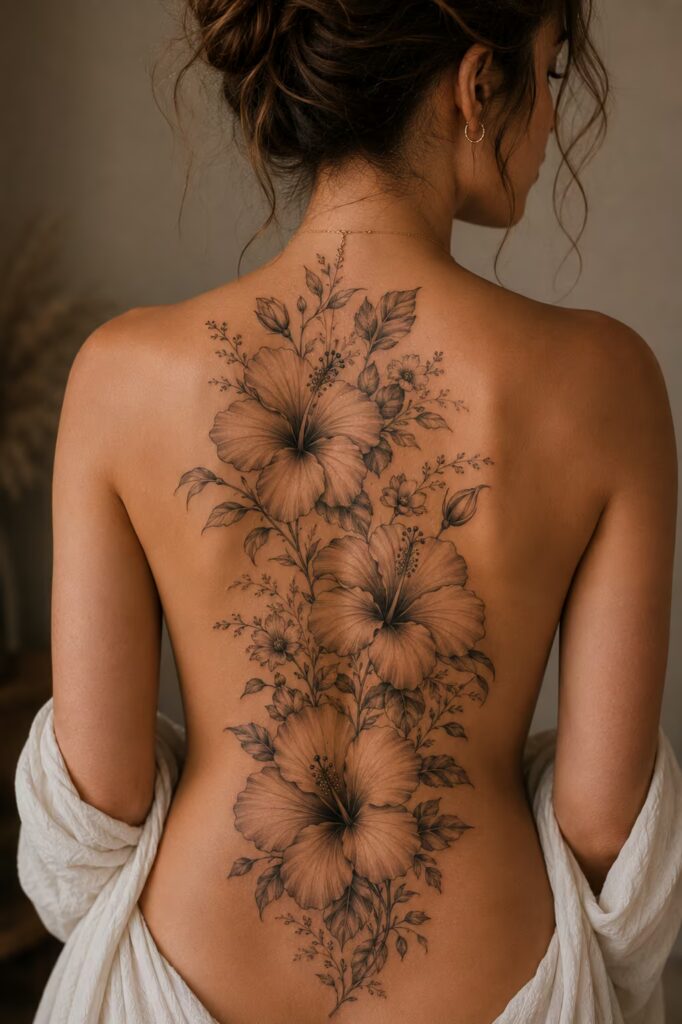
Small blossoms run single file down the length of the spine. The linework stays thin, closer to a pencil sketch than solid ink.
Following the backbone this way turns posture itself into part of the artwork. Many choose it as a marker of resilience, since the spine holds everything upright.
Shoulder Rose Drape Floral Back Tattoo
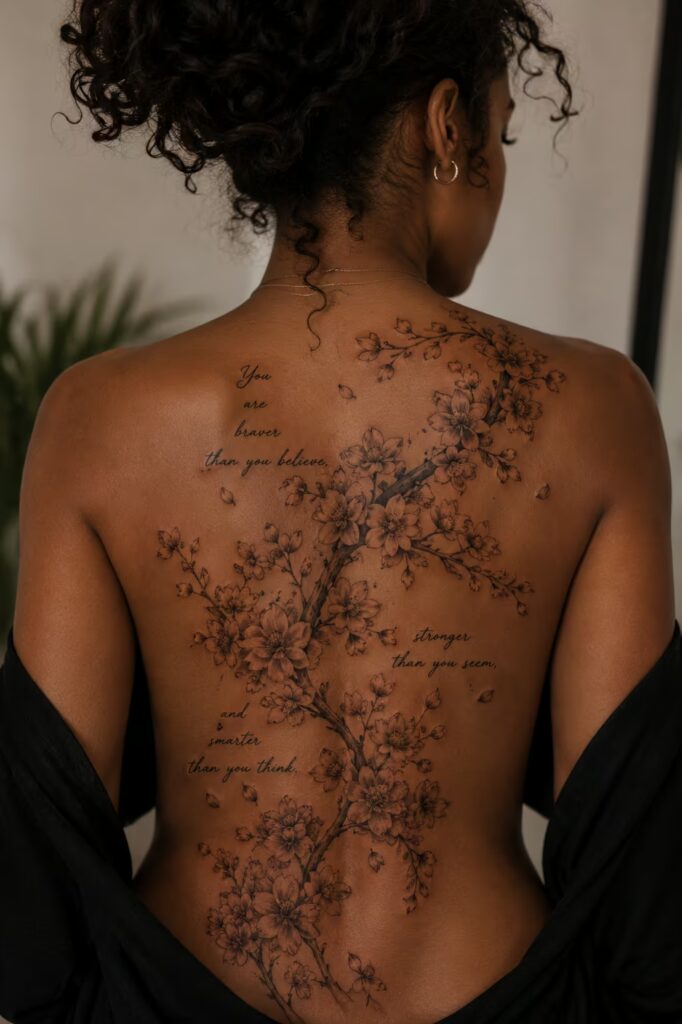
Roses gather at one shoulder blade and spill loosely over the curve of the arm. Leaves fill the gaps, keeping the shape soft instead of blocky.
Roses have carried meanings of love and devotion across centuries. Placed off-center, the piece feels personal rather than ceremonial.
Trailing Vine Backbone Floral Tattoo
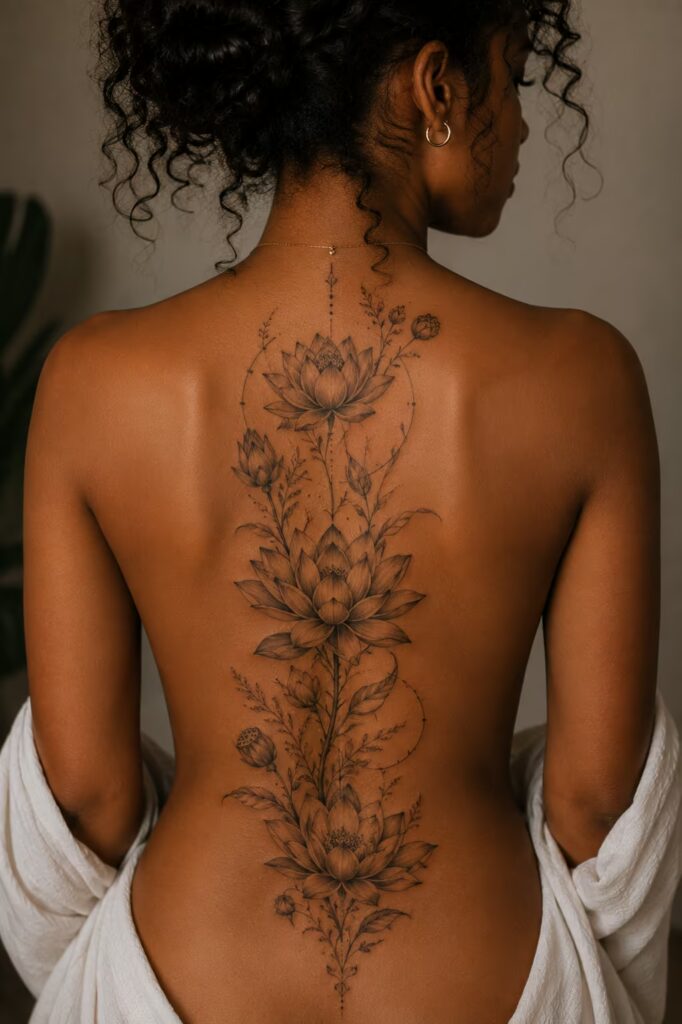
A thin vine climbs the spine with small buds and leaves branching at intervals. Nothing crowds the design, so skin stays visible between each element.
Vines suggest steady progress, the kind that happens without announcement. It suits anyone drawn to quiet symbolism over bold display.
Mirrored Bloom Spread Back Tattoo
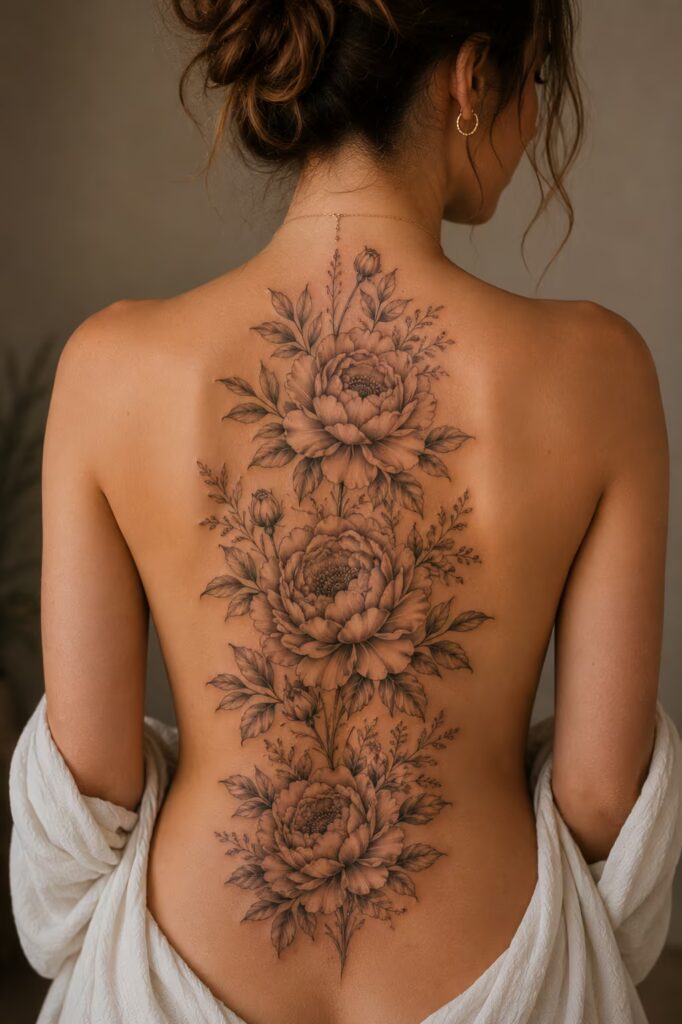
Large blooms sit in near symmetry on either side of the spine. Stems trail outward, softening the edges where the design meets bare skin.
Symmetry here suggests balance, a sense of things held in proportion. The piece rewards stillness, revealing detail the longer you look.
Dotwork Garden Panel Floral Back Tattoo
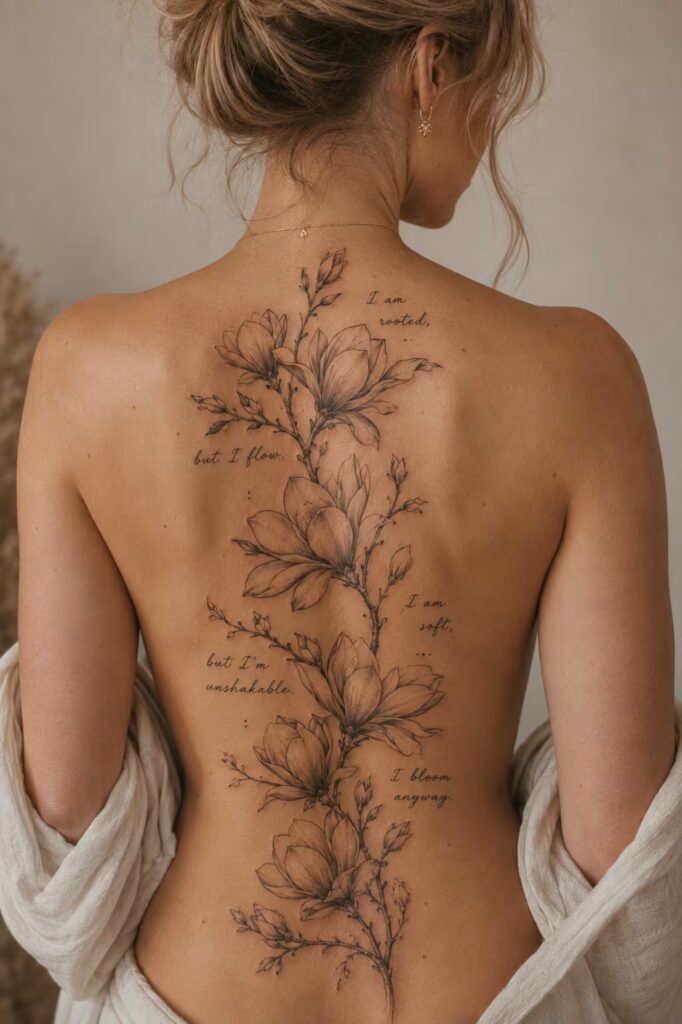
Clusters of flowers fill the upper back, built from stippled shading rather than solid fill. The texture creates depth while keeping the overall tone light.
Dotwork takes patience to apply, and the result carries that slowness. Many read it as a tribute to careful, deliberate living.
Winged Floral Spread Back Tattoo
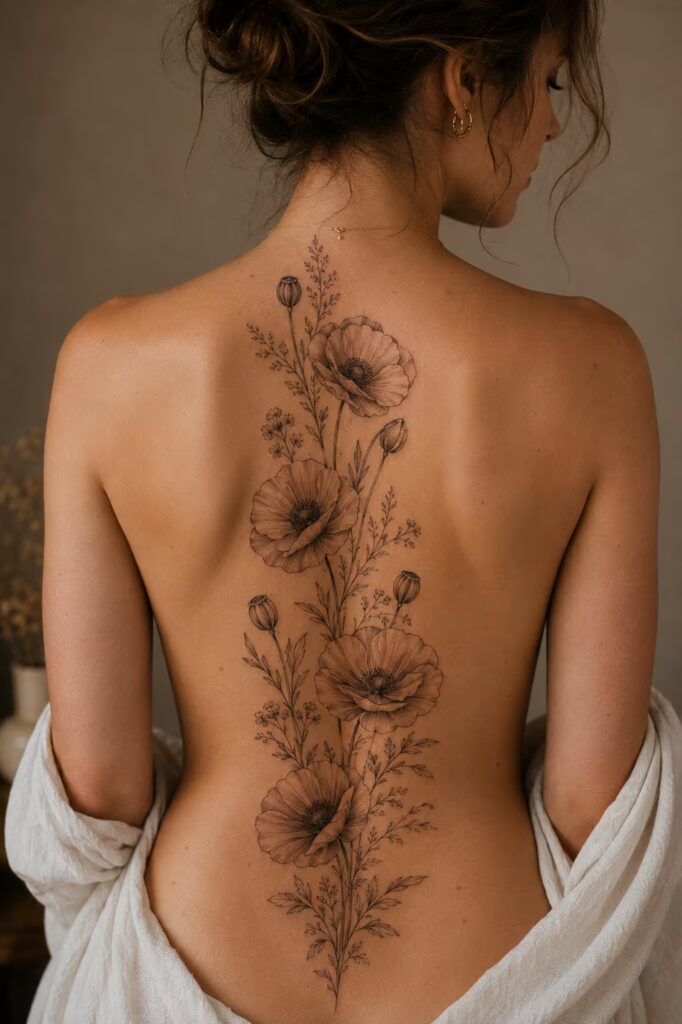
Flowers fan outward from the spine across both shoulders, echoing the shape of wings. Stems curve upward, lifting the eye toward the neck.
The wing silhouette has long stood for freedom and release. Rendered in petals, that idea softens into something gentler.
Single Stem Study Floral Back Tattoo
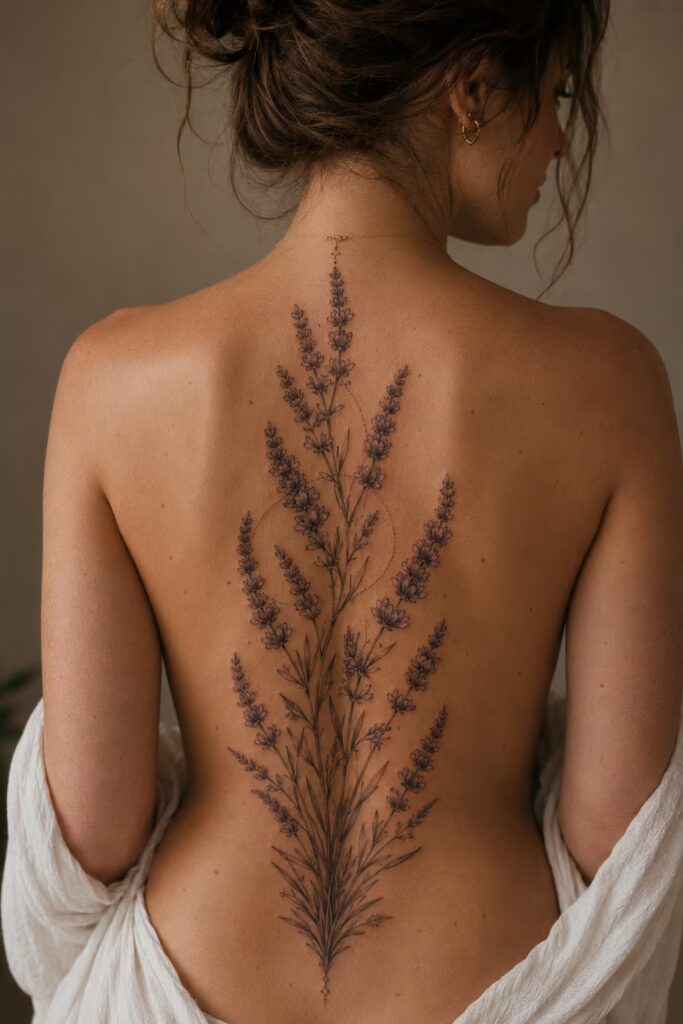
One slender stem runs down the back, carrying a handful of small leaves and flowers. There’s no shading and no fill, just clean line.
Restraint is the point, and it holds up well as skin ages. The design suits a first tattoo or a deliberate return to simplicity.
Deep Shadow Rose Panel Back Tattoo
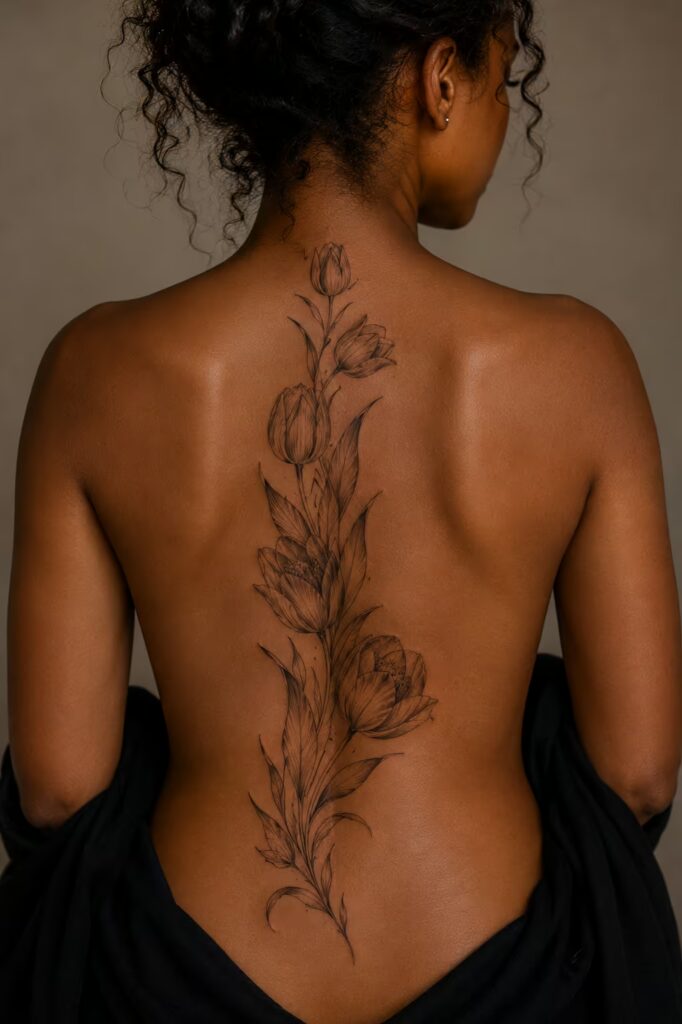
Full roses cover the back with heavy black shading pooling between the petals. Contrast runs high, so the flowers read clearly from a distance.
Dark rose work often signals something survived rather than something celebrated. The weight of the ink matches the weight of that story.
Shoulder Blade Bouquet Back Tattoo
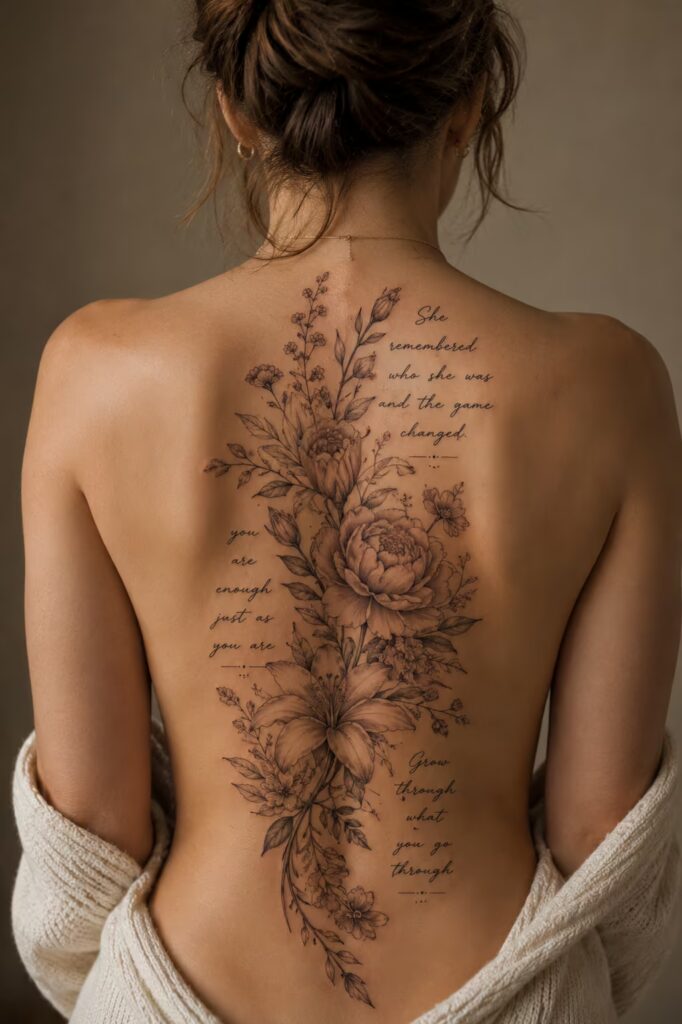
A tight cluster of flowers sits on one shoulder blade, framed by a few loose leaves. The compact shape follows the bone rather than fighting it.
Bouquets suggest gathering: people, memories, seasons held in one place. It works well before committing to more extensive coverage.
Cascading Spine Garland Back Tattoo
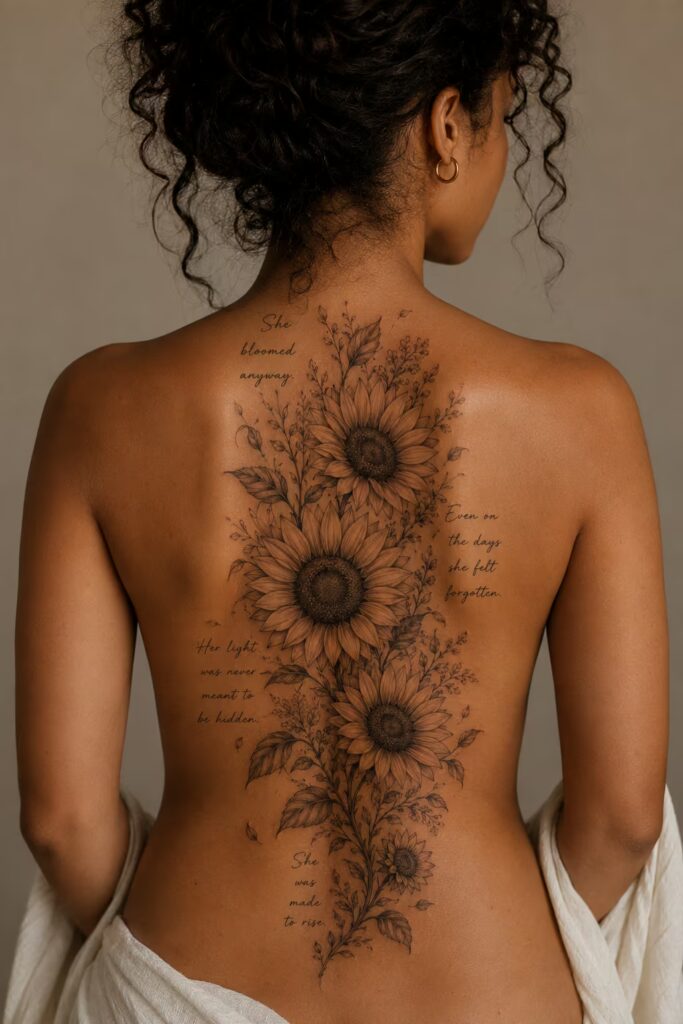
Flowers hang along the spine like a garland, heavier at the top and thinning downward. Fine stems connect each bloom, keeping the fall continuous.
Garlands historically marked celebration and passage between stages of life. The downward flow suits anyone marking a chapter that has closed.
Upper Back Floral Band Back Tattoo
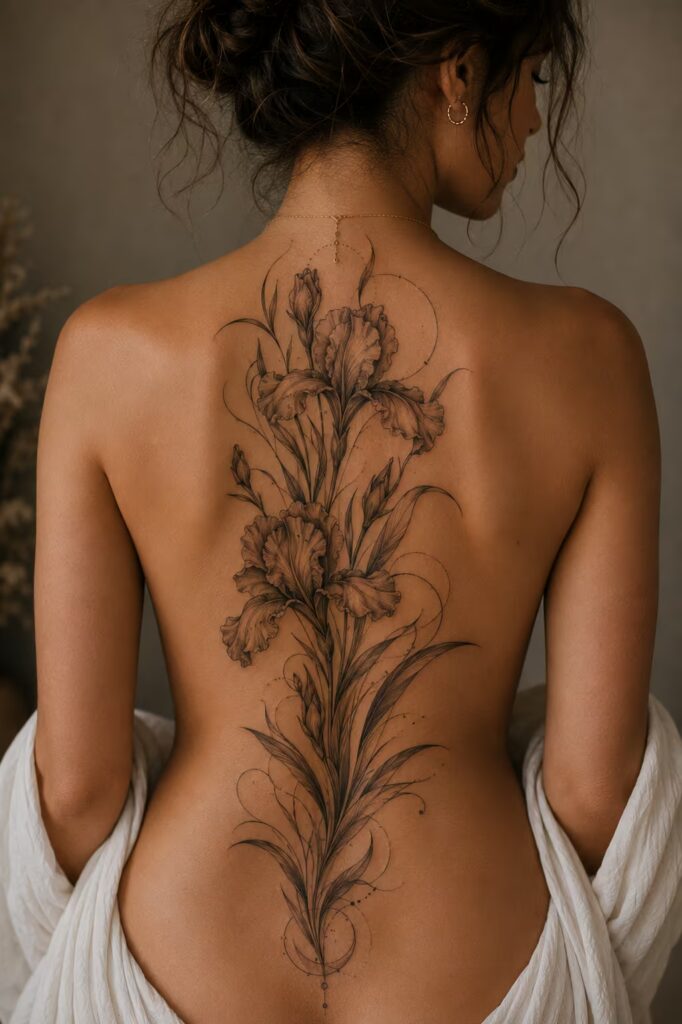
Flowers stretch shoulder to shoulder in a horizontal band across the upper back. The shape sits above most necklines, so coverage is easy to control.
Horizontal placement gives the design a settled, grounded feel. It appeals to those who want presence without a full back commitment.
Fine Line or Heavy Shading: Which One Suits You
Start with the flower, not the layout. A rose and a wildflower say different things, and no amount of good linework will change that.
Then think about how much you want to show. Spine pieces and shoulder clusters stay private under most clothing. Full back coverage doesn’t, and that’s a decision worth sitting with for a few weeks.
Last, match the style to the artist. Fine line specialists and blackwork specialists are rarely the same person. Look through a portfolio for healed photos of back pieces, not just fresh ones, then book a consultation and bring the design you actually want.
Bring three or four reference images to your consultation, including one you don’t like, and say why. That gap between what you want and what you don’t is usually the fastest way to get an artist drawing the right thing.