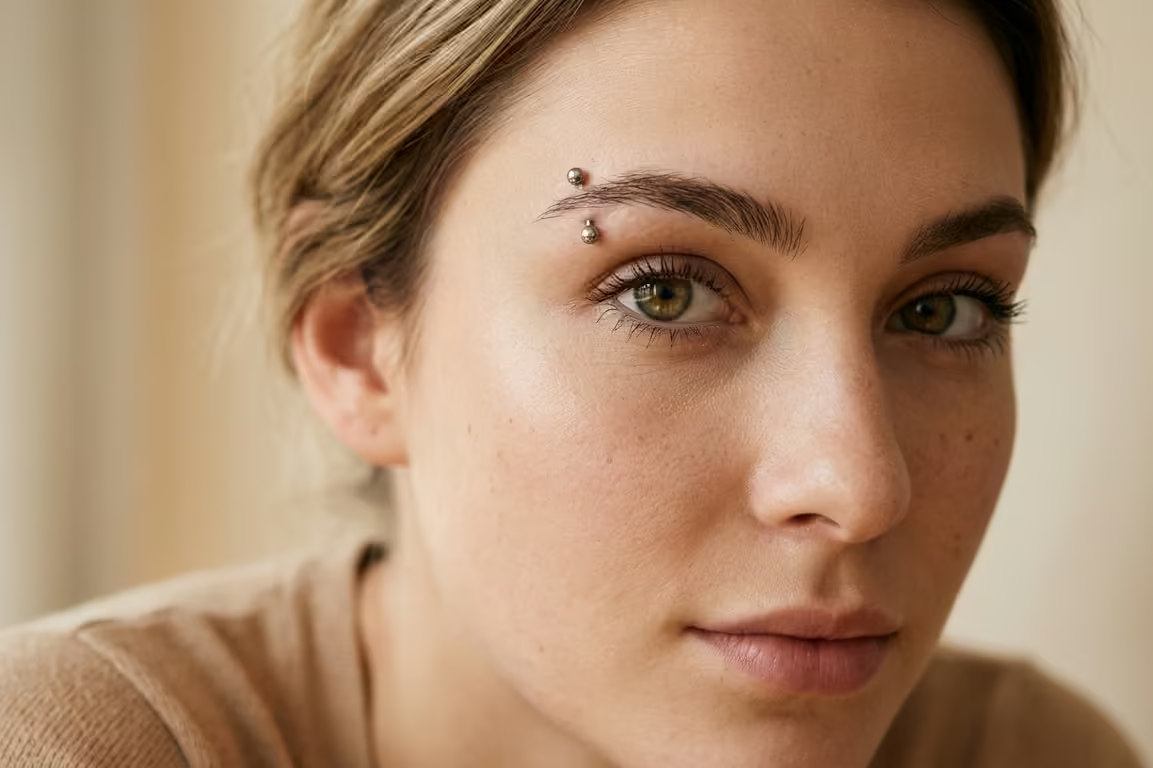
An eyebrow piercing is one of the most visually striking facial piercings you can get. Placed at the outer edge of the brow, it frames the eye and gives the face a bold, intentional edge.
It is also a surface piercing, which puts it in a different category from ear or nose piercings. Surface piercings carry a higher risk of rejection and a longer healing period. Understanding that from the start makes the whole experience easier.
This guide covers the full cost of an eyebrow piercing, factors that affect the price, the procedure itself, the healing process, and everything you need to know to make the right decision.
❝ An eyebrow piercing is one of the more affordable facial piercings to get. But it is also one of the more demanding to heal and maintain in the long term. Both sides of that equation matter.
What Is an Eyebrow Piercing?
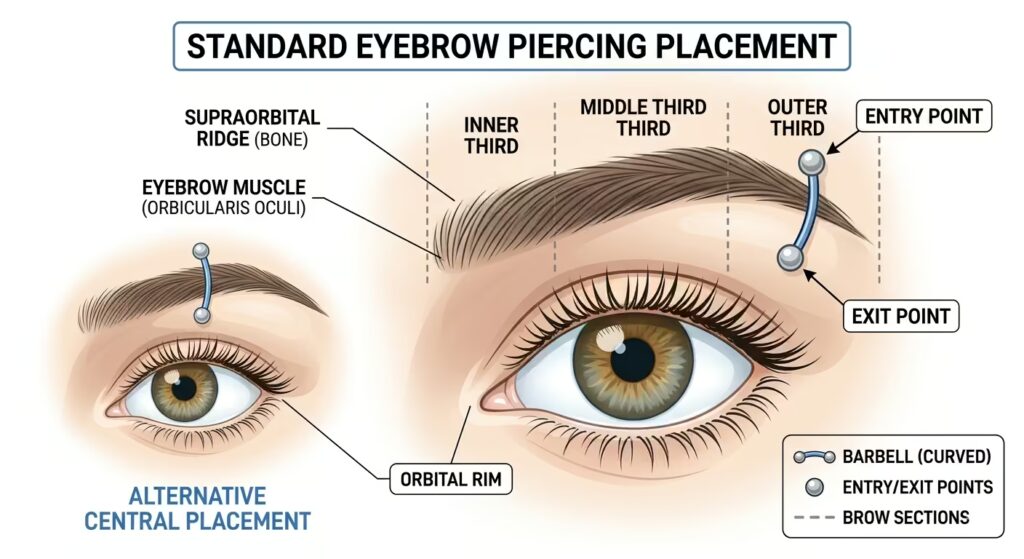
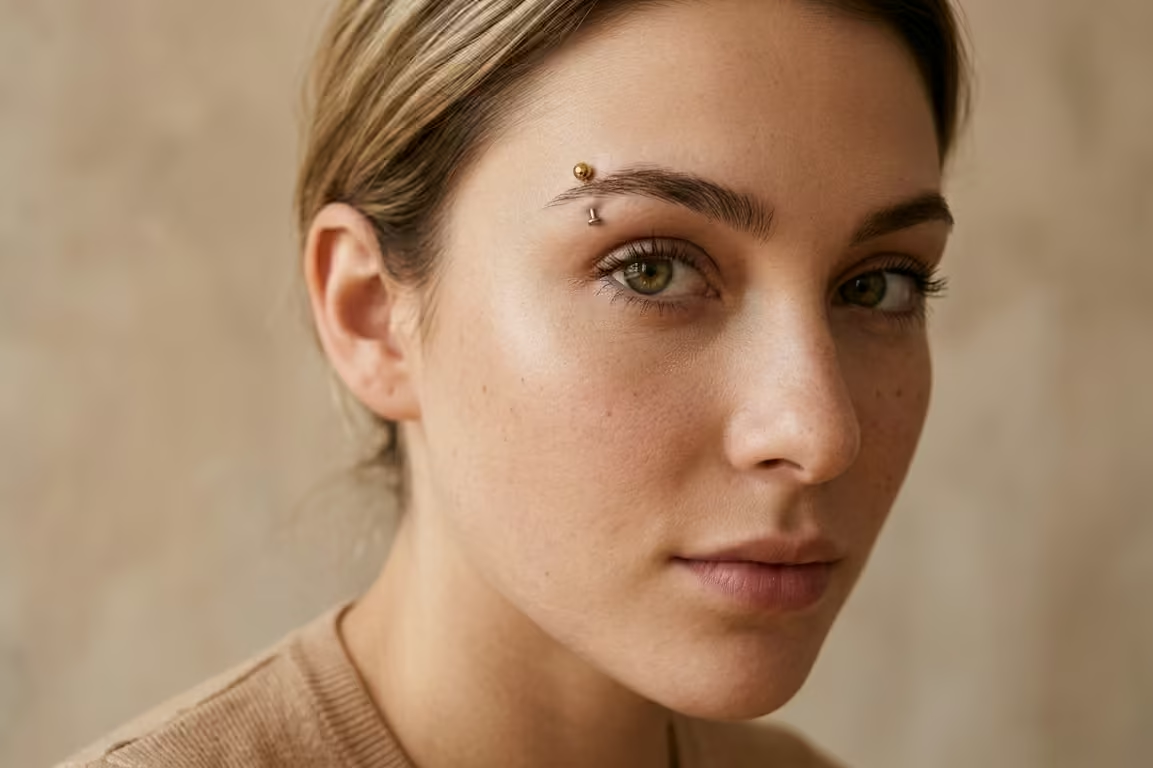
An eyebrow piercing is a surface piercing placed through the skin of the eyebrow ridge, typically at the outer third of the brow. A curved barbell passes through a fold of skin above the eye, with the two ball ends visible on either side of the brow.
Unlike a piercing through flesh, such as an earlobe, an eyebrow piercing passes through the top layer of skin without going through any significant tissue mass underneath. This is what makes it a surface piercing. The body has less to anchor the jewelry in, which is why rejection is a genuine risk.
Placement varies by anatomy and personal preference. The outer corner of the brow is most common. Some people opt for a more central placement. Others get multiple eyebrow piercings along the brow line. Each placement has the same surface-piercing considerations, regardless of position.
How Much Does an Eyebrow Piercing Cost?
At a reputable studio, an eyebrow piercing costs between $35 and $75 for the service fee. This typically includes basic implant-grade jewelry. With aftercare, a tip, and any jewelry upgrade, the realistic all-in cost is $60 to $120.
| Cost Component | Typical Range (USD) |
| Piercing service fee | $35–$75 |
| Implant-grade titanium curved barbell | $15–$40 |
| Sterile saline aftercare spray | $8–$15 |
| Tip for piercer (recommended) | $10–$20 |
| Realistic total all-in | $68–$150 |
Eyebrow piercings sit at the more affordable end of the facial piercing range. But as with any surface piercing, the upfront cost is only part of the financial picture. Rejection, re-piercing, and scar management are all worth factoring into your budget from day one.
What Affects the Price?
Piercer experience
Surface piercing placement is more technically demanding than a standard lobe or nostril piercing. The angle, depth, and position of the needle pass directly determine how long the piercing lasts.
A piercer who places the jewelry too shallowly sets you up for rejection within months. One who places it correctly, at the right depth and angle for your specific brow anatomy, gives you the best possible chance of a long-lasting result. That skill commands a higher fee and is worth every cent.
Studio location
Studios in larger cities charge more due to higher operating costs. Prices in New York or London sit toward the top of the range. Studios in smaller cities or towns often charge significantly less for equivalent quality.
Do not let price alone guide your studio choice for a facial surface piercing. A $35 eyebrow piercing that rejects in three months costs more overall than an $70 one that lasts years.
Jewelry material
Implant-grade titanium is the professional standard for fresh eyebrow piercings. It is lightweight, which matters for a surface piercing that is already fighting gravity and movement. It is also completely hypoallergenic, reducing the body’s inflammatory response during the healing process.
Solid gold is an excellent upgrade for a healed eyebrow piercing. It is not recommended as initial jewelry because it is heavier than titanium, which increases the risk of migration in a piercing that already sits on the brow ridge.
Regional Pricing Guide
| Country | Budget Studio | Reputable Studio |
| United States | $35–$55 | $65–$100 |
| Canada | CAD 40–60 | CAD 70–115 |
| United Kingdom | £20–£40 | £50–£80 |
| Australia | AUD 45–65 | AUD 80–130 |
| Kenya / East Africa | KES 1,500–3,000 | KES 4,000–7,500 |
The Procedure: What to Expect on the Day
An eyebrow piercing appointment typically takes 20 to 30 minutes from start to finish. The actual needle pass takes a fraction of a second. Most of the time is spent on consultation, cleaning, and marking the placement.
Marking and consultation
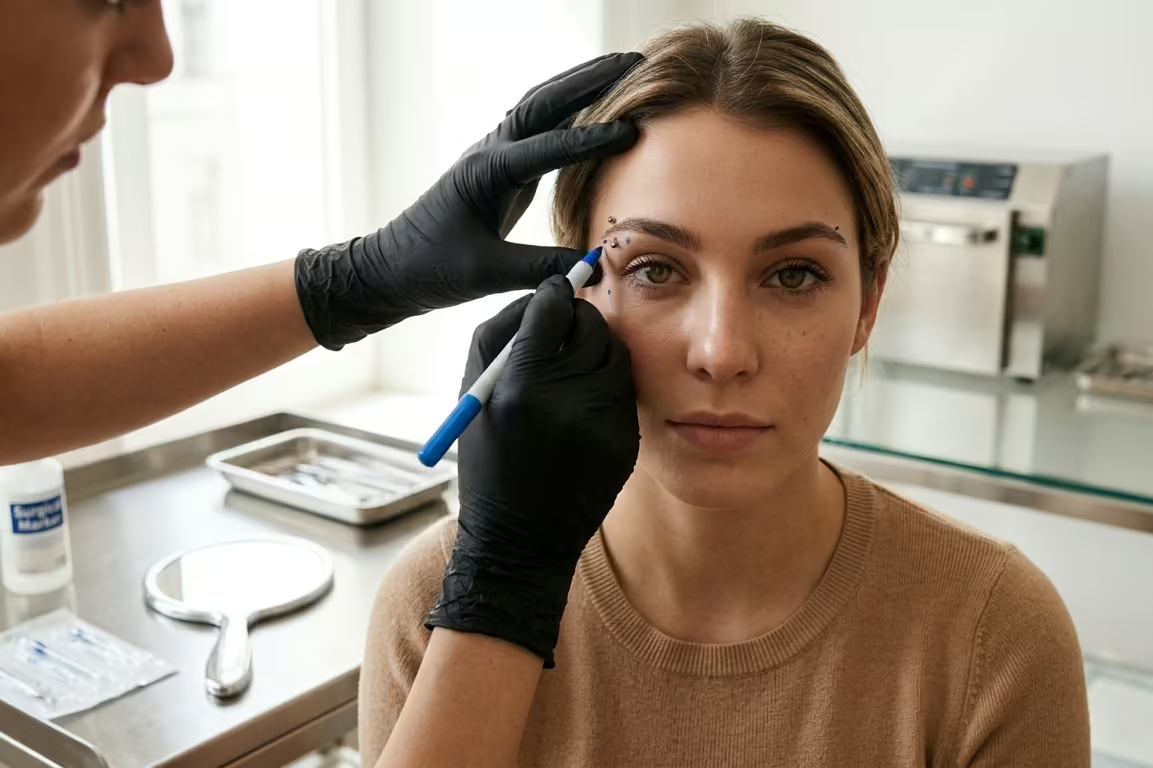
A good piercer will clean the brow area and then mark the entry and exit points with a skin-safe pen before doing anything else. They will show you the marks in a mirror and ask you to confirm the placement looks right from your perspective.
This step matters. Eyebrow piercings are on your face. You see them every day. If the placement looks slightly off to you in the mirror before the needle goes in, say so. A good piercer welcomes this conversation.
The piercing itself
Once the placement is confirmed, the piercer cleans the area again and uses a hollow single-use needle to pass through the marked points. A small receiving tube may be used beneath the brow to guide the needle and protect surrounding tissue.
The curved barbell is inserted immediately after the needle passes. The whole procedure feels like a sharp pinch on the skin of the brow. Most people are surprised by how brief the sensation is.
Immediately after
Some redness and mild swelling around the piercing is normal for the first day or two. The brow area may feel slightly tender to the touch. These are normal healing responses, not signs of infection.
Your piercer will give you written aftercare instructions. Read them on the day, not a week later. The first 48 hours of aftercare set the tone for the entire healing process.
How Painful Is an Eyebrow Piercing?
Most people rate an eyebrow piercing at 3 to 5 out of 10 on a pain scale. The eyebrow skin is relatively thin, and the area has fewer concentrated nerve endings than the nose, tongue, or cartilage.
The sensation is typically a sharp pinch with a brief pressure, followed by mild throbbing for a few minutes. The most common reaction after the procedure is relief that it was less intense than expected.
Swelling can make the brow feel tight and tender for the first day or two. This is usually the most uncomfortable part of the whole experience, rather than the piercing itself.
Healing Time: The Honest Timeline
Eyebrow piercings take 6 to 9 months to fully heal. Initial surface healing, in which the skin closes over at the entry and exit points, can occur in 6 to 8 weeks. But the deeper tissue takes much longer to stabilise.
Treating an eyebrow piercing as healed after 8 weeks is one of the most common reasons people experience rejection problems. The tissue beneath the surface is still in the process of building the fistula around the jewelry at that point.
Why the eyebrow is a challenging location
The brow ridge is in constant motion. Facial expressions, sleeping on the pierced side, glasses frames, makeup, and facial washing all create ongoing disturbance to a healing eyebrow piercing.
Each disturbance is minor on its own. But, over weeks and months, frequent micro-movements and friction significantly slow healing and increase the chances of migration.
❝ The eyebrow piercing is one of the most expressive parts of the face. Every raised eyebrow, every frown, and every surprised expression puts mechanical stress on the healing tissue. Patience is genuinely essential here.
Eyebrow Piercing Jewelry: What Works and What Does Not
Curved barbells
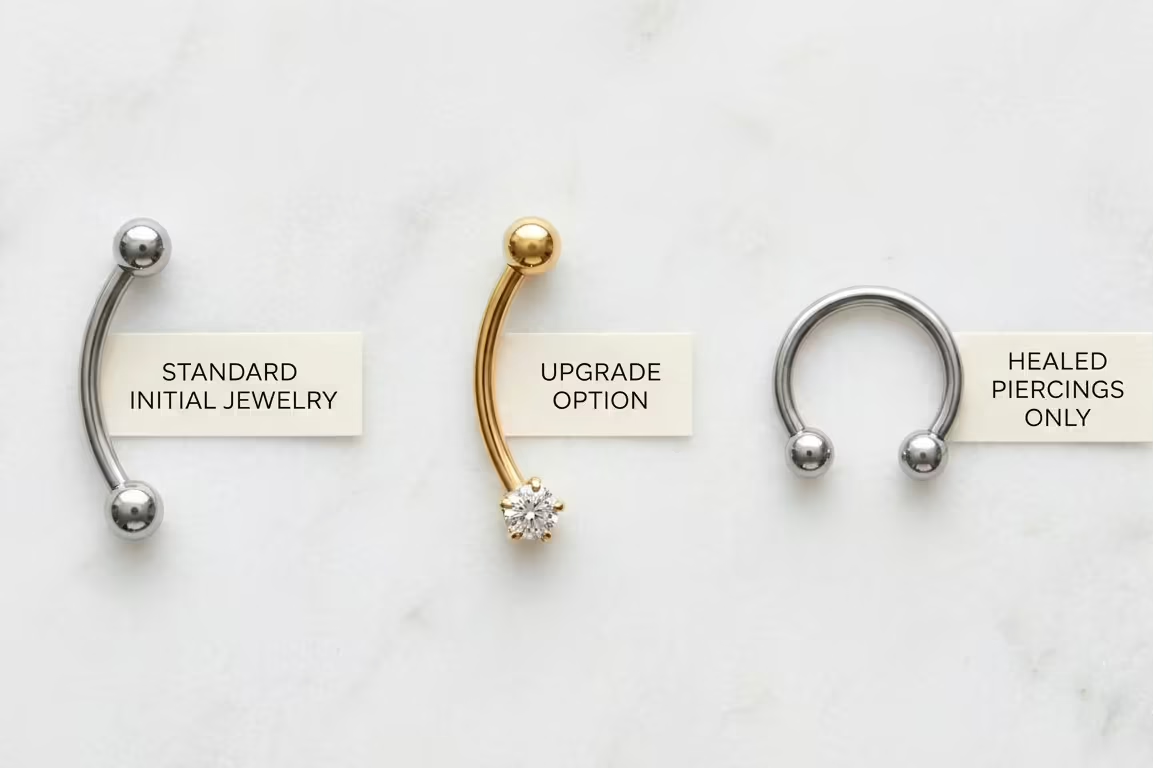
A curved barbell is the standard and recommended choice for eyebrow piercings. The curve follows the natural contour of the brow ridge, allowing the jewelry to sit flat against the skin rather than pulling outward at the entry and exit points.
Straight barbells are not suitable for eyebrow piercings. A straight bar creates angle pressure at both ends of the piercing channel, significantly increasing the risk of migration and rejection.
Circular barbells and rings
Rings and circular barbells are not recommended for fresh eyebrow piercings. They rotate and catch on everything, creating constant movement in the healing tissue. Once the piercing is fully healed, rings are an option but require careful sizing to avoid putting pressure on the brow.
| Material | Cost Range | Best For | Notes |
| Implant-grade Titanium | $15–$45 | Fresh and healed piercings | Lightweight and hypoallergenic. Best all-round choice. |
| Implant-grade Steel | $10–$30 | Non-sensitive individuals | Heavier than titanium. Contains trace nickel. |
| Solid 14k/18k Gold | $50–$120+ | Fully healed piercings only | Beautiful long-term option. Too heavy for fresh piercings. |
| Fashion / Mystery Metal | Under $10 | Avoid entirely | Not body-safe. Causes persistent irritation and speeds rejection. |
Aftercare: What to Do Every Day
Cleaning
Clean the piercing twice daily with sterile saline wound wash. Spray directly onto the entry and exit points and leave for thirty seconds. Rinse gently with clean water.
Avoid using cotton wool. The fibres catch on the ball ends of the barbell and leave residue that irritates the tissue. Non-woven gauze or a gentle rinse under running water is better.
Makeup and skincare
This is one of the most frequently overlooked aspects of aftercare for eyebrow piercings. Eyebrow makeup, foundation, concealer, and skincare products applied near the brow can easily come into contact with the piercing.
During the healing period, keep all products well away from the piercing site. Apply makeup around the area, not over it. Wash your face carefully, avoiding direct water pressure on the jewelry for the first few weeks.
Glasses and sunglasses
If you wear glasses, the arm of the frame may sit very close to or directly on the eyebrow piercing, depending on placement. Check this before you leave the studio.
Frames that press against the piercing site exert constant low-level pressure, significantly delaying healing. Adjusting the placement slightly to avoid the frame resting point, or switching to contacts during the initial healing period are both worth considering.
Sleeping
Sleeping on the same side as the piercing puts direct pressure on it for hours at a time. A travel pillow worn around the neck keeps your head from rolling toward the pierced side during sleep.
Many people underestimate how much sleep-related pressure slows the healing of eyebrow piercings. A few weeks of adjusting the sleeping position make a real difference to the healing speed.
❝ Eyebrow makeup and glasses are the two aftercare challenges most people do not think about until they are already healing. Plan for both before you book your appointment.
Rejection and Migration: The Risk You Need to Understand
Eyebrow piercings have one of the highest rejection rates among facial piercings. Because the jewelry sits in a thin fold of skin at the brow ridge rather than through a substantial piece of tissue, the body sometimes treats it as a foreign object and gradually pushes it toward the surface.
This process, called migration, happens gradually over weeks or months. Most people do not notice it until the jewelry is visibly closer to the surface than it was when the piercing was fresh.
Signs your eyebrow piercing may be rejecting
The barbell appears to sit higher or shallower in the skin than it did originally. The skin between the two ball ends looks thinner, or you can see the shape of the bar through the skin. The area stays persistently red or flaky despite consistent aftercare.
If you notice these signs, visit your piercer as soon as possible. Removing the jewelry while there is still reasonable tissue depth results in a small, flat scar. Leaving a rejecting piercing until it breaks through leaves a more pronounced, sometimes raised scar at the brow line.
How to minimise rejection risk
Starting with implant-grade titanium significantly reduces the body’s inflammatory response to the jewelry. Correct depth placement by an experienced piercer gives the tissue more to anchor through. Consistent aftercare and avoiding pressure from makeup and glasses also contribute.
There is no way to completely eliminate the risk of rejection for a surface piercing. But these factors together give your eyebrow piercing the best possible chance of longevity.
Types of Eyebrow Piercings
The standard eyebrow piercing at the outer brow is by far the most common. But there are several variations worth knowing about, each with its own aesthetic and placement considerations.
| Type | Typical Cost | Placement | Key Notes |
| Standard Eyebrow | $35–$75 | Outer third of the brow | Most common, most studied for longevity. |
| Anti-Eyebrow | $45–$85 | High on the cheekbone below the outer eye | Higher risk of rejection due to facial movement. Needs a specialist piercer. |
| Horizontal Eyebrow | $50–$90 | Horizontally across the brow rather than vertically | Less common. Very high rejection risk. Not widely recommended. |
| Double Eyebrow | $70–$150 | Two piercings along the same brow | Double the healing demands. Best done separately, not simultaneously. |
The anti-eyebrow piercing is frequently searched alongside the standard eyebrow piercing. It sits on the upper cheekbone just below the outer eye rather than through the brow itself. It carries a higher risk of rejection because the cheek area undergoes significant facial movement during expressions.
Eyebrow Piercings and Professional Life
One of the most practical questions people ask before getting an eyebrow piercing is whether it will cause problems at work. The honest answer depends entirely on your specific workplace.
Eyebrow piercings are visible in all normal interactions. Unlike a tongue or navel piercing, they cannot easily be hidden. A clear retainer reduces visibility but does not make the piercing invisible.
In many modern workplaces, visible facial piercings are increasingly accepted. In traditional corporate environments, legal and medical fields, and roles working with young children, policies may still restrict visible facial piercings.
If your workplace has a facial piercing policy, check it before booking. Many people time their eyebrow piercings around career changes, or get the piercing and see how their employer responds before fully committing.
Frequently Asked Questions
How long does an eyebrow piercing last?
There is no guaranteed lifespan for an eyebrow piercing. Some last many years with no problems. Others reject within months despite perfect aftercare. The average well-placed eyebrow piercing at a reputable studio lasts one to five years before the wearer either chooses to remove it or notices early signs of rejection.
People who keep their eyebrow piercings for many years typically share a few common factors: experienced initial placement, implant-grade jewelry from the start, consistent aftercare, and good anatomical suitability for the piercing.
Can I get an eyebrow piercing if I wear glasses?
Yes, but placement needs to account for where your frame arm sits. Before committing to a placement, put your glasses on in the studio and show the piercer exactly where the arm rests against your brow.
A small adjustment in placement position often allows the piercing and the glasses frame to coexist without the frame pressing on the jewelry. This conversation is much easier to have before the needle goes in than after.
Will an eyebrow piercing leave a scar?
Most eyebrow piercings leave a small, flat scar when removed. In the brow area, this is often partially obscured by eyebrow hair. Scars from piercings removed proactively before full rejection are typically small and fade significantly within a year.
Piercings that fully reject or become infected before removal tend to leave a more visible, sometimes raised or indented scar. Acting on early signs of rejection is the most effective way to minimise long-term scarring.
Can I get my eyebrow repierced after rejection?
Yes, in most cases. The scar tissue from the original piercing needs to fully soften and settle first, which typically takes three to six months after removal. A piercer can then assess the area and advise on whether re-piercing is viable and where to place it.
Many people find that a slightly different placement for re-piercing is more successful than the original placement. An experienced piercer can often spot why the first piercing was rejected and make an informed adjustment.
Does eyebrow piercing hair grow back?
The piercing needle passes through the skin of the brow rather than through the hair follicles themselves. In the vast majority of cases, eyebrow hair grows back normally after the piercing is removed.
In rare cases, where a piercing has been in place for many years or significant scar tissue has formed, some localised thinning of the hair at the exact piercing site may remain. This is uncommon and typically very minor.
Eyebrow Piercing Full Cost and Care Guide: Final Thoughts
An eyebrow piercing costs between $68 and $150, all-in, at a reputable studio. For a facial surface piercing that requires skill, patience, and consistent aftercare, that is a fair and reasonable investment.
The keys to a successful eyebrow piercing are straightforward. Choose an experienced piercer with a strong portfolio of healed surface piercings. Start with implant-grade titanium. Plan for makeup and glasses before you book. Commit to the full 6 to 9-month healing timeline rather than treating it as healed at 6 weeks.
Do those things, and an eyebrow piercing can be a long-lasting, genuinely striking addition to your look. Skip any of them, and the risk of rejection climbs significantly. For more on facial piercing types, see our guide to different types of lip piercings and our complete breakdown of what are the most painful piercings. For a broader view of all body piercing options, our guide to body piercing types with pictures covers the full range.