Quick Facts
| Fact | Detail |
|---|---|
| Origin | The Middle East, traced back over 4,000 years |
| First recorded use | ~1500 BC (Mesopotamia/Middle East) |
| Primary spiritual systems | Hinduism, Ayurveda, African traditions, Islam, Buddhism |
| Key energy channels involved | Ida Nadi (left nostril), Pingala Nadi (right nostril) |
| Left nostril association | Feminine energy, intuition, reproductive health (Ayurveda) |
| Right nostril association | Masculine energy, strength, spiritual power |
| Hindu deity linked to nose piercing | Goddess Parvati (marriage, femininity, divine power) |
| Biblical reference | Genesis 24:22 — gold nose ring gifted to Rebekah |
| Cultural hubs | India, parts of Africa, the Middle East, and Native American tribes |
Spiritual Meanings of Nose Piercing
Nose piercing symbolizes spiritual protection, feminine power, life transformation, and connection to divine energy. This piercing carries deep spiritual significance across cultures worldwide, dating back over 4,000 years to the ancient Middle East. In Hinduism, it honors Goddess Parvati and symbolizes feminine power, marital devotion, and divine protection.

Ayurveda links the left nostril to reproductive health and emotional balance, while the right connects to solar energy, strength, and spiritual authority. African traditions treat the piercing as a conduit to ancestral spirits and a shield against negative forces.
In Buddhism, it symbolizes mindfulness and the aspiration toward enlightenment. Across nearly every tradition that practices it, nose piercing marks transformation — a permanent, visible declaration of spiritual intention, identity, or life transition.
The Nose as a Spiritual Gateway
In many spiritual traditions, the nose is not simply a physical feature. It is the seat of breath — and breath, across nearly every spiritual tradition on earth, is synonymous with life force.
In Sanskrit, this life force is called prana. In Chinese medicine, it is qi. In Yoruba tradition, it is àṣẹ. Nose piercing is understood, in these frameworks, as an act that directly engages these subtle energy systems.
Ayurveda identifies two primary energy channels — the Ida Nadi and the Pingala Nadi — which run alongside the spinal column and connect to the left and right nostrils, respectively. Activating these channels through piercing is believed to shift the flow of spiritual energy through the body.
Nose Piercing in Hinduism: Goddess Parvati and the Sacred Nath
In Hindu tradition, the nose ring (nath) is one of the most spiritually loaded pieces of jewelry a woman can wear. It is directly associated with Goddess Parvati — the deity of marriage, motherhood, feminine power, and devotion.

Wearing a nose ring is regarded as an act of honor toward Parvati and a prayer for a harmonious married life. It forms part of solah shringar, the sixteen adornments considered sacred to Hindu women.
In many regions, a woman’s nose ring is removed at the death of her husband — a marker of how deeply the piercing is tied to spiritual and marital identity, not aesthetics.
Ayurveda: Energy, Reproductive Health, and the Left Nostril
Ayurvedic texts specifically link the left nostril to the female reproductive system. The nerve pathways on this side are believed to connect to the uterus and ovaries.
Traditionally, piercing the left nostril was thought to:
- Ease menstrual discomfort
- Support smoother labor and childbirth
- Balance feminine energy (Shakti) in the body
These beliefs have informed generations of practice in South Asia, where girls would often receive their nose piercing before or at the time of marriage — a convergence of spiritual, medical, and cultural intention.
Mentions of piercing rituals such as Karnavedha appear in Ayurvedic texts dating back to the 6th century BC, indicating how seriously these traditions treated body modification as a spiritual and health practice.
The Right Nostril Piercing: Masculine Energy and Spiritual Strength
While the left nostril is feminine and intuitive, the right carries different energy entirely. The right nostril connects to the Pingala Nadi — the solar channel associated with logic, action, discipline, and outward strength.
In parts of Gujarat and South India, women pierce the right nostril, reflecting regional variations in spiritual interpretation. In some South Asian traditions, unmarried women pierce the left nostril, while married women add a right-side piercing — together creating energetic balance.
Spiritually, a right-side nose piercing is associated with:
- Self-confidence and personal authority
- Connection to a spiritual guide or higher power
- Protection against negative forces
- Activation of masculine (Yang) energy within the self
Nose Piercing in African Traditions: Ancestral Connection and Protection
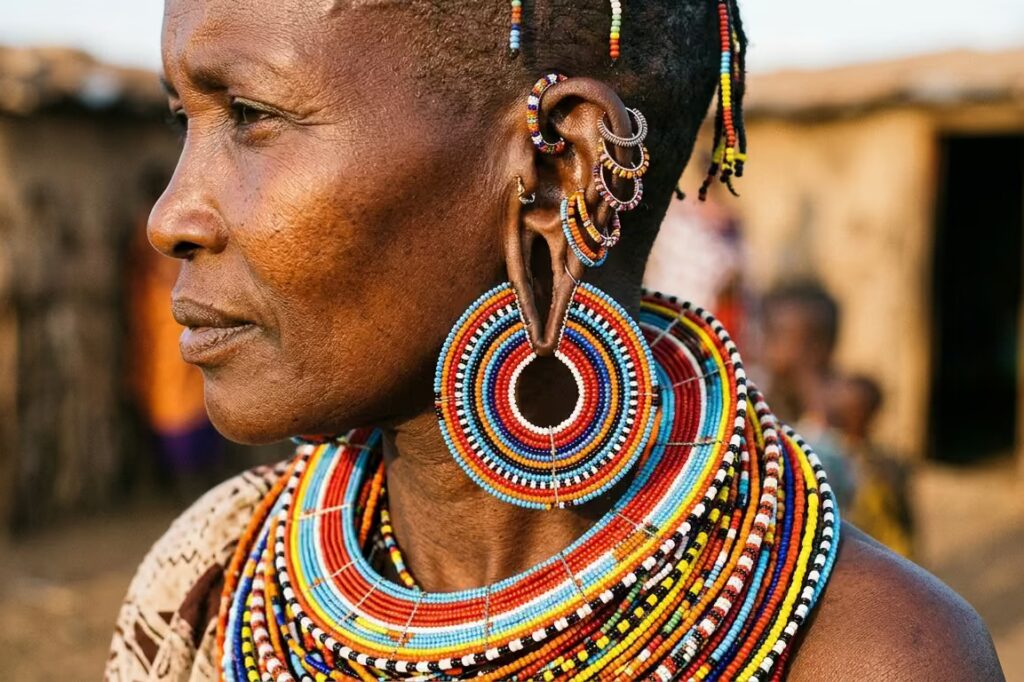
Across several African cultures, the nose is considered a portal between the physical and spiritual realms. Because breath passes through the nose, adorning it is seen as honoring the life force itself.

In certain African tribes, nose piercings serve as conduits for communication with ancestral spirits. The jewelry is believed to act as a spiritual amulet, actively warding off negative energy and harmful forces.
Nose piercings in these traditions also mark rites of passage. They signal a young person’s transition into adulthood or a new phase of spiritual responsibility within the community.
The Middle East and the Biblical Record
The oldest documented nose piercings date back roughly 4,000 years, originating in the Middle East. Among ancient Bedouin and Berber tribes, a bride’s nose ring was a central part of her dowry — both a symbol of status and a form of spiritual protection.
The Biblical account in Genesis 24:22 records Abraham’s servant presenting a gold nose ring to Rebekah as a gift preceding her marriage to Isaac. Scholars note this was not casual ornamentation — it carried the weight of identity, covenant, and divine blessing in the cultural context of the ancient Near East.
Buddhism: Mindfulness and Spiritual Awareness
In certain Buddhist traditions, nose piercings carry meaning related to mindfulness and the aspiration toward enlightenment. The nose, as the organ of breath, connects directly to meditation practice — breath awareness is foundational to Buddhist contemplative traditions.
In this context, a nose adornment becomes a physical reminder of present-moment awareness. Some practitioners regard it as a symbol of the intention to remain awake to reality — a living, wearable cue for inner attention.
Native American Traditions: Sacred Adornment and the Divine
Among several Native American peoples, nose piercings were sacred rather than decorative. They were worn to honor the divine, to mark ceremonial status, or to invite spiritual protection.
In these traditions, nose piercing was not a personal fashion statement. It was a communal and spiritual act — performed within a ceremony and carrying obligations to the spiritual world.
Rites of Passage and Personal Transformation
Across nearly every culture that practices nose piercing spiritually, one theme recurs: transformation. The piercing marks a before-and-after — an initiation into a new phase of life, identity, or spiritual understanding.
The physical act of piercing — a deliberate, permanent change to the body — creates a somatic memory. Every time the jewelry is touched or seen, it recalls the moment of decision. For many wearers, that moment is one of grief processed, freedom claimed, identity reclaimed, or commitment made.
The permanence is part of the point. A spiritual intention held only in the mind is invisible. Worn on the face, it becomes a daily, visible declaration.
Nose Piercing as Protection Against Evil
The belief that nose piercings offer spiritual protection appears across cultures that otherwise share very little. From India to sub-Saharan Africa to the ancient Middle East, nose jewelry has been regarded as a barrier against malevolent forces.
In Hindu practice, the piercing wards off negative energy and evil spirits from the home and family. In African traditions, it blocks harmful spiritual entities. In Bedouin culture, it provided protective power to the bride entering a new household.
Some scholars of spiritual history suggest that this near-universal belief reflects an ancient understanding of the nose as a vulnerable entry point — one that, once adorned with a charged object, becomes defended.
Septum Piercing: Bridging the Two Energy Channels
The septum sits between the left and right nostrils — between the Ida and Pingala Nadis. In Ayurvedic and Hindu spiritual frameworks, a septum piercing is understood to engage both channels simultaneously.
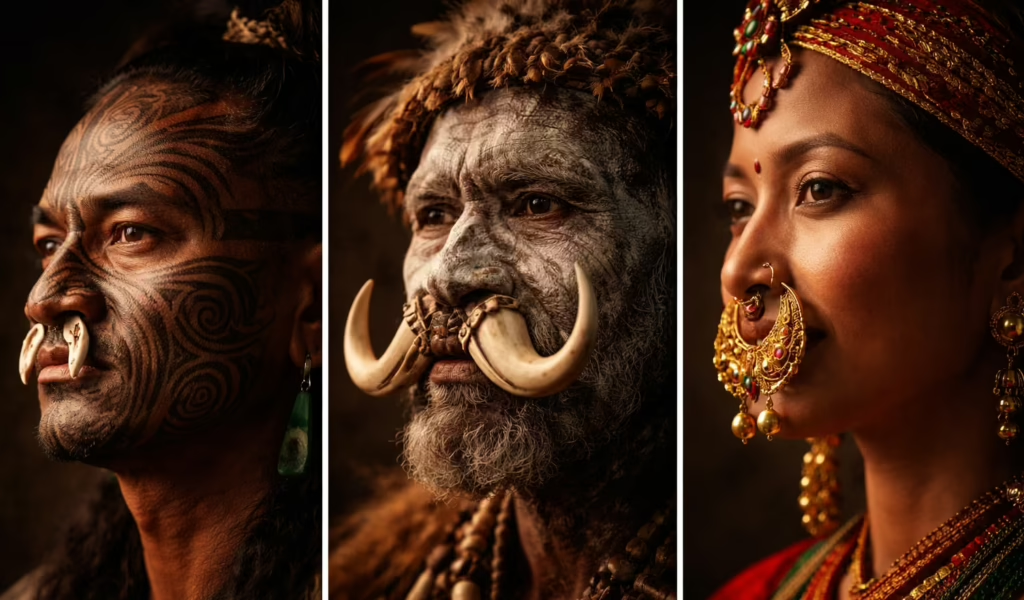
This is why septum piercings appear in some of the most ceremonially significant contexts: New Guinea warrior traditions, South Asian bridal customs, and certain indigenous North American rites. The septum placement is considered the most energetically potent position on the nose.
In Sanatan Dharma texts, the septum piercing is described as activating the Kundalini energy channels and drawing spiritual energy (Shakti) from the surrounding environment into the body.
FAQs
Does the side of a nose piercing have a spiritual meaning?
Yes. The left nostril is traditionally associated with feminine energy, emotional depth, and reproductive health in Ayurvedic tradition. The right nostril connects to solar, masculine energy — strength, focus, and spiritual authority. The meaning varies by culture, but side placement is rarely spiritually neutral in traditions that have practiced this for centuries.
What does a nose piercing mean spiritually for women?
In Hindu and Ayurvedic traditions, it honors Goddess Parvati and connects the wearer to feminine spiritual power. It has also historically marked marital status, rites of passage, and protection for mother and child. Across African and Middle Eastern traditions, it carries meaning related to ancestral protection and divine favor.
Is nose piercing mentioned in the Bible?
Yes. Genesis 24:22 describes Abraham’s servant giving Rebekah a gold nose ring as part of the marriage arrangement for Isaac. In the cultural context of the ancient Near East, nose rings were associated with status, beauty, and covenant.
What does nose piercing mean spiritually in African cultures?
Nose piercings in many African traditions serve as a connection to ancestral spirits and a protective amulet against negative energies. They also mark significant life transitions, including the passage into adulthood.
What is the spiritual significance of a septum piercing?
The septum sits at the intersection of the two primary nasal energy channels (Ida and Pingala). Piercing this point is believed, in Hindu and Ayurvedic frameworks, to activate both channels simultaneously and draw spiritual energy into the body. Among certain indigenous cultures globally, it marks warrior status or spiritual authority.
Does nose piercing have a spiritual meaning for men?
In several traditions — including some African and indigenous cultures — men also wore nose piercings as markers of spiritual rank, tribal identity, or warrior status. The spiritual meanings are not exclusively gendered, though the most documented traditions center on feminine spiritual symbolism.
What does it mean to pierce your nose during a life transition? Across traditions, nose piercing during major life changes carries intentional spiritual weight. The act marks a physical and permanent transition. It functions as a promise to oneself — a somatic anchor to a moment of decision, growth, or transformation.