Quick Facts: Valley Piercing
| Also Known As | Sacral piercing, coccyx piercing, butt crack piercing |
| Placement | Lower back, just above or within the gluteal cleft |
| Piercing Type | Surface piercing (or dermal anchor alternative) |
| Pain Level | 5–7 out of 10 |
| Healing Time | 6–12 months (surface bar); 1–3 months (dermal) |
| Rejection Risk | High — higher than most surface piercings |
| Jewelry Type | Surface bar (14G or 16G); PTFE/Tygon; dermal anchor |
| Average Cost | $50–$100 (plus jewelry) |
| Orientation | Vertical or horizontal |
| Rarity | Very rare — uncommon even among experienced piercers |
What Is a Valley Piercing?
A valley piercing is a surface piercing placed at the lower back, directly above or within the cleft of the buttocks. The name comes from the natural valley-like depression at the base of the spine.
It goes by several names — sacral piercing, coccyx piercing, and the more colloquial “butt crack piercing.” All refer to the same placement.
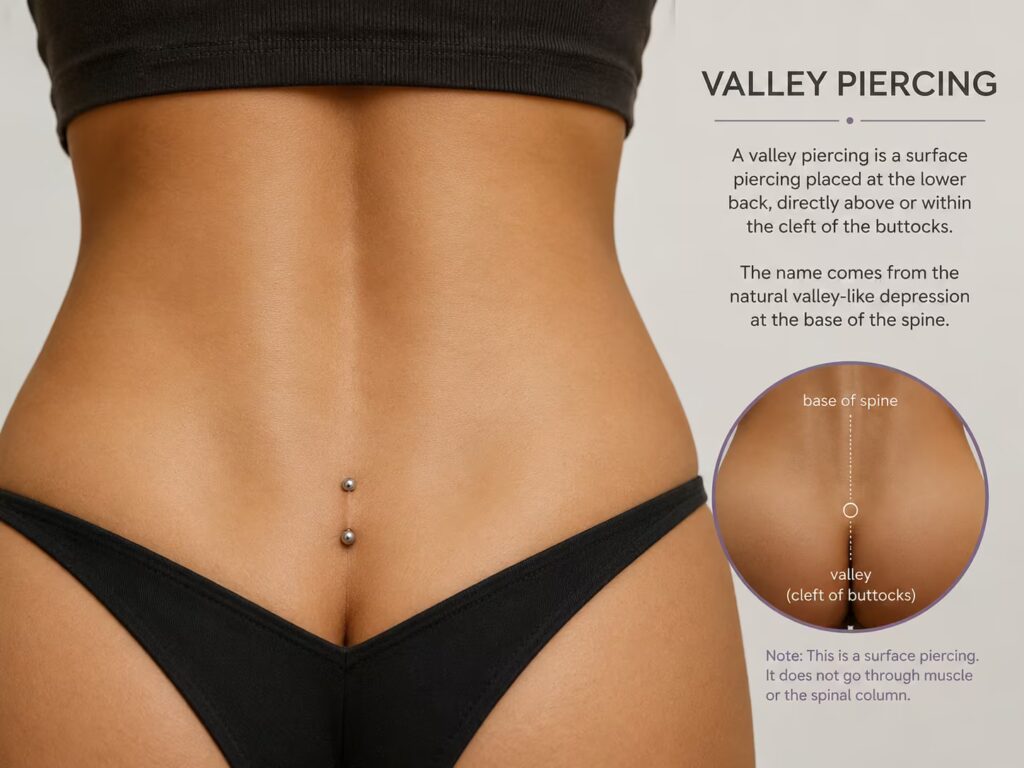
Valley piercings can run vertically (along the spine line) or horizontally (across the cleft). Some sit slightly higher on the lumbar spine, depending on anatomy and piercer preference.
The piercing has existed since at least 2007, but remains genuinely rare. Many experienced piercers have never performed one.
Valley Piercing Placement Variations
Vertical placement runs along the natural line of the spine, above the cleft. It draws the eye upward and tends to sit on flatter skin, which can slightly improve longevity.
Horizontal placement runs across the cleft or just above it. It’s bolder visually but sits in a higher-movement zone, which increases rejection risk.
Higher sacral placement sits further up the lower back, away from the cleft. This position reduces friction from waistbands and bending. It’s considered the most stable option for this type of piercing.
Some people with lower back tattoos place a valley piercing or valley dermals strategically to accentuate the existing artwork.
Valley Piercing Pain Level
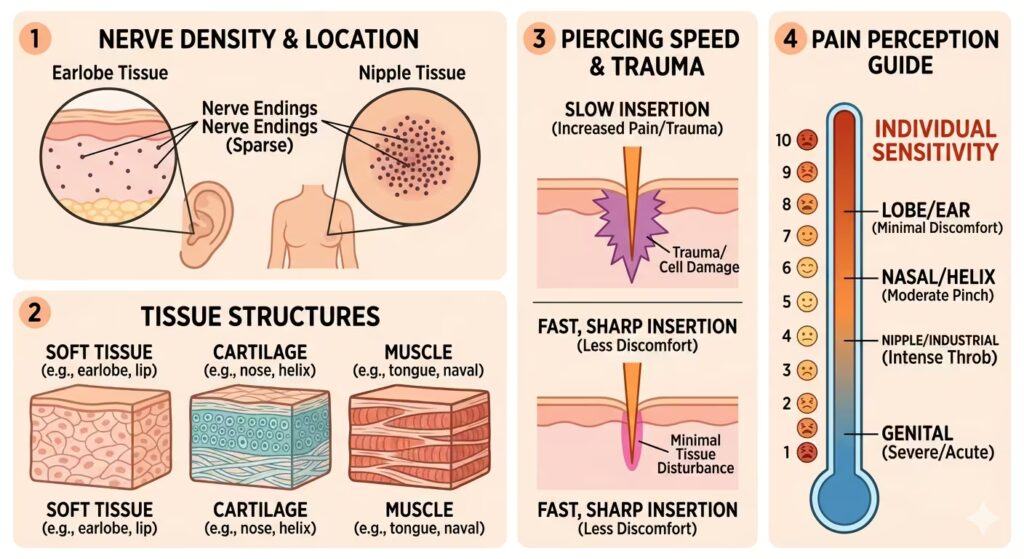
Valley piercings rate around 5–7 out of 10 on the pain scale. The skin of the lower back is relatively fleshy, which reduces sharp pain. However, surface piercings involve more tissue manipulation than standard piercings — the piercer creates a channel or pocket under the skin rather than simply passing a needle through.
Most people describe the sensation as a firm pinch followed by pressure. The area is also harder to keep completely still, and any movement during the procedure increases discomfort.
Pain after the piercing is generally low-grade. The bigger concern is chronic irritation during healing from sitting, clothing, and posture changes.
Surface Bar vs. Dermal: Which to Choose
Both options work for the valley placement. The choice affects healing time, the risk of rejection, and long-term appearance.
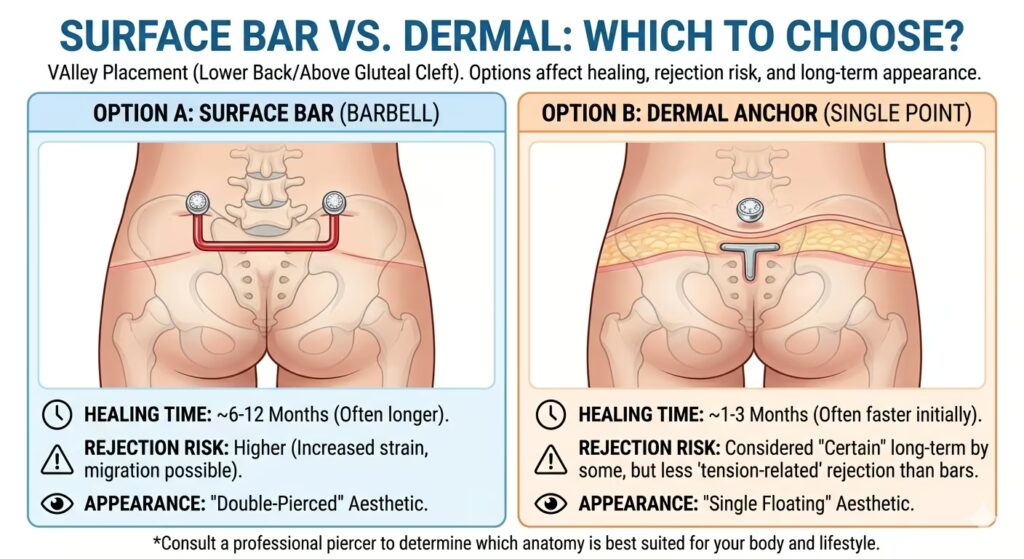
Surface bar (traditional valley piercing)
- Two visible gem or disc ends connected by a flat bar under the skin
- Entry and exit points, both visible on the surface
- Higher rejection risk; the body treats the bar like a foreign object and may slowly push it out
- Longer healing: 6–12 months
Dermal anchors (valley dermals)
- Single-point piercing; one visible gem, anchor hidden beneath the skin
- No exit point — anchor tissue grows around the base
- Lower rejection rate than surface bars
- Shorter healing: 1–3 months surface, up to 6 months for the anchor to fully settle
- Two dermals placed side by side can mimic the look of a traditional surface piercing
According to the Association of Professional Piercers (APP), surface piercings in high-movement zones have a significantly higher complication rate than single-point dermals in the same area. Piercers who regularly work with lower-back placement often recommend dermals for better long-term results.
Valley Piercing Jewelry Options
Surface bars are the standard choice for a traditional valley piercing. They have a staple shape — the bar runs flat under the skin with 90-degree bends at each end. This design distributes pressure evenly and reduces the risk of rejection compared to a curved barbell.
PTFE (polytetrafluoroethylene) and Tygon bars are flexible plastic alternatives. They move with the body rather than resisting it. This reduces friction-related irritation, making them a reasonable option for placement in areas that endure constant movement. They are not as aesthetically refined but can significantly extend the lifespan of a piercing.
Dermal anchors use a flat-footed base inserted under the skin. Holed anchors (those with perforations in the base) tend to last longer — tissue grows through the holes, creating a physical grip that slows rejection.
Material matters more at this placement than almost anywhere else. The valley area endures friction from waistbands, sitting, bending, and exercise. Low-quality metals increase irritation and speed up rejection.
Recommended materials (per APP standards and implant-grade guidelines):
- Implant-grade titanium (ASTM F-136) — the top choice; biocompatible, nickel-free, lightweight
- Implant-grade surgical steel — acceptable for most people; avoid if you have a nickel sensitivity
- 14K or 18K solid gold — safe; avoid gold-plated pieces, as the plating flakes
- Niobium — hypoallergenic, no nickel, suitable for sensitive skin
Gauge: Most valley piercings use 14G. Some piercers use 12G for the added stability of a thicker bar.
Valley Piercing Healing Time
| Jewelry Type | Surface Healing | Full Healing |
|---|---|---|
| Surface bar | 3–6 months | 6–12 months |
| Dermal anchor | 1–3 months | Up to 6 months |
The valley placement is one of the slower-healing surface piercings. The lower back is in near-constant motion — sitting, standing, bending, and walking all stress the tissue around the jewelry.
Healing also looks different from what most people expect. A piercing can appear healed on the outside while still fragile internally. The APP notes that piercings heal from the outside in; external closure doesn’t signal internal stability.
Signs of normal healing: mild redness, whitish-yellow crust around the jewelry ends, and some tightening of the skin. These should gradually improve week by week.
Valley Piercing Rejection and Migration: The Biggest Risk
Rejection is the primary reason valley piercings fail. The body identifies the jewelry as a foreign object and slowly pushes it toward the skin’s surface. This process is called migration when it’s partial, and rejection when the jewelry is pushed completely out.
A 2023 review in the Journal of Clinical Medicine confirmed that surface piercings — particularly those in high-movement, high-friction zones — carry a substantially higher rejection rate than piercings through tissue folds or cartilage (Kopec & Borys, Aesthetic Piercings – A Review of Clinical Practice Guidelines, J Clin Med, 2023).
The valley placement is especially vulnerable because:
- Constant flexion and extension of the lumbar spine stress the tissue
- Waistbands and clothing create daily friction at the exact piercing site
- Sitting compresses the area repeatedly throughout the day
Early rejection warning signs:
- More of the bar is becoming visible on the skin surface
- Skin thinning or becoming translucent over the jewelry
- Persistent redness or irritation after the initial healing phase
- The jewelry is tilting or shifting position
If rejection begins, remove the jewelry promptly. The APP advises that waiting for full rejection significantly worsens scarring. Early removal leaves two small marks; delayed removal can leave a visible track scar.
Surface piercings are often semi-permanent. Even with ideal jewelry, ideal placement, and consistent aftercare, many surface piercings eventually reject — some within months, some after years. Going in with that understanding avoids unnecessary frustration.
Valley Piercing Aftercare
The lower back placement requires specific attention beyond standard piercing aftercare, due to clothing, posture, and the difficulty of accessing the site.
Cleaning:
- Use sterile saline wound wash (0.9% sodium chloride) twice daily
- Spray directly onto the piercing; let it sit for 30 seconds
- Pat dry with a clean, non-woven gauze pad or paper towel — never cloth towels, which harbor bacteria and snag jewelry
- Do not use alcohol, hydrogen peroxide, Betadine, or antibacterial soap — these damage new tissue and slow healing (APP Aftercare Guidelines)
Clothing:
- Wear high-waisted or loose-fitting bottoms during healing — waistbands sitting directly on the piercing cause chronic irritation
- Low-rise clothing that sits below the piercing is preferable
- Avoid tight synthetic fabrics that trap moisture and increase friction
- Cover the piercing with a breathable, non-adhesive dressing for the first few days to protect it from fabric contact
Sleeping:
- Sleep on your stomach or side to avoid direct pressure on the piercing
- Keep bedding clean; change pillowcases and sheets regularly
Activities:
- Avoid pools, hot tubs, lakes, and oceans during healing — submerging introduces bacteria to an open wound
- Use a waterproof transparent film dressing (available at pharmacies) if water exposure is unavoidable, per APP guidance
- Exercise is not prohibited, but movements that cause the waistband to repeatedly drag across the piercing should be minimized
What to avoid:
- Touching the jewelry unless cleaning
- Rotating or moving the bar — unnecessary movement delays healing and increases migration risk
- Ointments — they block air circulation and trap moisture
Valley Piercing Cost
Valley piercings cost $50–$100 for the service, not including jewelry. Surface bar and dermal placements are priced similarly at most reputable studios.
Jewelry costs are separate:
- Titanium surface bars or dermal anchors: $15–$50
- Gold options: $50–$150+
- PTFE/Tygon bars: $5–$20
Studios in major urban areas charge more. Specialist piercers who perform surface work regularly may charge a premium, which is worth paying given the technique demands of this placement.
Do not choose a piercer based on price. The valley placement requires precise judgment of depth and angle. A bar placed too shallow rejects faster; placed too deep, it can cause tissue damage. The piercer’s expertise directly affects how long the piercing lasts.
Who Is a Good Candidate for Valley Piercing?
Body anatomy affects whether a valley piercing is viable and how long it lasts.
Ideal candidates have:
- Relatively flat lower back skin at the desired placement
- Low levels of daily friction in the area (limited bending-intensive work or sport)
- Flexibility to wear clothing that avoids the piercing site during healing
The placement becomes more complicated with:
- Significant lumbar curve or pronounced spinal structure — the jewelry may not sit flat
- Active lifestyles involving frequent heavy lifting, contact sports, or sustained bending
- Sensitivity to nickel or metals (workable with titanium or niobium, but requires extra care)
A consultation with an experienced piercer before committing is strongly recommended. They can assess placement viability and advise on dermal vs. surface bar based on your anatomy.
Valley Piercing Frequently Asked Questions
How long does a valley piercing last? Surface bar valley piercings often last 1–5 years before rejection, though some people keep them longer with careful maintenance. Dermal alternatives in the same area tend to last longer. Both are considered semi-permanent.
Is the valley piercing the same as a back dimple piercing? No. Back dimple piercings (also called Venus dimple piercings) are dermals placed in the naturally indented dimples on the upper buttocks, roughly at the level of the sacroiliac joints. The valley piercing sits lower, at or within the gluteal cleft. The placements are adjacent but distinct.
Can I sit normally after getting a valley piercing? Yes, but sitting creates pressure and friction at the exact site of the piercing. Hard chairs and car seats are the most problematic in the first weeks. A small cushion or rolled towel placed slightly above or below the piercing can redistribute pressure and reduce irritation.
What happens if my valley piercing rejects? The jewelry migrates toward the skin surface and eventually exits. If caught early, removal leaves minimal scarring — typically two small marks that fade over time. Waiting until full rejection results in a more visible scar. Scar tissue at the site may make re-piercing in the same spot difficult.
Can I get a valley piercing over a tattoo? Yes. Many people use valley piercings or valley dermals to accent lower back tattoos. The piercer will assess the tattoo’s design and skin condition to determine the safest placement. Healed tattoo skin is generally safe to pierce through.
What jewelry should I start with? Implant-grade titanium is the standard recommendation for initial jewelry. It is biocompatible, nickel-free, and lightweight — all critical for placement in a high-rejection risk setting. Do not start with surgical steel if you have any nickel sensitivity. A 14-G implant-grade titanium surface bar or dermal anchor is the typical starting point.
Why is the valley piercing so rare? The placement is technically demanding, anatomically variable, and has a high rejection rate. Many piercers have limited or no experience with it. Its rarity is partly practical and partly historical — it gained little mainstream attention despite existing for nearly two decades.
Sources: Association of Professional Piercers (safepiercing.org); Kopec M, Borys S. “Aesthetic Piercings – A Review of Clinical Practice Guidelines.” J Clin Med. 2023; Medical News Today – Piercing Rejection (medicalnewstoday.com); Mayo Clinic – Piercings: How to Prevent Complications.